ICA Kinamo
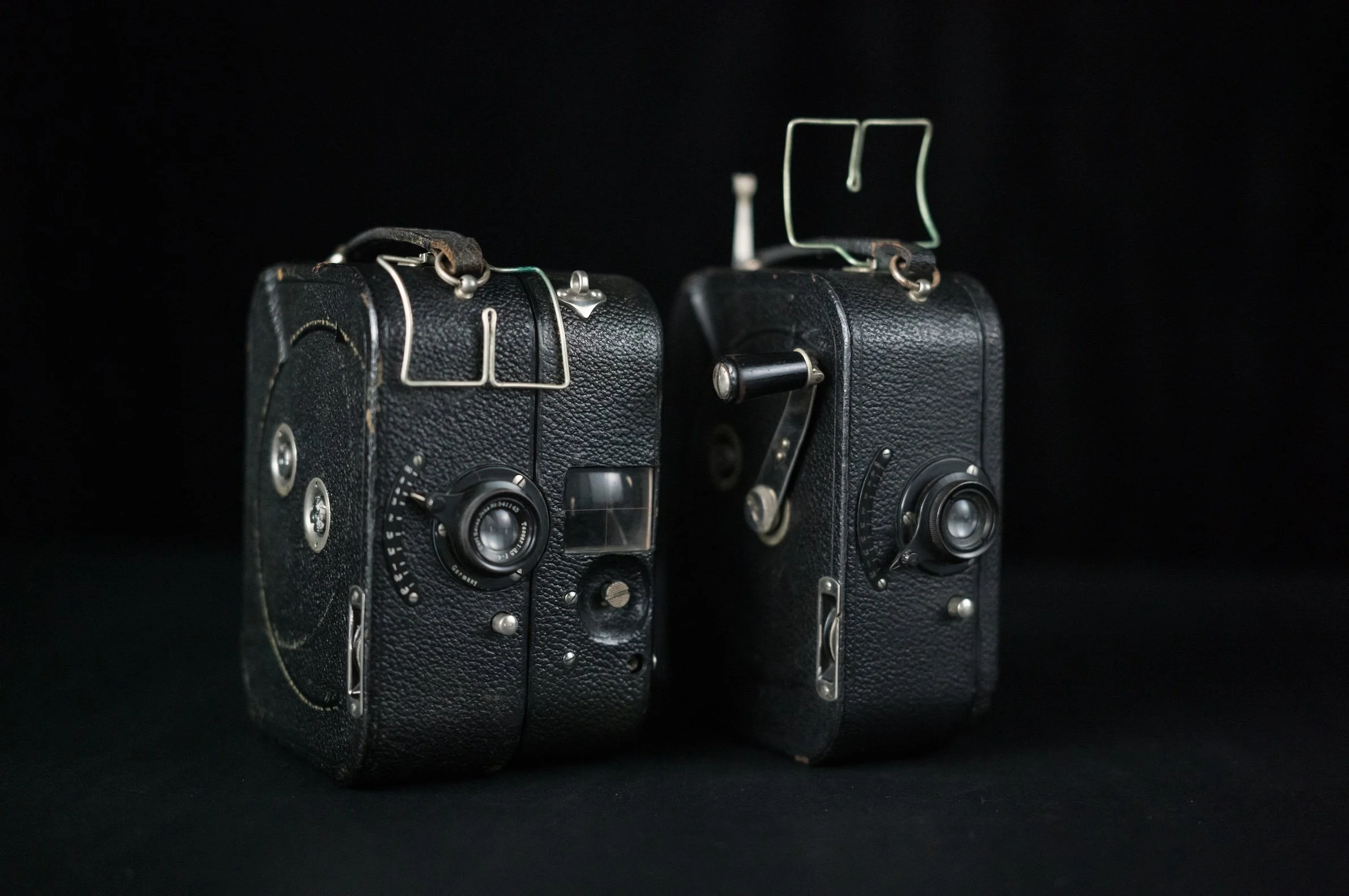
Kinamo N25 models 5402/4 and 5402
35mm | Germany, 1921
The Camera That Freed the Filmmaker
In the early 1920s, making a movie meant one thing: a tripod. You couldn't crank a hand-operated camera and hold it steady at the same time, so the tripod wasn't optional — it was part of the camera. Emanuel Goldberg, a Russian-born scientist working at Ica in Dresden, decided that was exactly the problem worth solving.
His answer was the Kinamo.
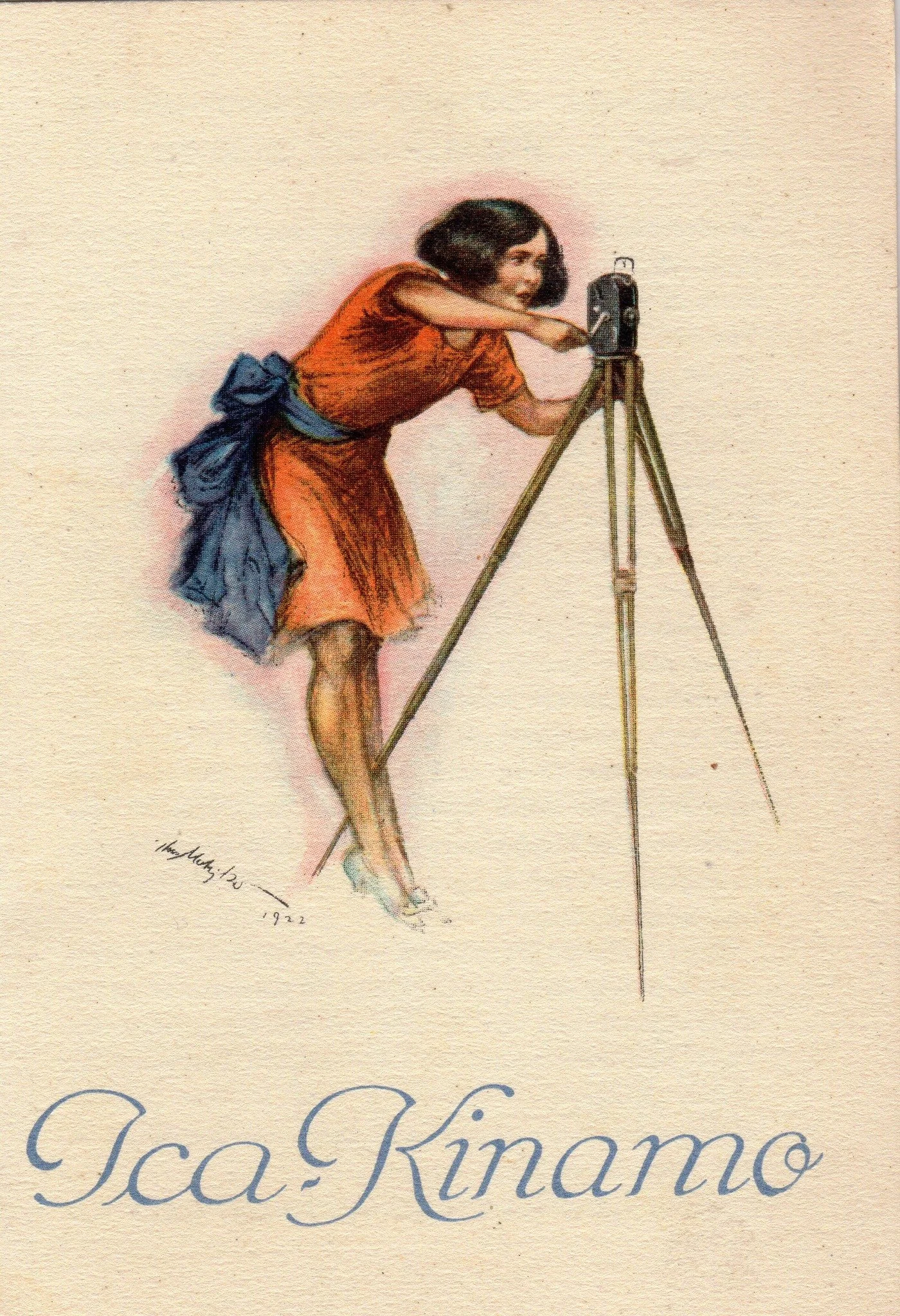
Ica Kinamo, 1922
“It is possible now to possess a movie picture camera using standard film, most convenient of operation, and, at the same time, of such small dimension as to present no inconvenience in travel, and inconspicuous in appearance.
The Ica Kinamo Camera is a very compact, small size camera, of durability, simple of operation, yet a most efficient and capable instrument, doing work comparable in excellency to that done by the most expensive and elaborate movie cameras.”
Emanuel Goldberg
Goldberg was not a typical camera designer. He had a PhD in photochemistry from the University of Leipzig and had spent years teaching photography and photoengraving at the Royal Academy of Graphic Arts in Leipzig before being recruited to Ica by Carl Zeiss in 1917. He was equally comfortable doing precision metalwork, grinding lenses, or writing a scientific paper on sensitometry. He liked to describe himself as "a chemist by learning, a physicist by calling, and a mechanic by birth."
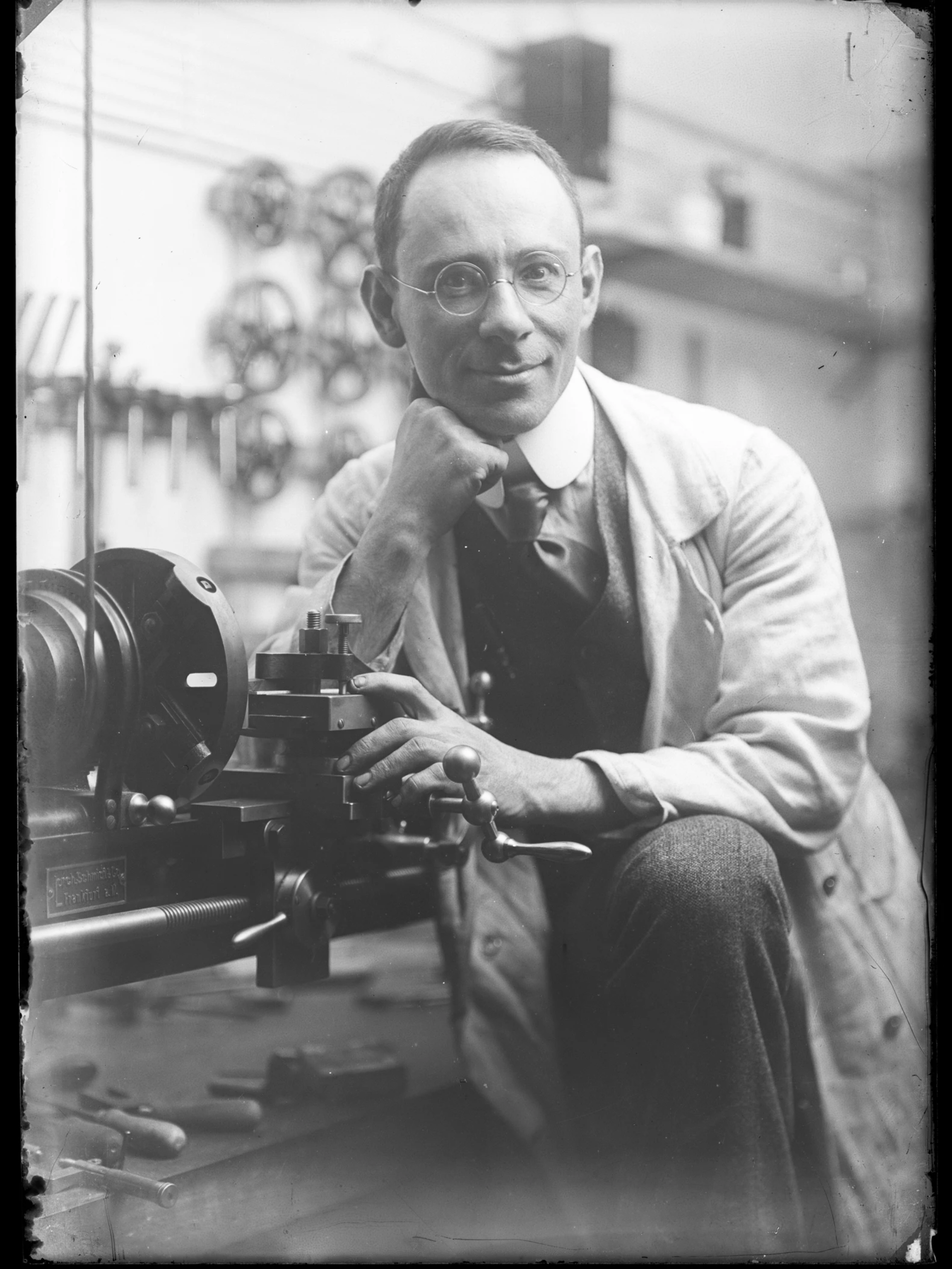
Emanuel Goldberg
At Ica, his assignment was to modernize the company and develop new products. Military production was cut short by the Treaty of Versailles, so Goldberg turned his attention to the amateur film market — which he believed was enormous and largely untapped. Ica reorganized into two divisions: one for still cameras, and one for movie equipment, headed by Goldberg.
The Design Problem
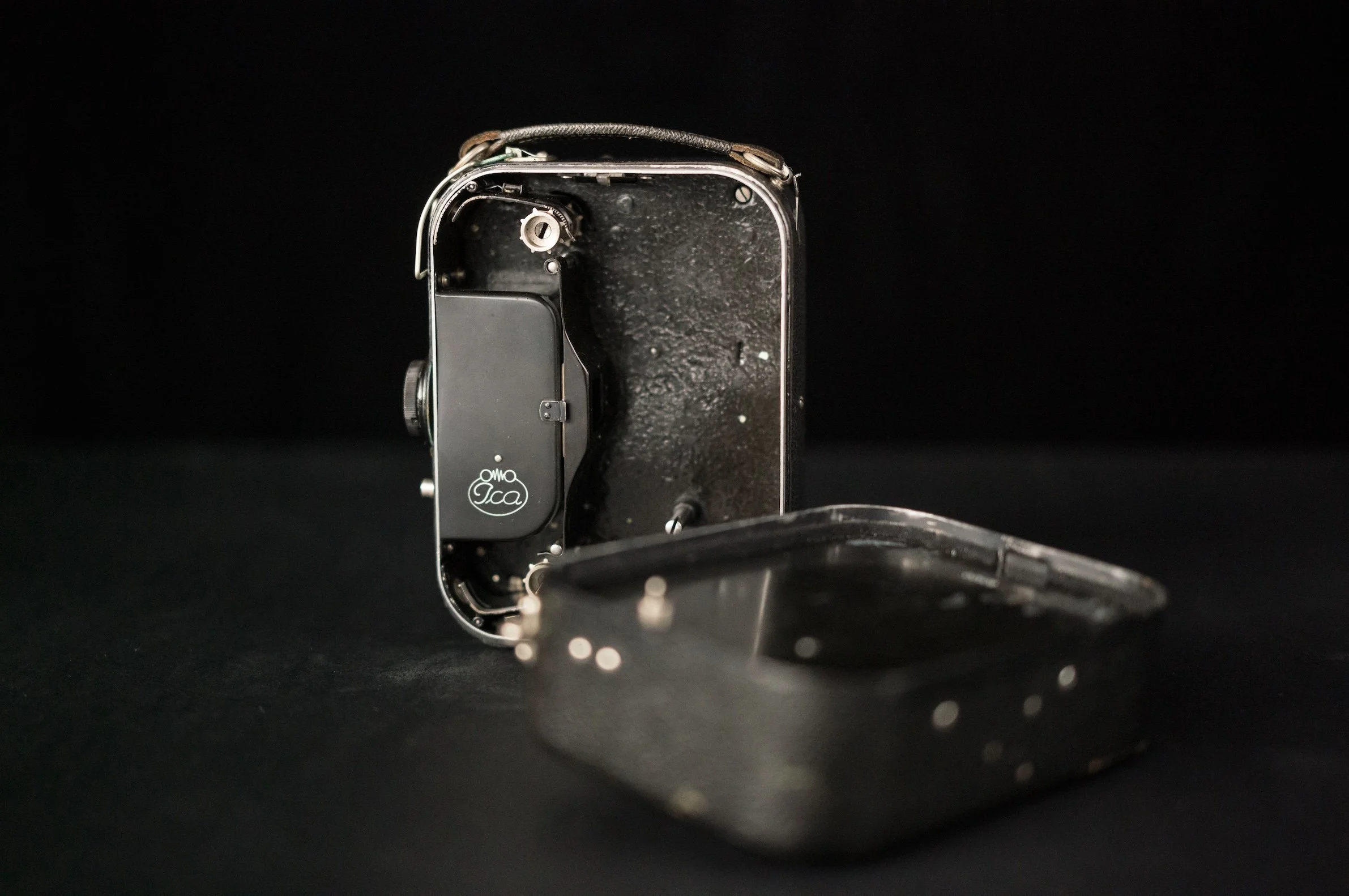
Eliminating the tripod meant eliminating the crank. That left two options: an electric motor, which was impractical outdoors in the early 1920s, or a spring-wound clockwork motor — like those used in clocks. Goldberg chose the spring. It was a genuine engineering challenge. A wound spring gradually loses tension as it unwinds, so the mechanism had to convert that diminishing energy into perfectly regulated, consistent film movement. It also had to drive the shutter, the film gate, the take-up spool, and a slipping clutch — all from a single compact package.
“With its spring-driven mechanism, the Kinamo offers the amateur filmmaker a host of astonishing new creative possibilities. One is no longer dependent on a tripod; instead, holding the camera freely in one’s hand, one can follow the movements and shifting positions of the subject at will.”
“While we other comrades enjoyed the evening in the cozy hut on the Schwarzwasser Alp, having fun, eating, drinking, smoking, and singing, happy to be far from our jobs, Goldberg unpacked from a backpack an entire arsenal of small tools and worked for hours on the first Kinamo model, which he had brought, a new movie camera that he was developing then in Dresden.”
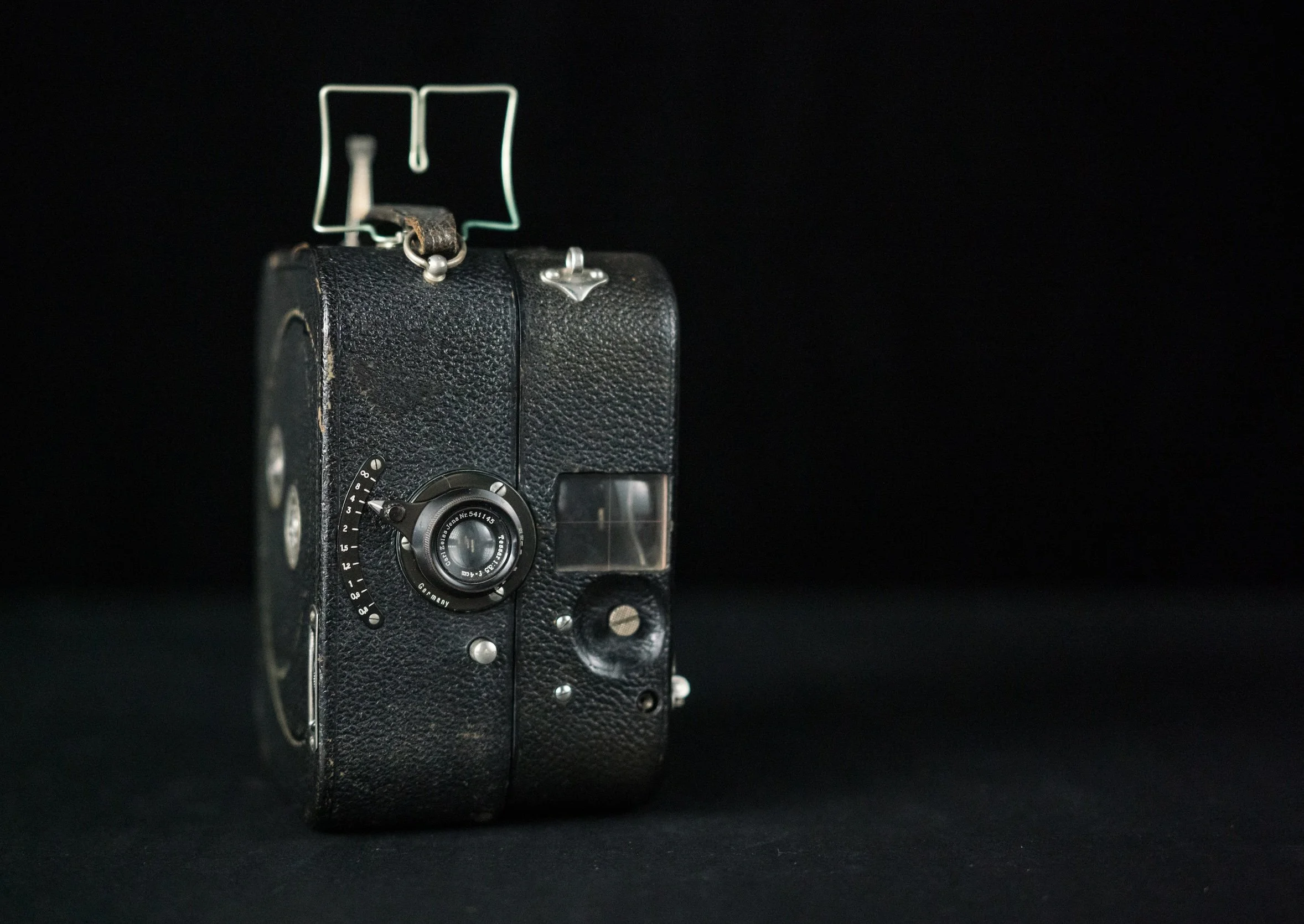
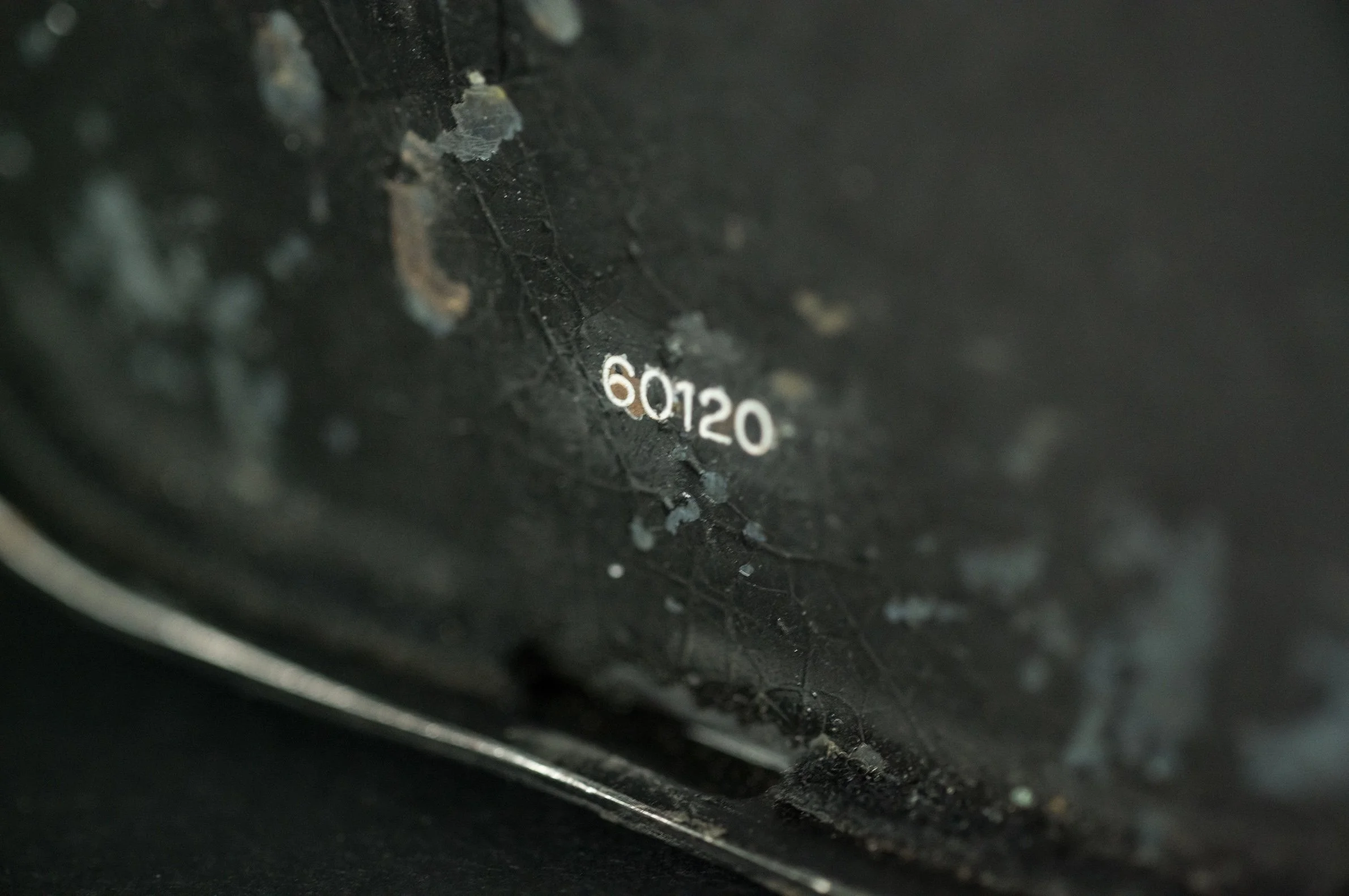
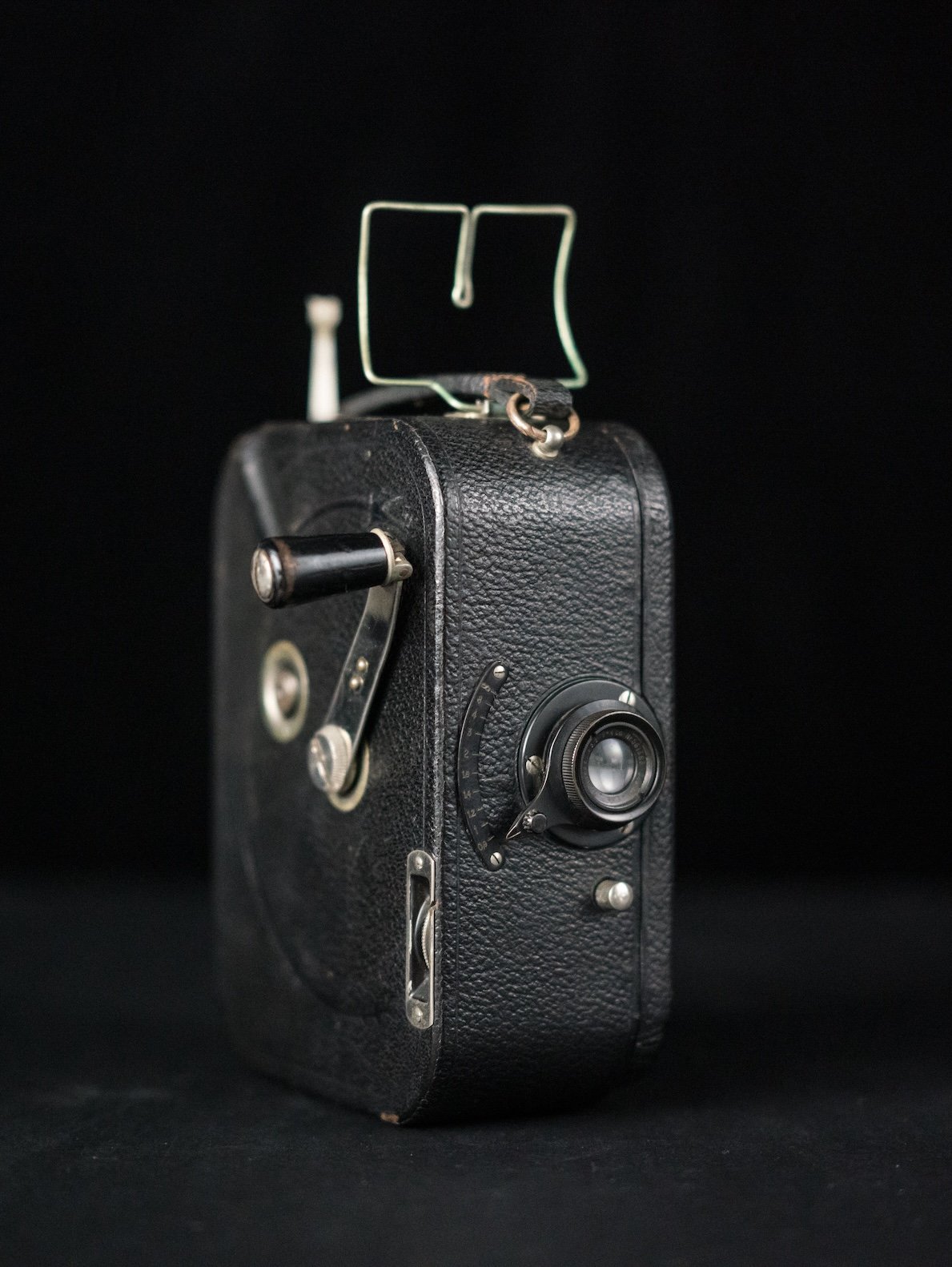
Kinamo 5402/4, serial number 60124
Goldberg was determined to make the spring motor reliable in cold weather too. When early prototypes failed in freezing temperatures, he left cameras out overnight and disassembled the motor section each morning until he found the problem.
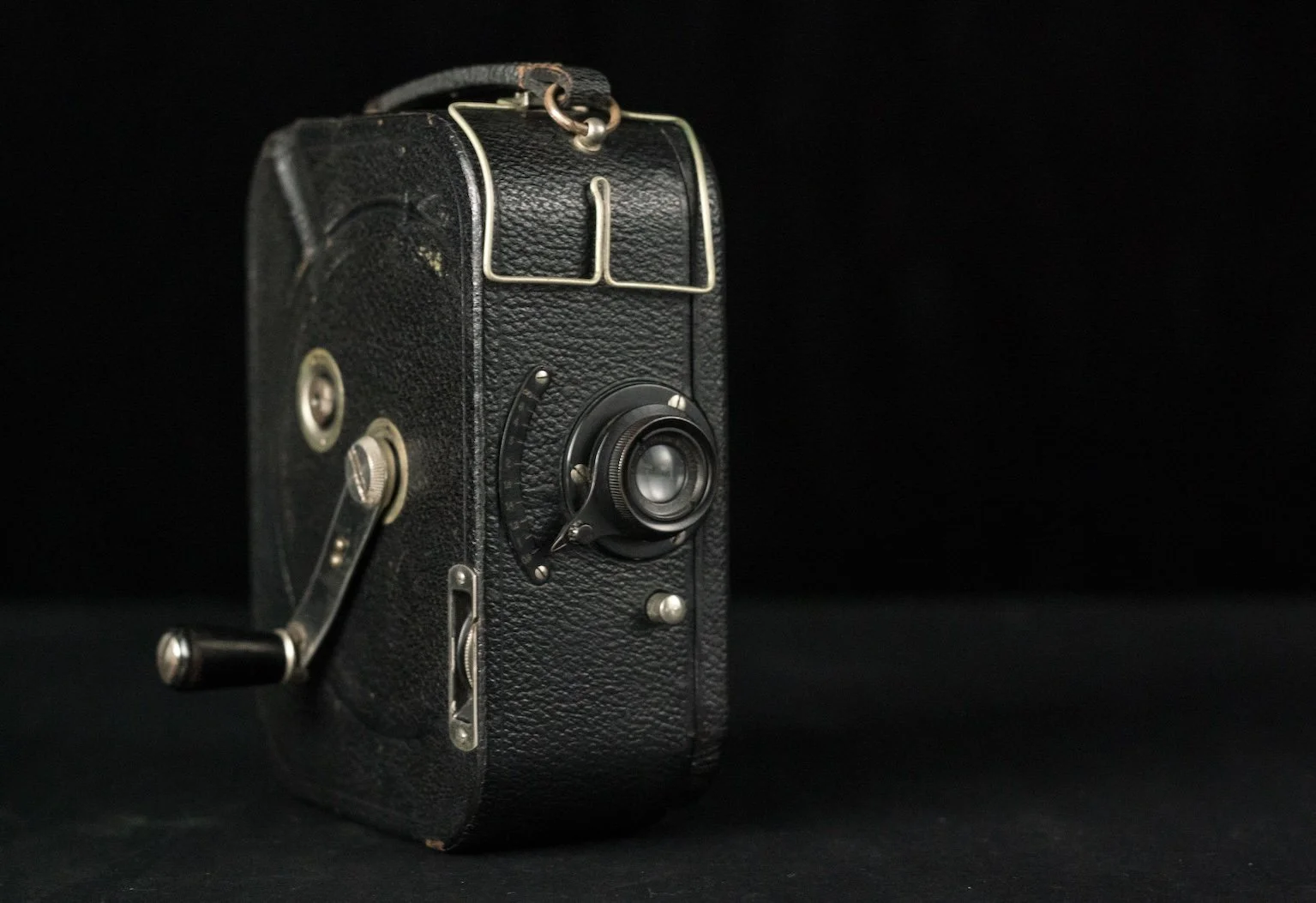
Kinamo 5402, serial no. 54296
The Name
The name Kinamo came from Goldberg's studies of Greek and Latin: kine (Greek: motion) + amo (Latin: I love) = "I love movies." Ica embraced the wordplay, coining derivative terms like Kinamofilm, Kinamomann, and the verb kinamographieren — to make a film using a Kinamo.
The Camera
The first Kinamo, the N25, came to market in 1921 as a hand-cranked model. The spring-driven motor attachment arrived in experimental use as early as 1923 and was marketed in 1924. The camera was remarkably compact for what it could do — loaded with up to 25 metres of standard 35mm film and still small enough to hold in one hand. It was effectively the smallest practical 35mm camera of the 1920s — only one smaller model existed, limited to just 5 meters of film. Dimensions varied by model and configuration, with the body of the 15m variations being slightly smaller.
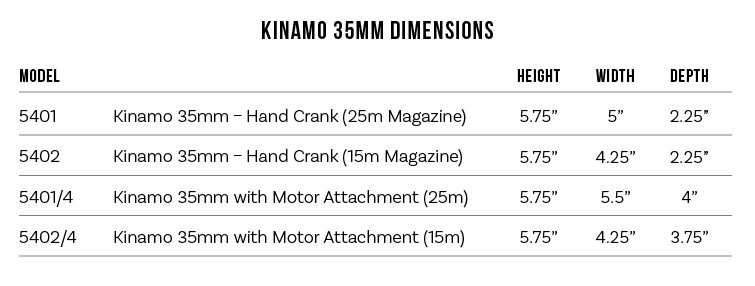
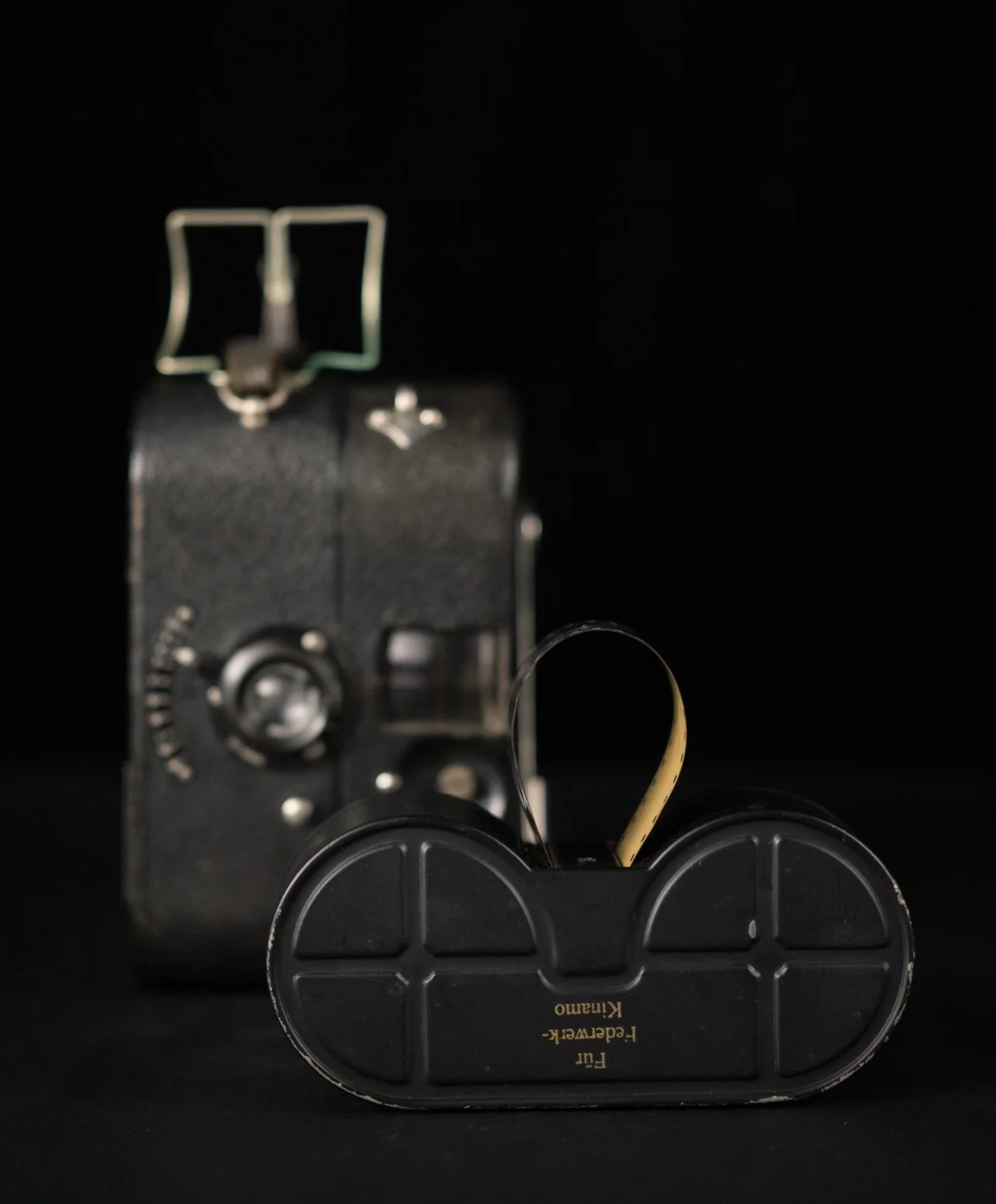
The first hand-cranked Kinamo (product code 5401) used film cassettes holding up to 25 metres of standard 35mm film. A variant model, the 5402, was also sold, limited to 15 metres. In the US, they were simply known as the Kinamo A (with motor) and Kinamo B (hand cranked).
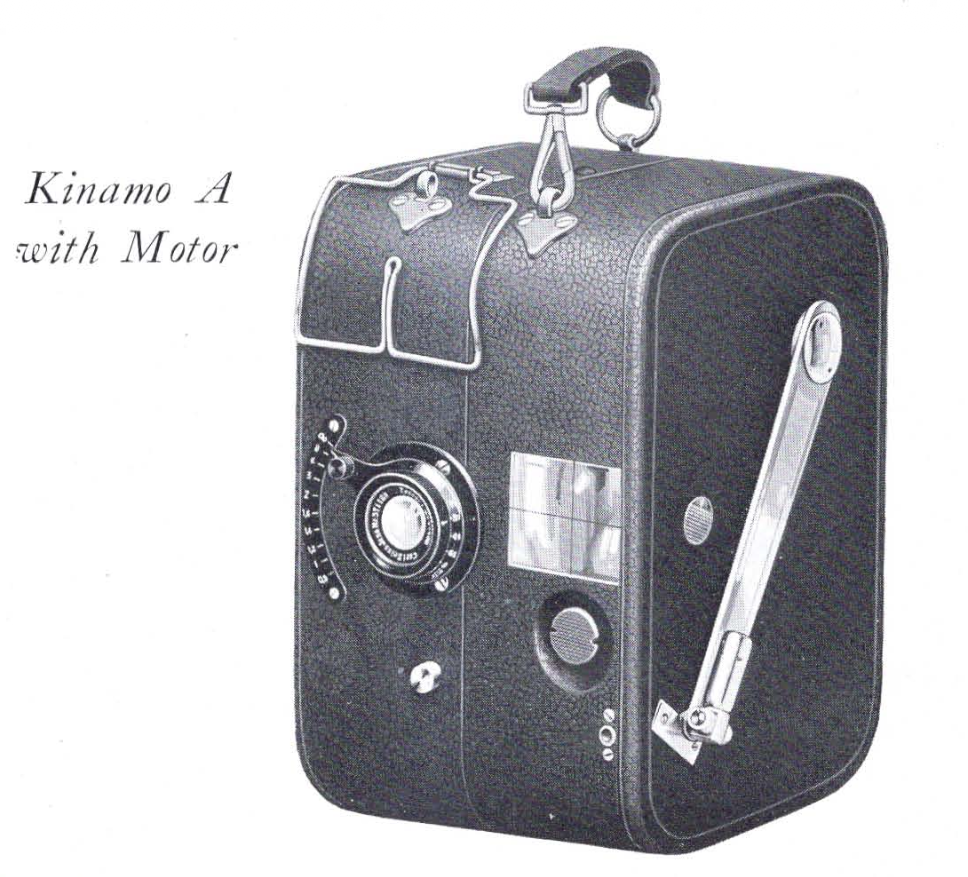
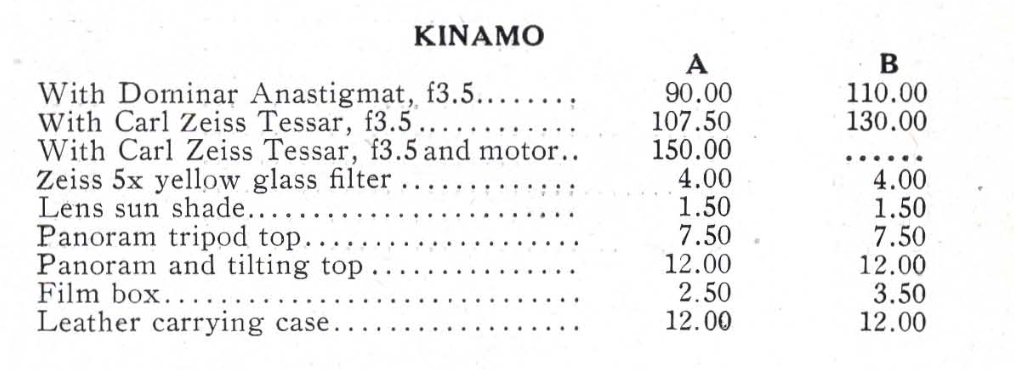
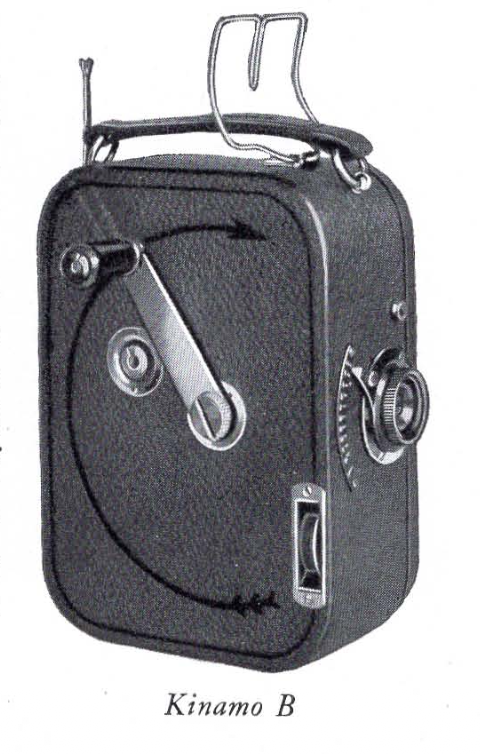
The spring-driven motor attachment was a removable unit that clamped to the side of the camera, doubling its width. The motor was sold in two versions — with or without a delayed-action release (5401/6 and 5401/4 respectively) — allowing the filmmaker to start the timer and step into the scene before filming began.
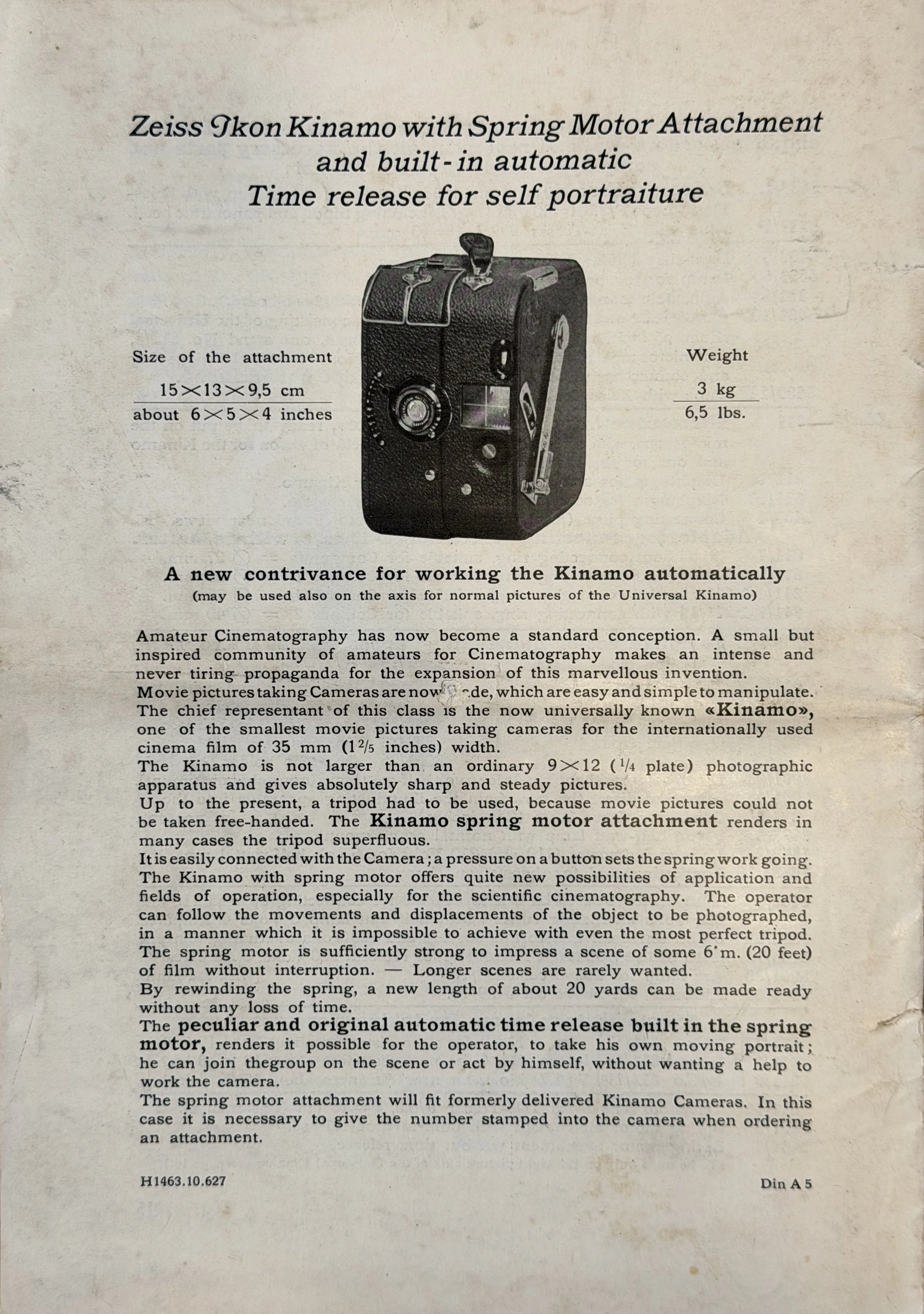
“Nothing has been sacrificed in the quality, durability or construction of the Kinamo, although it is the smallest practical, standard size motion picture camera made. It is not a plaything; in fact, Kinamo pictures of standard size are equal to the best work the most expensive professional camera can produce.”
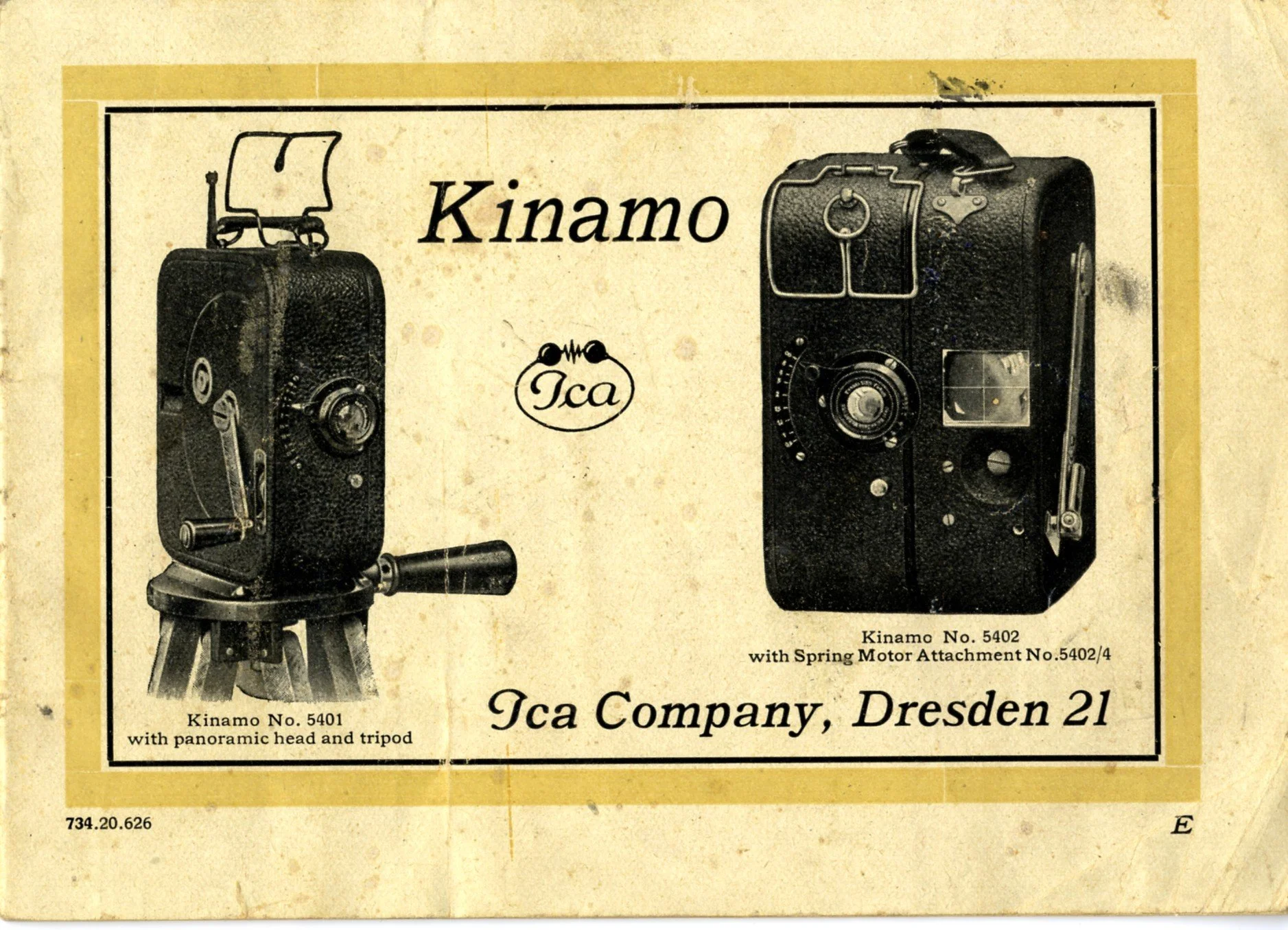
Ica Catalog c1924
The design was full of practical features aimed squarely at ease of use:
Film is housed in light-tight cassettes that could be changed in full sunlight
A button punched the film to mark scenes
A second gear reduced filming speed for slow-motion or trick photography, including cloud movement
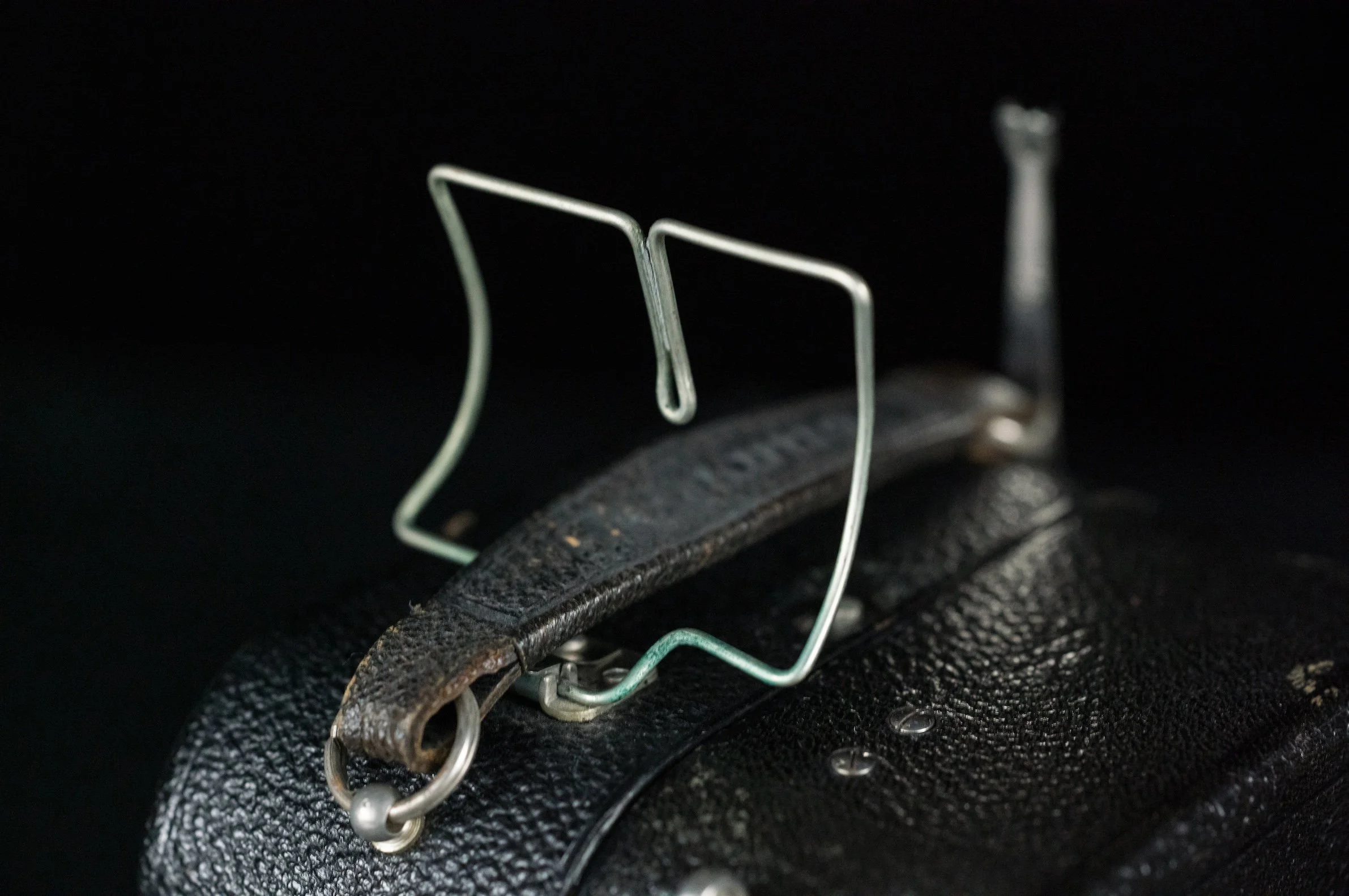
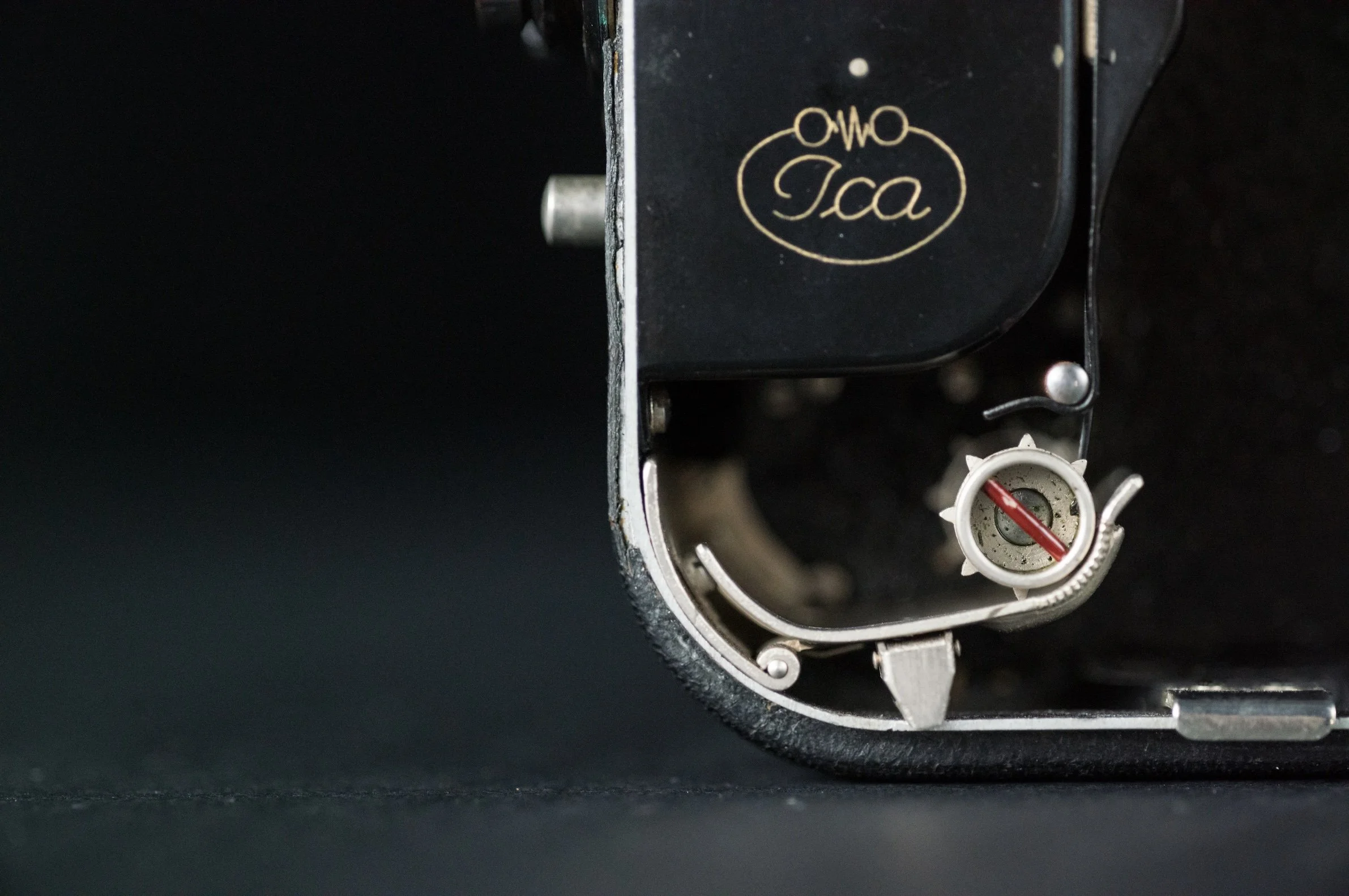
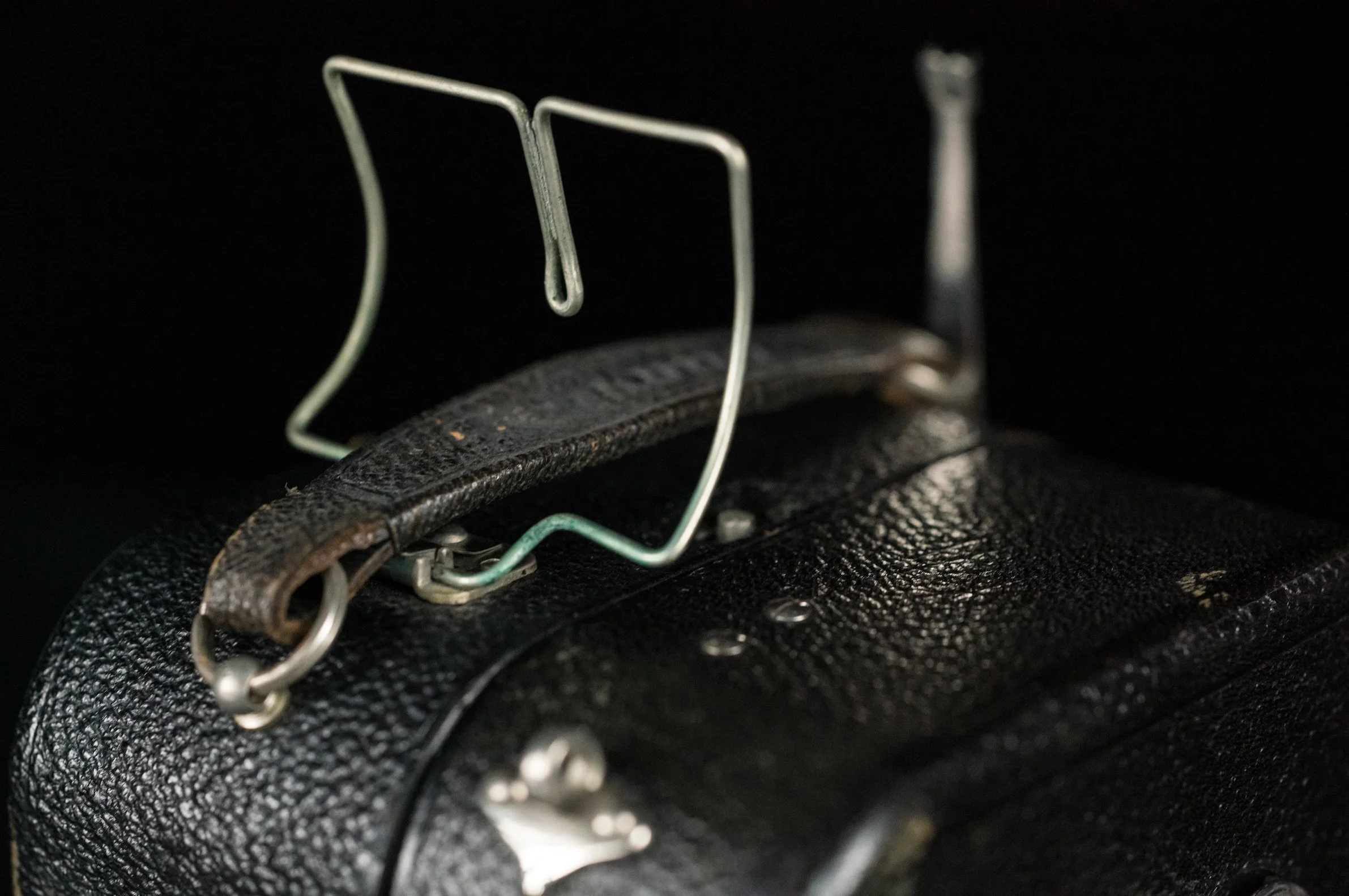
A delayed-action release allowed the camera operator to step in front of the lens before filming began — you placed a scrap of paper or a leaf in a small clamp on the front of the camera. When the mechanism released, the paper fluttered to the ground as a visual signal that filming was about to start
That last feature was the key to Goldberg’s own promotional films, where he starred in his own productions — appearing on screen alongside his family while operating the camera himself.
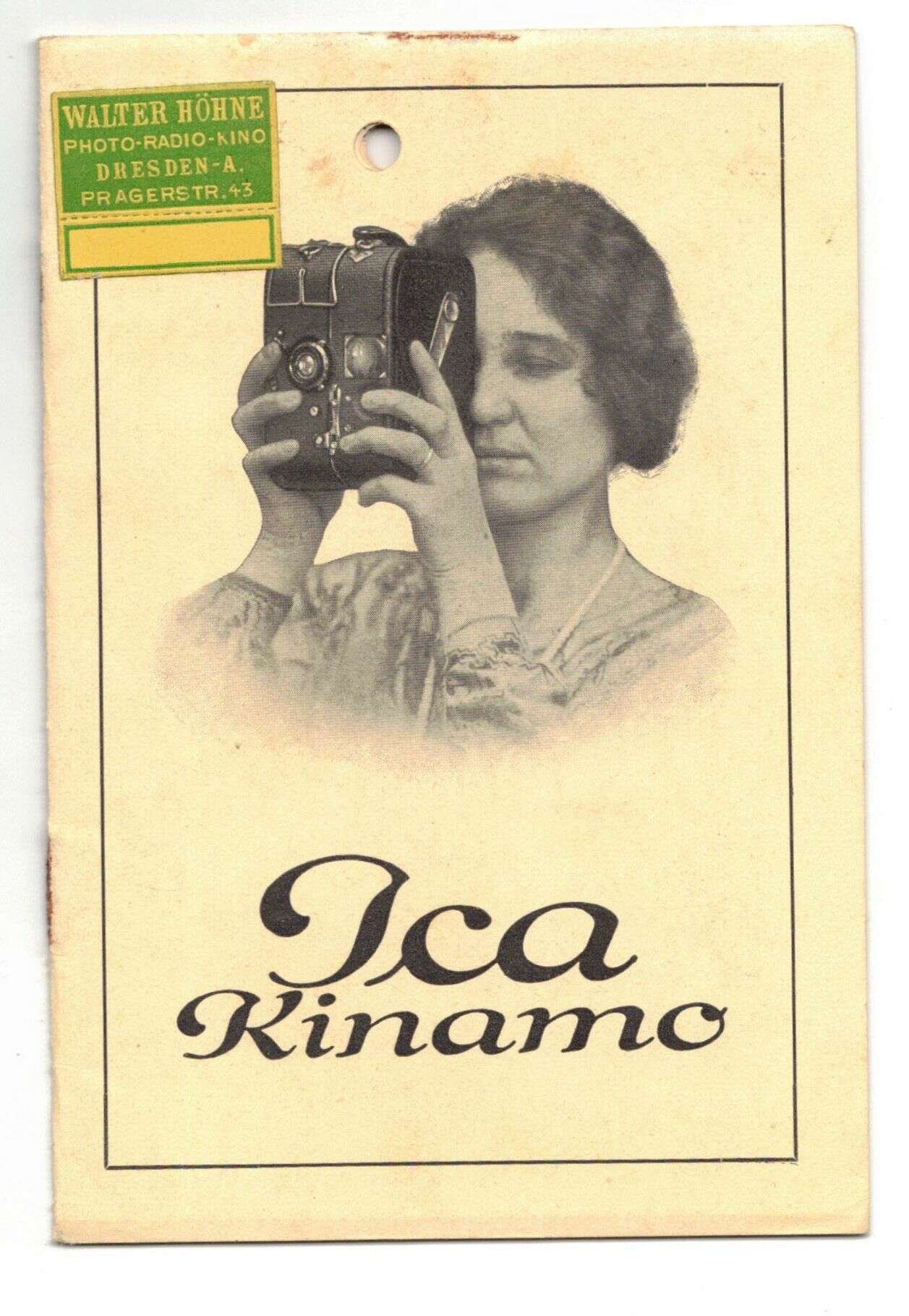
“Its small size permits its being made use of without any risk of detection, so that it becomes possible to secure what may have been prohibited, and besides, it can be called to do work where it would be hazardous or even impossible to introduce the ordinary movie camera.
One may see from all this how invaluable it is to the explorer, the traveler, the newspaper reporter, and the naturalist, inasmuch as it offers no impediment upon a protracted journey.”
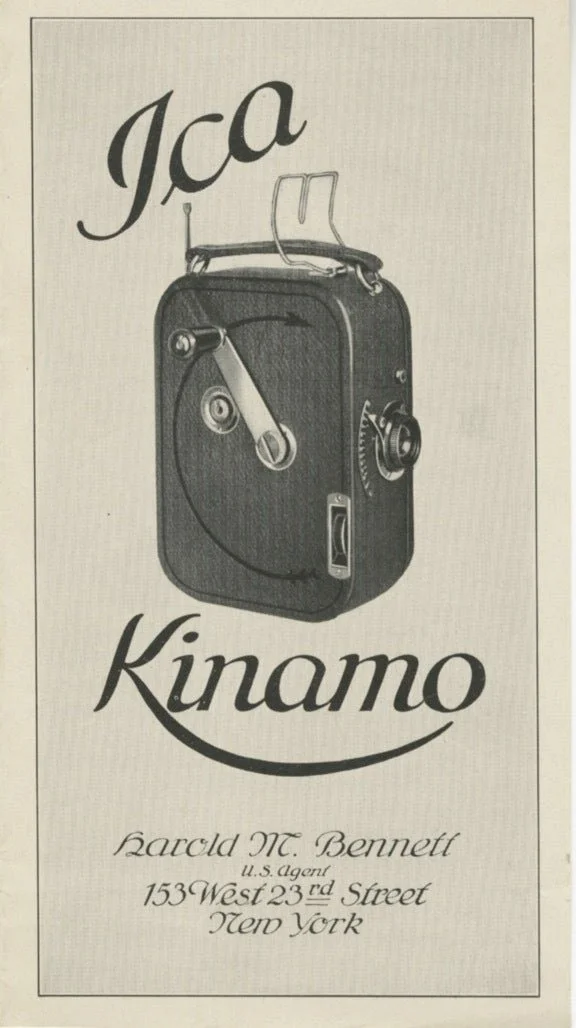
Kinamo introduced in the U.S.
Joris Ivens, Dutch documentary filmmaker and his Kinamo
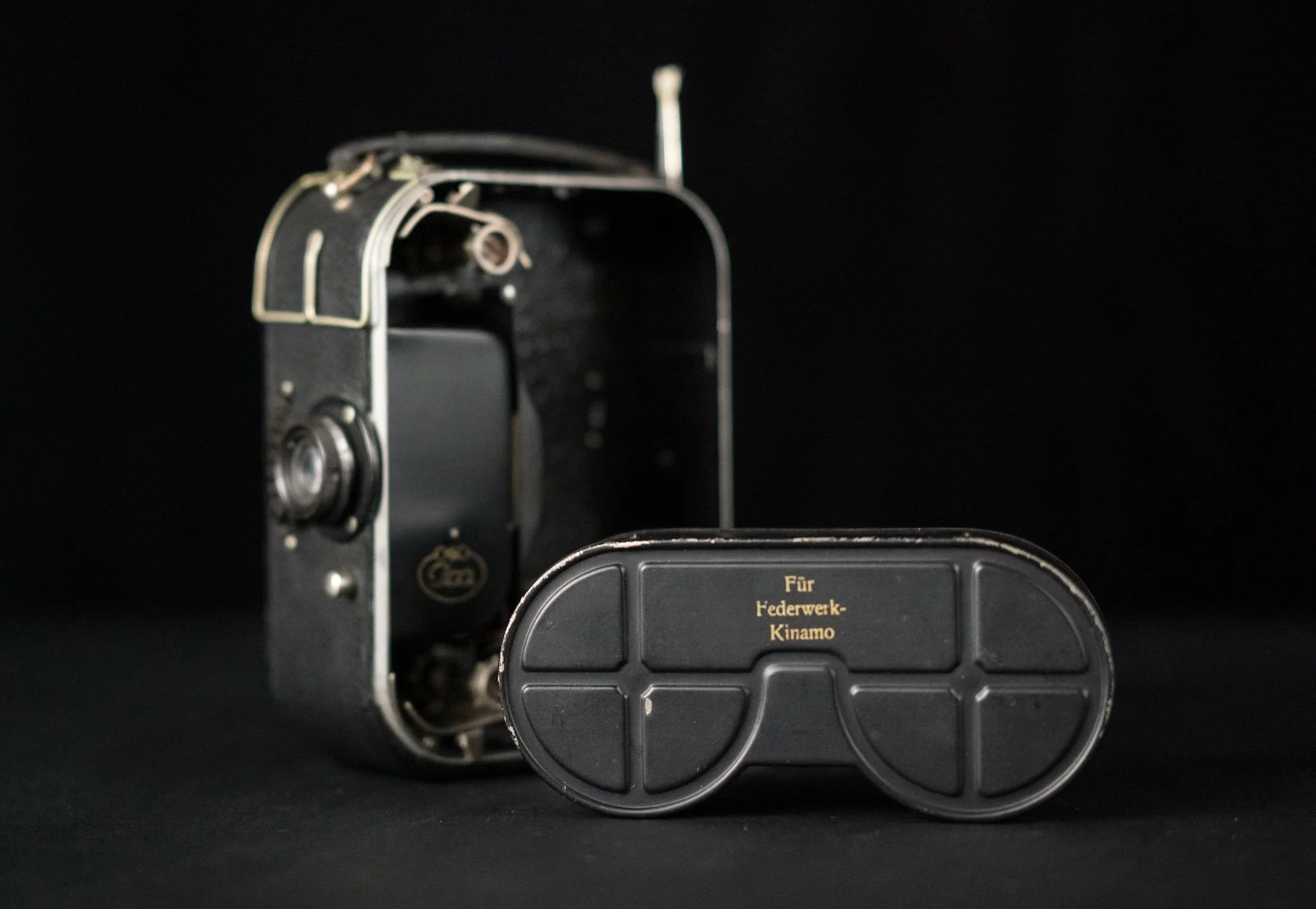
The Panoramic Head
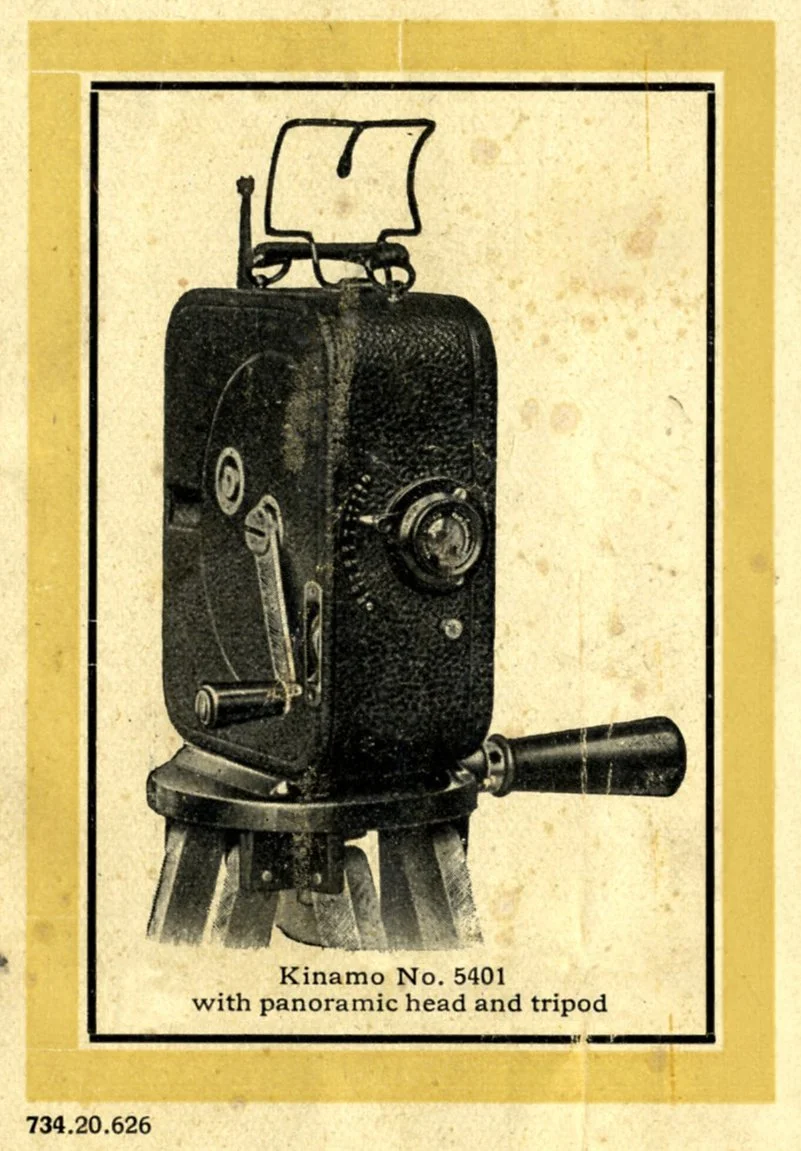
The camera was sold with a unique panoramic head and tripod, a combination that is rarely seen today. As described in the manual:
In cinematography, it is often necessary to alter the camera's direction of view while recording. To this end, a particularly simple panoramic head was designed, which is also compatible with any tripod previously supplied.
In this way, one can capture circular landscape shots — which appear highly captivating during projection — or keep subjects in lively motion continuously within the viewfinder's field of view. When executing a shot using the panoramic head, the left hand should be placed firmly on the handle. To perform a panning motion, the pressure of the hand on this handle is eased, and the tripod head — along with the camera — is rotated slowly.
Caution! Moving the panoramic head too rapidly results in blurred footage — a frequently occurring error.
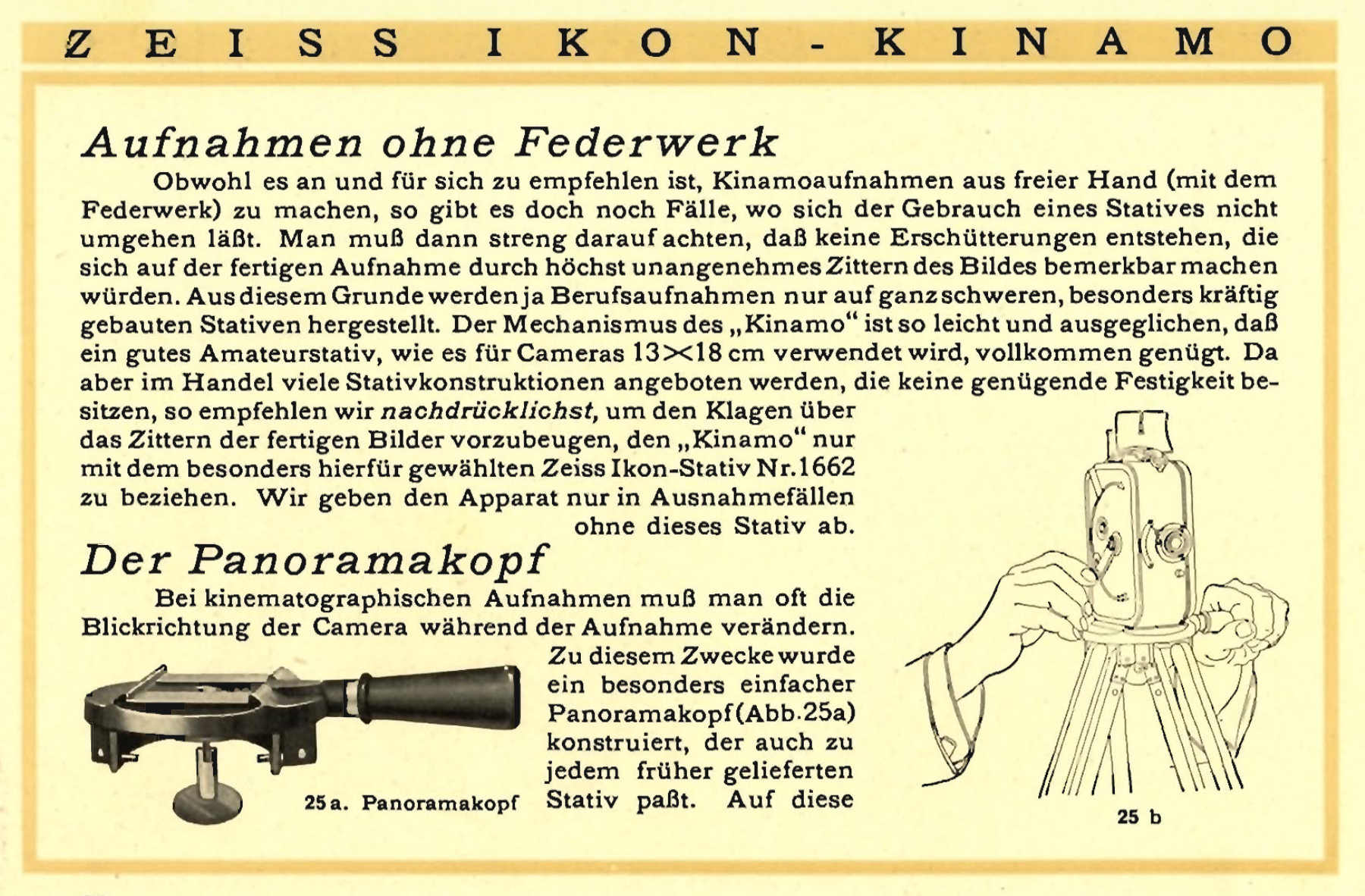
“...given that the market offers numerous tripod designs lacking sufficient stability, we most emphatically recommend—in order to preclude any complaints regarding image unsteadiness in the final footage—that the “Kinamo” be purchased exclusively in conjunction with the Zeiss Ikon Tripod No. 1662, which has been specifically selected for this purpose. We supply the camera without this tripod only in exceptional circumstances.”
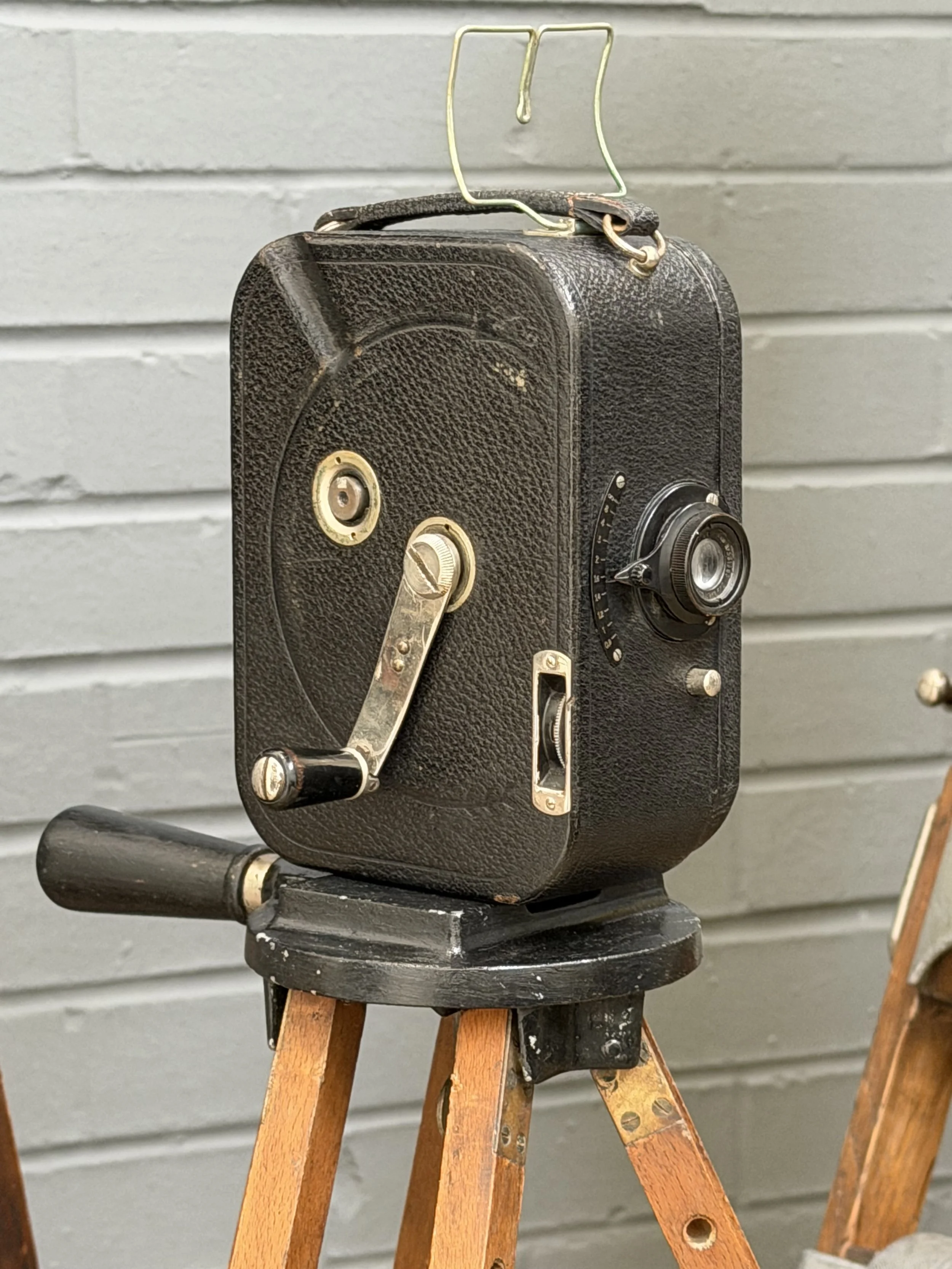
Zeiss/Ikon Panoramic Head for Kinamo 35mm
An Improved Model
Around 1927 a new model was introduced, the Universal Kinamo, adding two more film speeds and a simple attachment that enabled contact printing from existing film. As 16mm safety film grew in popularity, Zeiss Ikon — formed in 1926 from the merger of Ica with Ernemann, Contessa, and Goerz — introduced the Kinamo S10 for 10-metre cassettes of 16mm film, later refining it into the improved KS10. Kinamo production wound down around 1938 with the arrival of the Movikon 8mm and 16mm cameras.
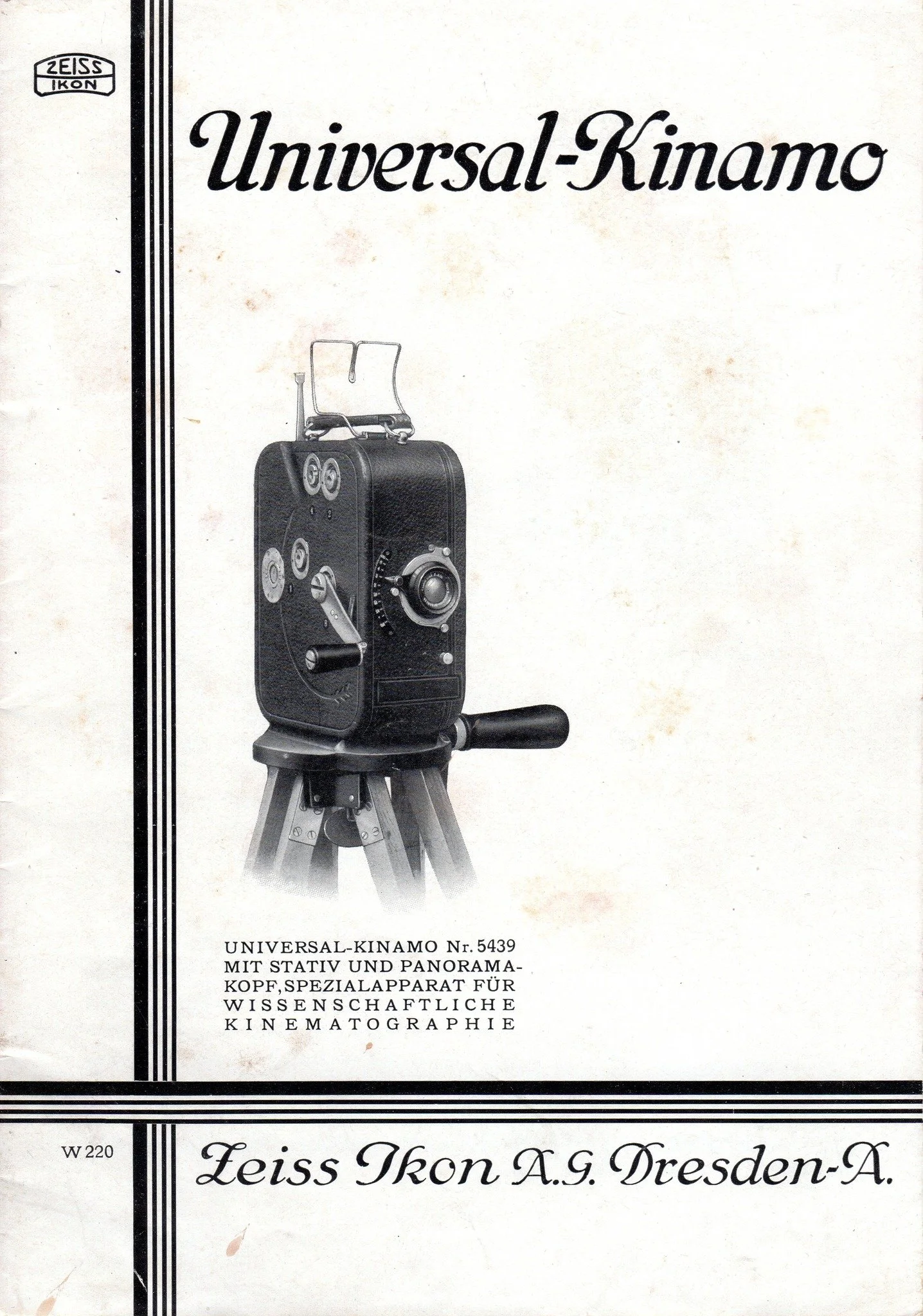
Universal Kinamo
Goldberg's Own Films
Goldberg used the Kinamo to produce a series of short films starring himself, his wife Sophie, his son Herbert, and his daughter Renate. Three complete shorts and one fragment survive, preserved in 16mm copies made decades later from deteriorated 35mm originals.
Im Sonneck (In the Sunny Corner, 1924) — Scenes from a day in the life of two-year-old Renate, looked after by her older brother Herbert.
Im Sonneck (In the Sunny Corner, 1924)
Zeltleben in den Dolomiten (Camping in the Dolomites, 1925) — Goldberg sets up camp in an alpine valley, climbs above the treeline, and films spectacular cloud sequences. He operated the camera himself using the delayed-action release to step into his own scenes.
Zeltleben in den Dolomiten (Camping in the Dolomites, 1925)
Die verzauberten Schuhe (The Magic Shoes, 1927) — The most ambitious of the shorts, a 13-minute comedy about a vacationing family in the Alps, complete with a storm sequence, a reconciliation, and children playing in a sunlit meadow. It was shot in the Dolomites during a family trip following his daughter Renate's recovery from pneumonia.
Die verzauberten Schuhe (The Magic Shoes, 1927)
These films were later repackaged as promotional shorts for Ica and Zeiss Ikon, with intertitles promoting handheld filming and the Kinamo brand — championing the idea that anyone could make a film at a time when home movies were still a novelty. Goldberg's films, however, show sophisticated composition, careful editing, and skillful use of backlighting and shadows. They are anything but amateur.
Joris Ivens
The Kinamo's most significant user outside of Goldberg himself was Joris Ivens, the Dutch documentary filmmaker. Ivens came to Dresden to learn the photography trade and worked briefly on the Kinamo assembly line at Ica, where he met Goldberg personally.
“In the mechanical workshop, one man made a great impression on me: Professor Goldberg. He was an inventor who had just perfected a marvellous little camera, the famous Kinamo, a professional 35mm spring-driven camera of a robustness and precision that was astonishing for its time. From this man I learned the basic principles of this kind of machine and I meddled with the secrets of manufacture.”
Back in the Netherlands in 1927, Ivens experimented with handheld filming inside a bar on the Zeedijk using a Kinamo borrowed from his father's store. The experience changed how he thought about cinema. He described it this way: "That day I realized that the camera was an eye and I said to myself, 'If it is a gaze, it ought to be a living one.'"
He went on to film De Brug (The Bridge, 1928) with the same borrowed Kinamo — a fast-paced, rhythmic documentary study of a Rotterdam railway bridge that is still considered a landmark of avant-garde filmmaking.
De Brug (The Bridge)
He also used Kinamos for Regen, Borinage, Indonesia Calling, and others. On the Borinage shoot in 1933, the camera's small size proved critical — it was easily concealed from police and reportedly saved Ivens from arrest on at least one occasion.
Other filmmakers documented as Kinamo users include Boris Kaufman, Henri Storck, Dziga Vertov, Ella Bergmann-Michel, and Jacques Cousteau.
Beyond Home Movies
Goldberg and Ica were careful to position the Kinamo as more than just a home movie camera. In the USA it was marketed as a "semi-professional" camera. A range of specialized accessories extended its capabilities well beyond the living room.
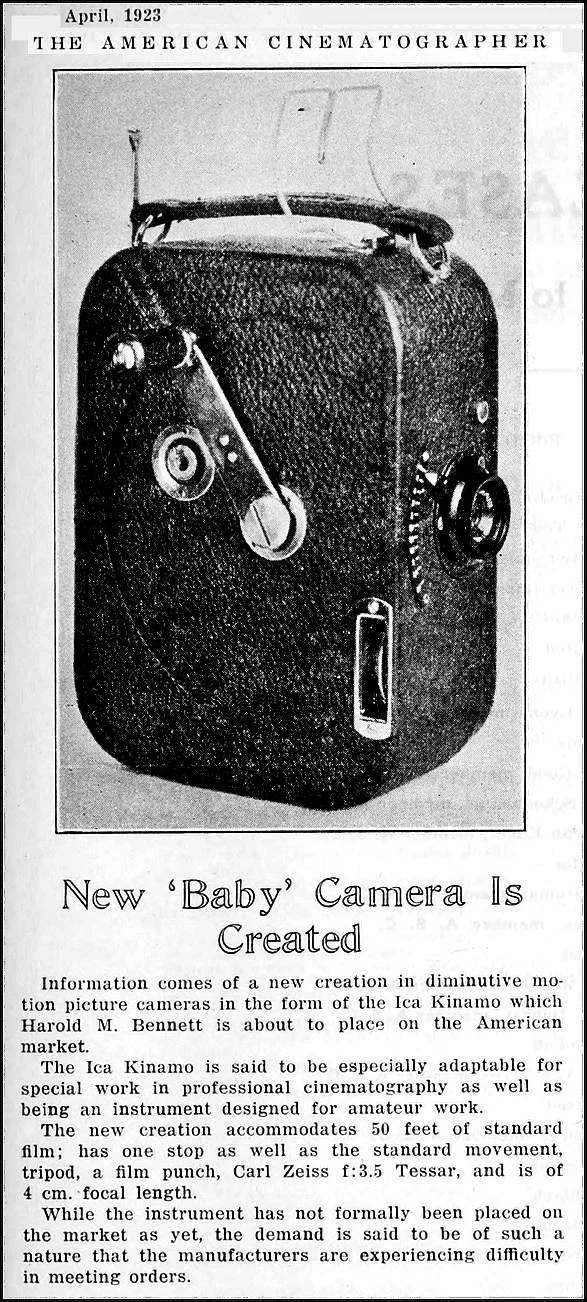
Introduced in the U.S. in 1923
The Goldberg Mikrophot microscope attachment allowed the Kinamo to film objects through a microscope, using a partially silvered mirror to redirect 99% of the light sideways into the camera while still allowing the operator to focus through the eyepiece in the normal way.
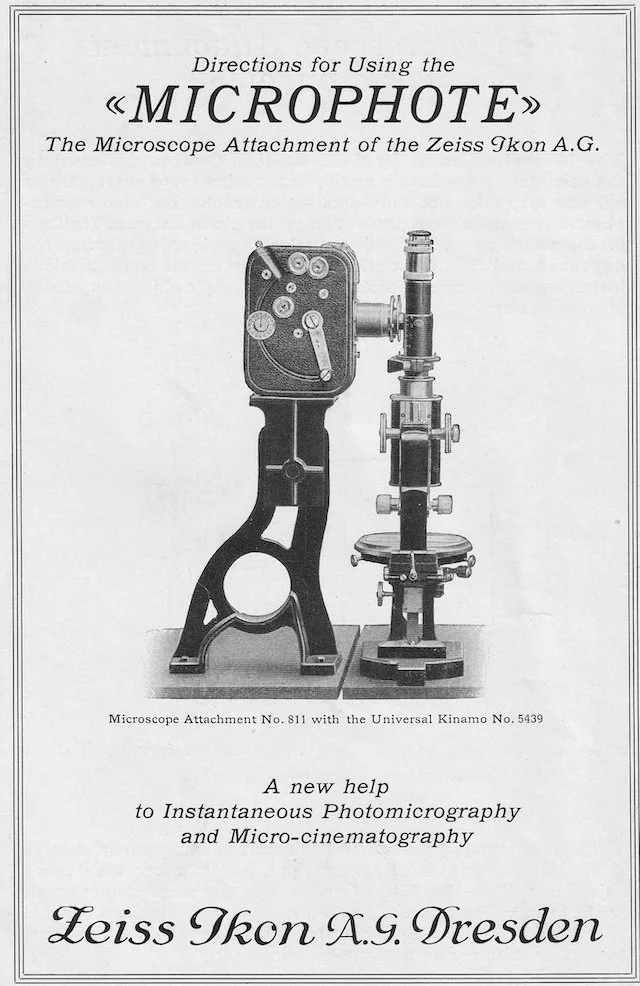
Kinamo Microscope Attachment No. 811 (click for full document)
Zeiss Ikon also deployed the Kinamo in an industrial data processing system for telephone companies. A mechanized Kinamo photographed telephone exchange dial counters — about 100 subscriber numbers per frame — onto 35mm microfilm. A custom workstation then displayed two rolls of film side by side (current and previous month), allowing a billing clerk to read and calculate each subscriber's charges in a single motion. The system reportedly reduced labor by more than 80 percent and cut errors by over 98 percent.
Variable Shutter
A late Zeiss Ikon-branded Kinamo with a variable shutter is known to exist, though no documentation has surfaced to confirm whether this was ever an official option. It may have been a custom order for a specific client or a feature introduced late in production.
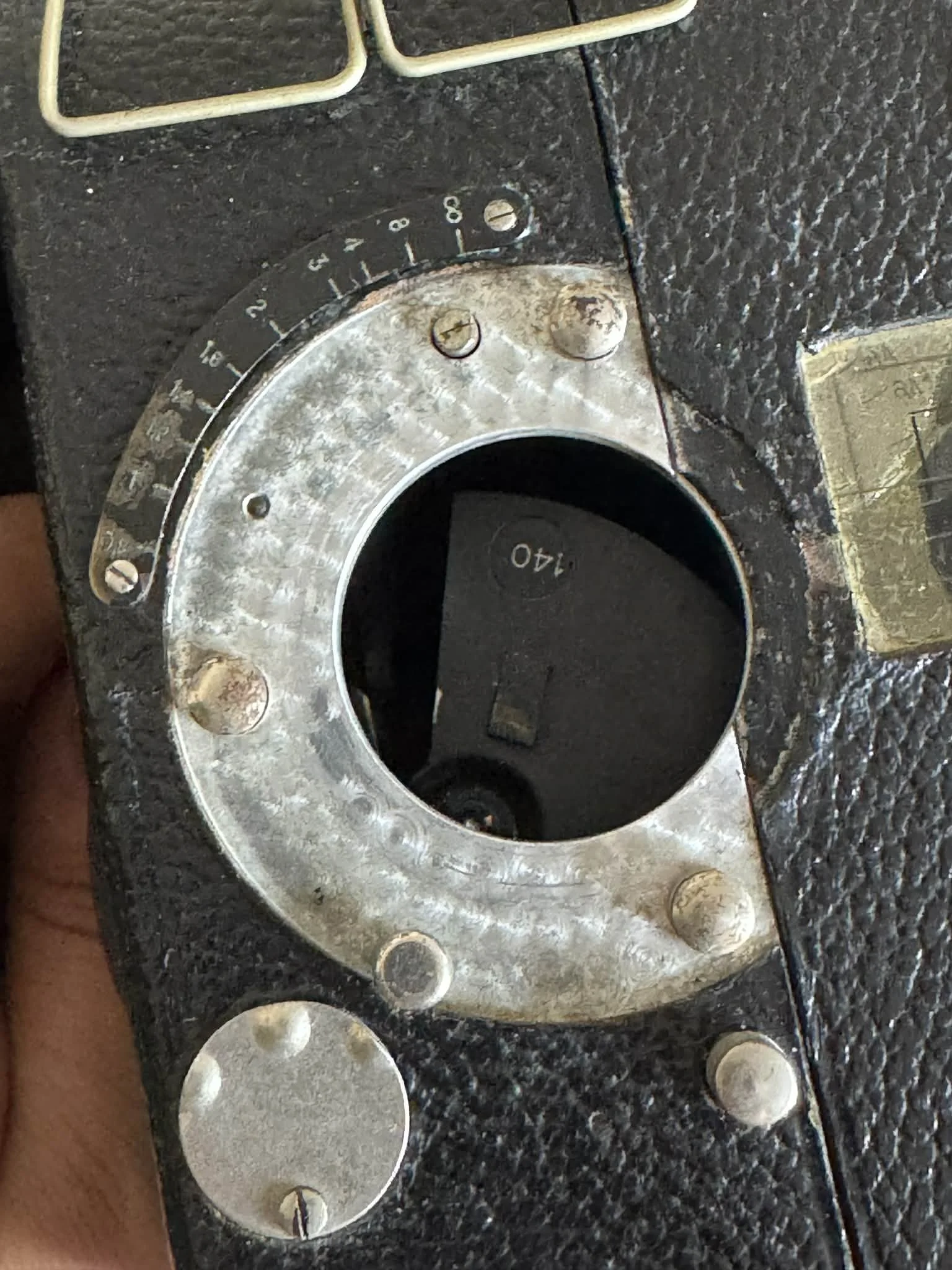
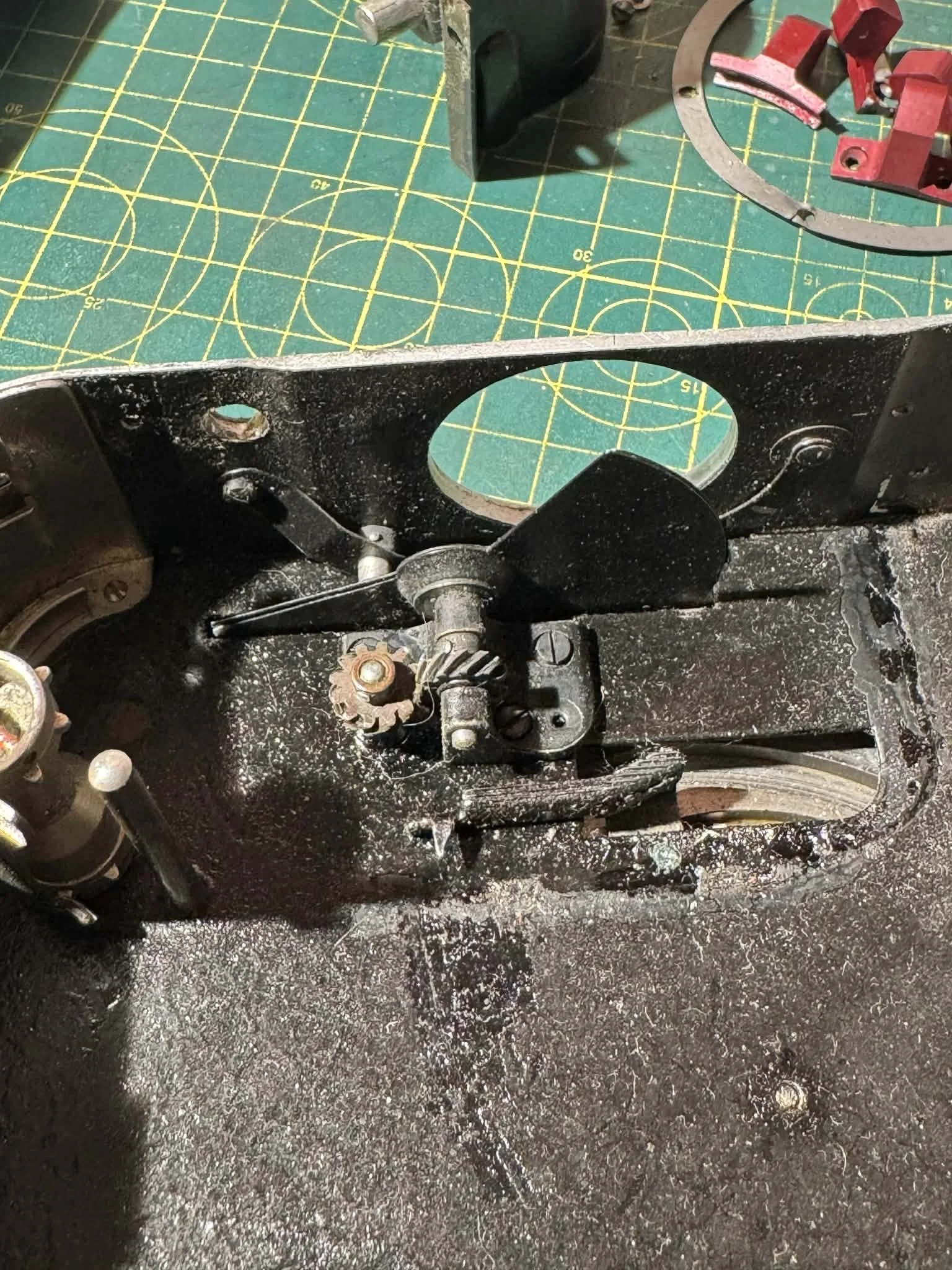
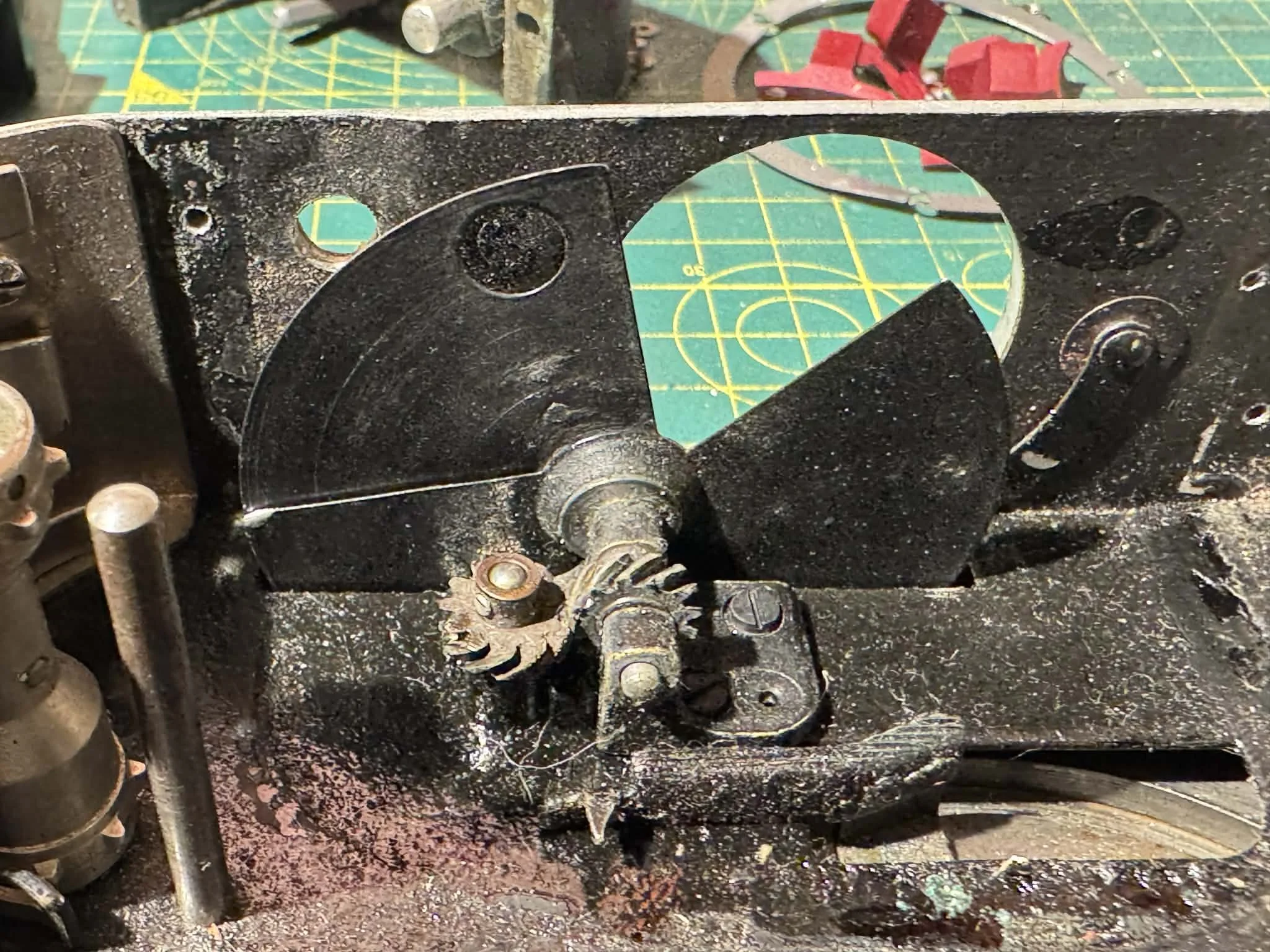
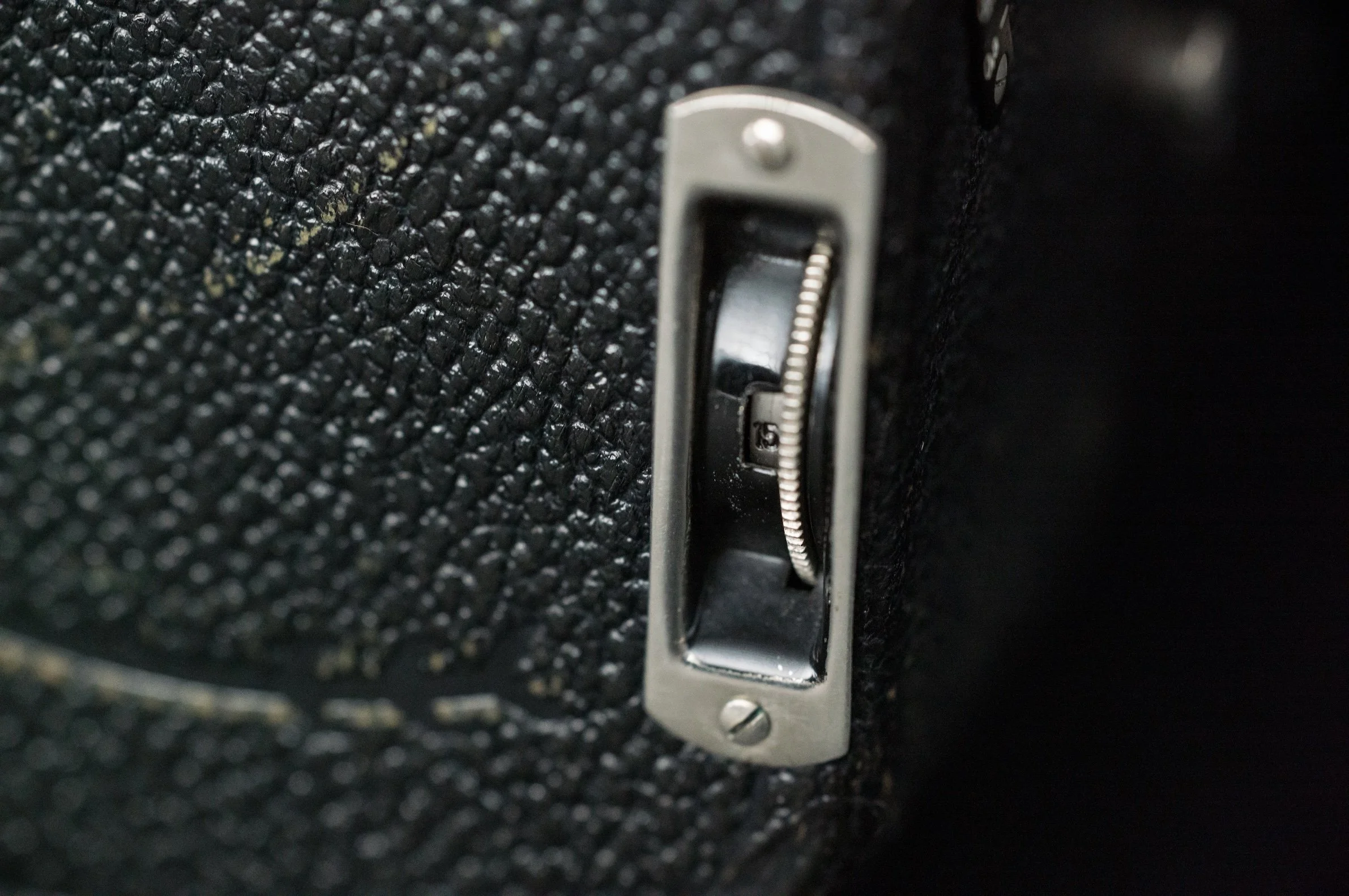
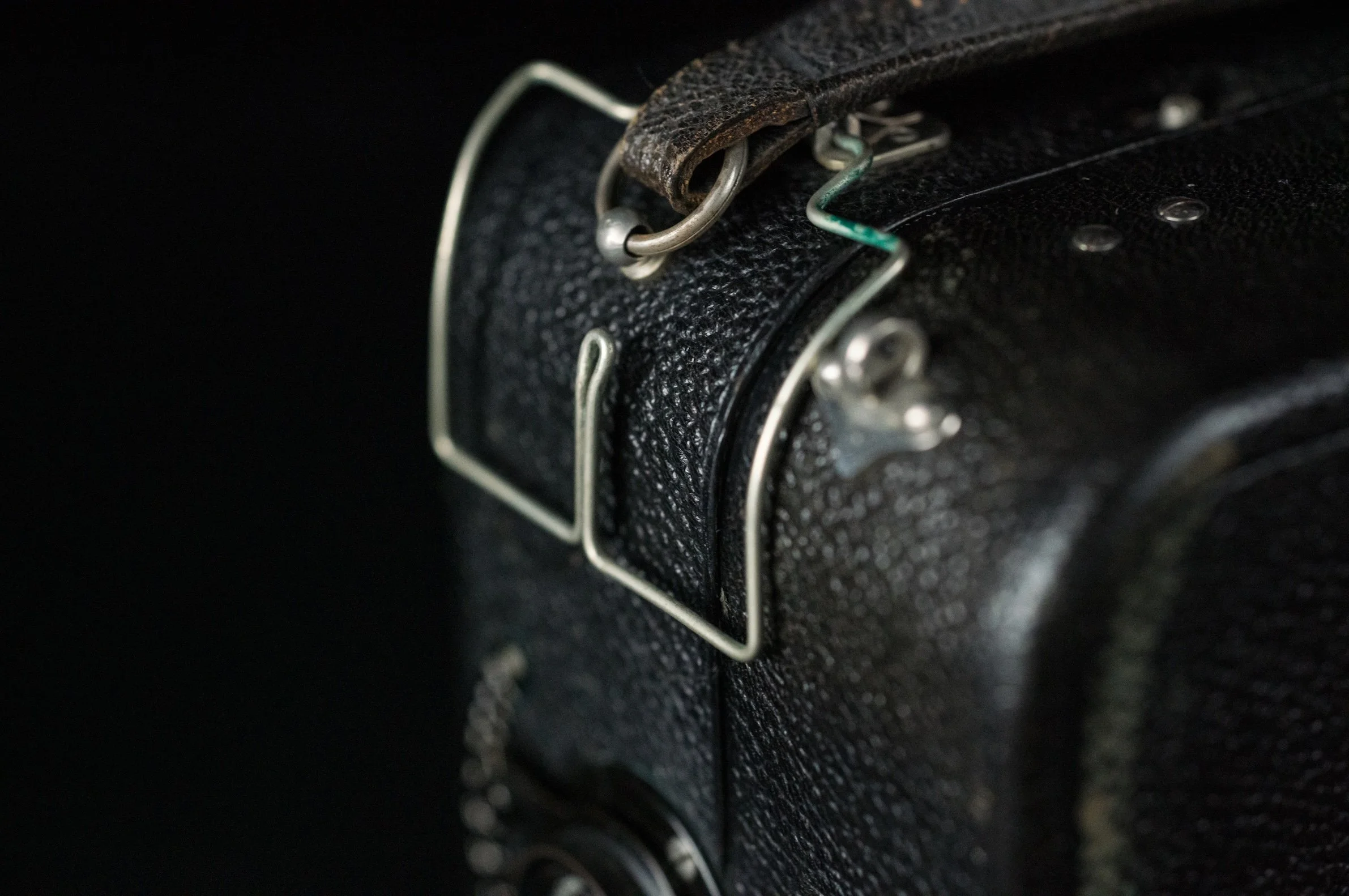
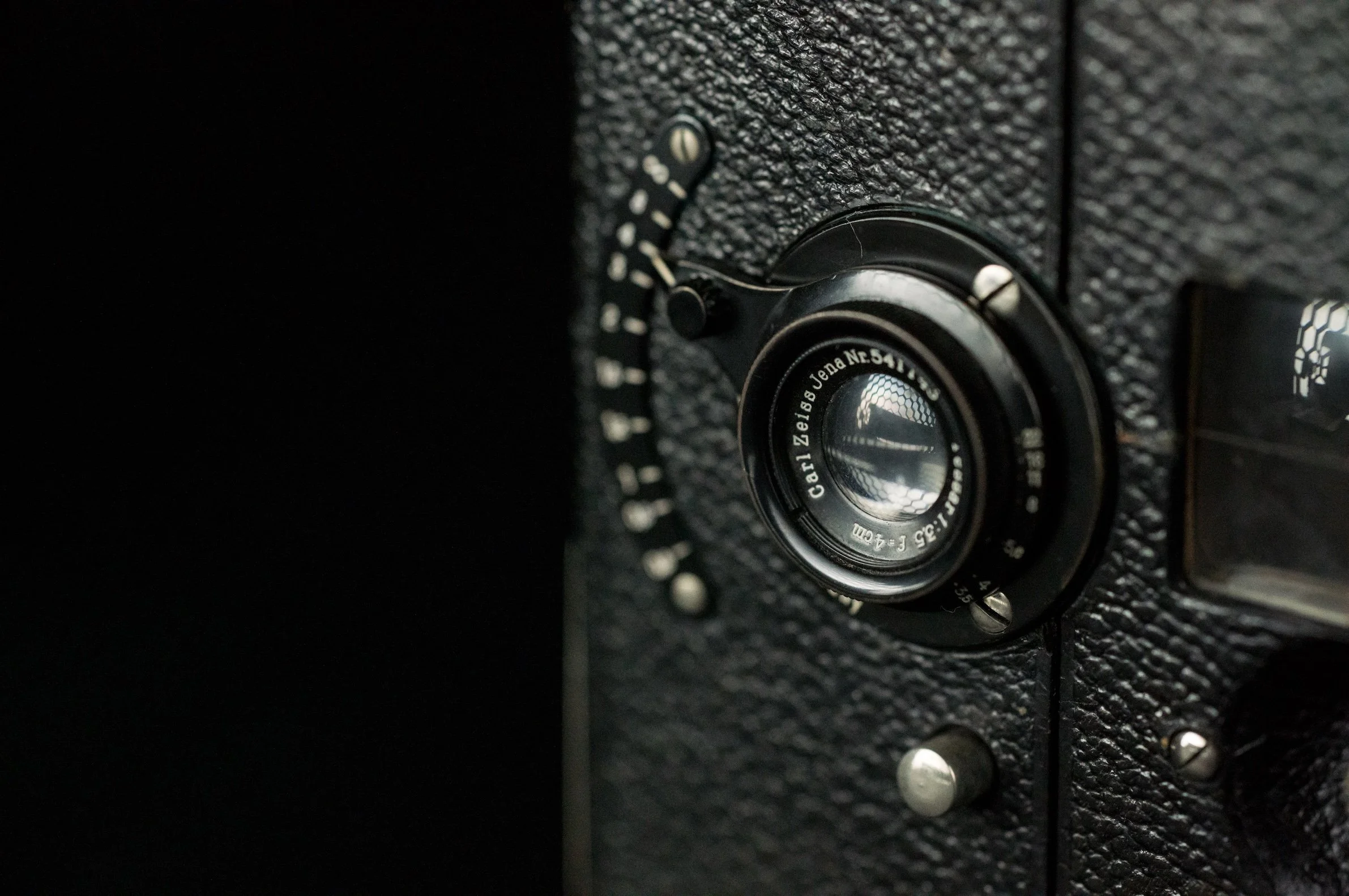
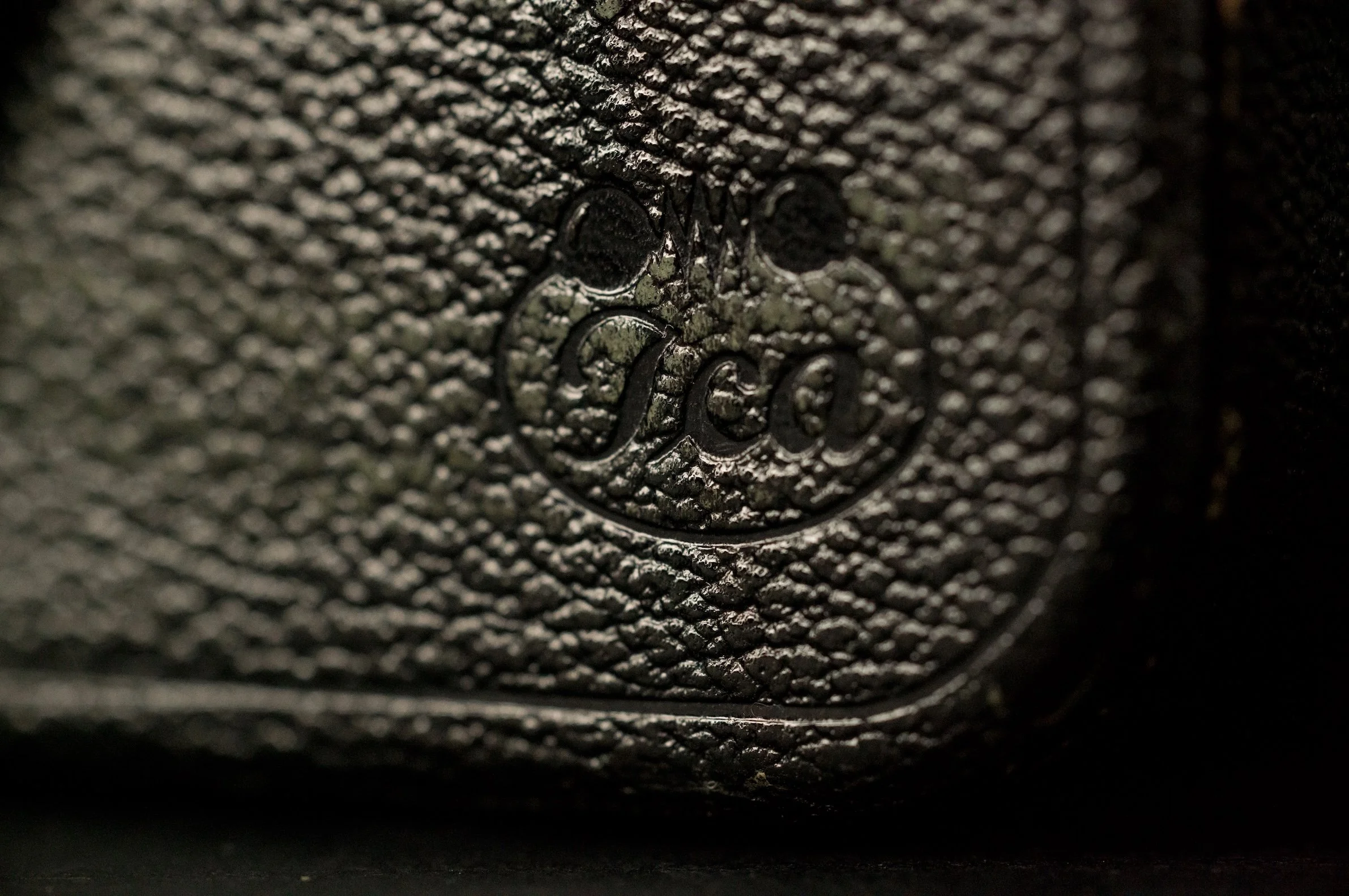
Photos courtesy of Daniil Nevskil
“The Kinamo N25 is invaluable wherever a small, lightweight, and agile standard-gauge film camera—specifically one featuring a spring-driven mechanism—is required for handheld filming. Kinamo cameras are found in the hands of both amateur filmmakers and professional cinematographers, as well as in industrial settings and scientific institutions. Many explorers and researchers rely on this device; it has proven its worth in the steppes of Asia, the icy heights of the Himalayas, the Arctic, and the scorching heat of the tropics, just as effectively as it has in temperate zones.”
The Competition
The early 1920s saw a wave of compact camera development across Europe, each manufacturer chasing the same goal — a smaller, more portable camera for the growing amateur market. In Germany, Arnold & Richter was developing their first camera, the Kinarri 35mm, a compact round-bodied design that would lay the groundwork for what eventually became the Arriflex. In Paris, André Debrie had introduced the Sept 35mm — a clockwork-driven camera so compact it nearly fit a coat pocket, and capable of doubling as a still camera, projector, and enlarger. Yet another compact French entry was the spectacular Établissements A. Bourdereau Cinex 35mm. Also in France, Syndicat Industriel introduced the Le Cinoscope, a dual-purpose camera-projector aimed squarely at the amateur market and sold in both France and Italy. The Cinoscope arrived just as 16mm and 9.5mm safety film systems were gaining traction with consumers — smaller formats, safer film stock, lower cost. That timing likely hurt it. The camera is relatively scarce today.
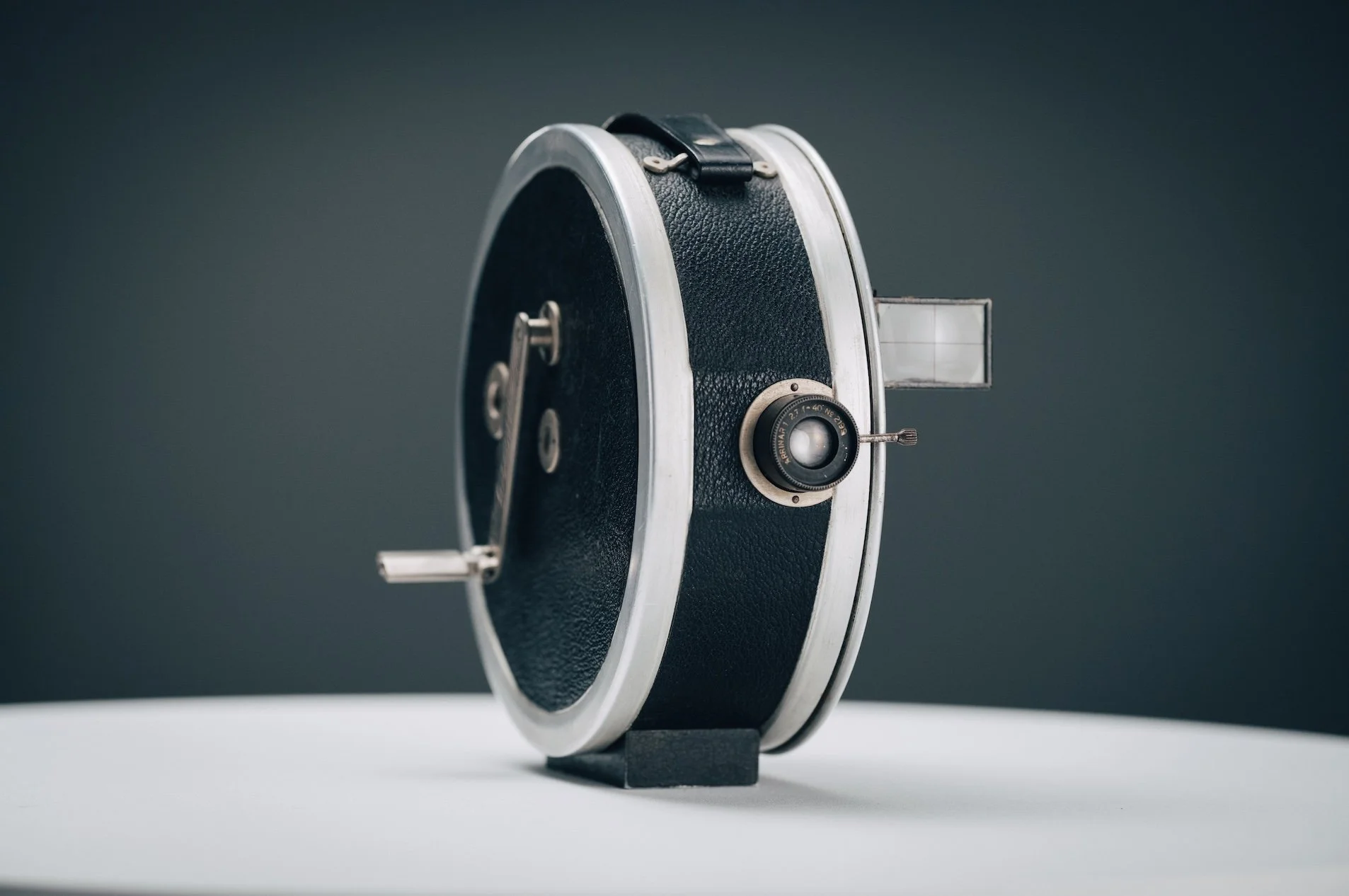
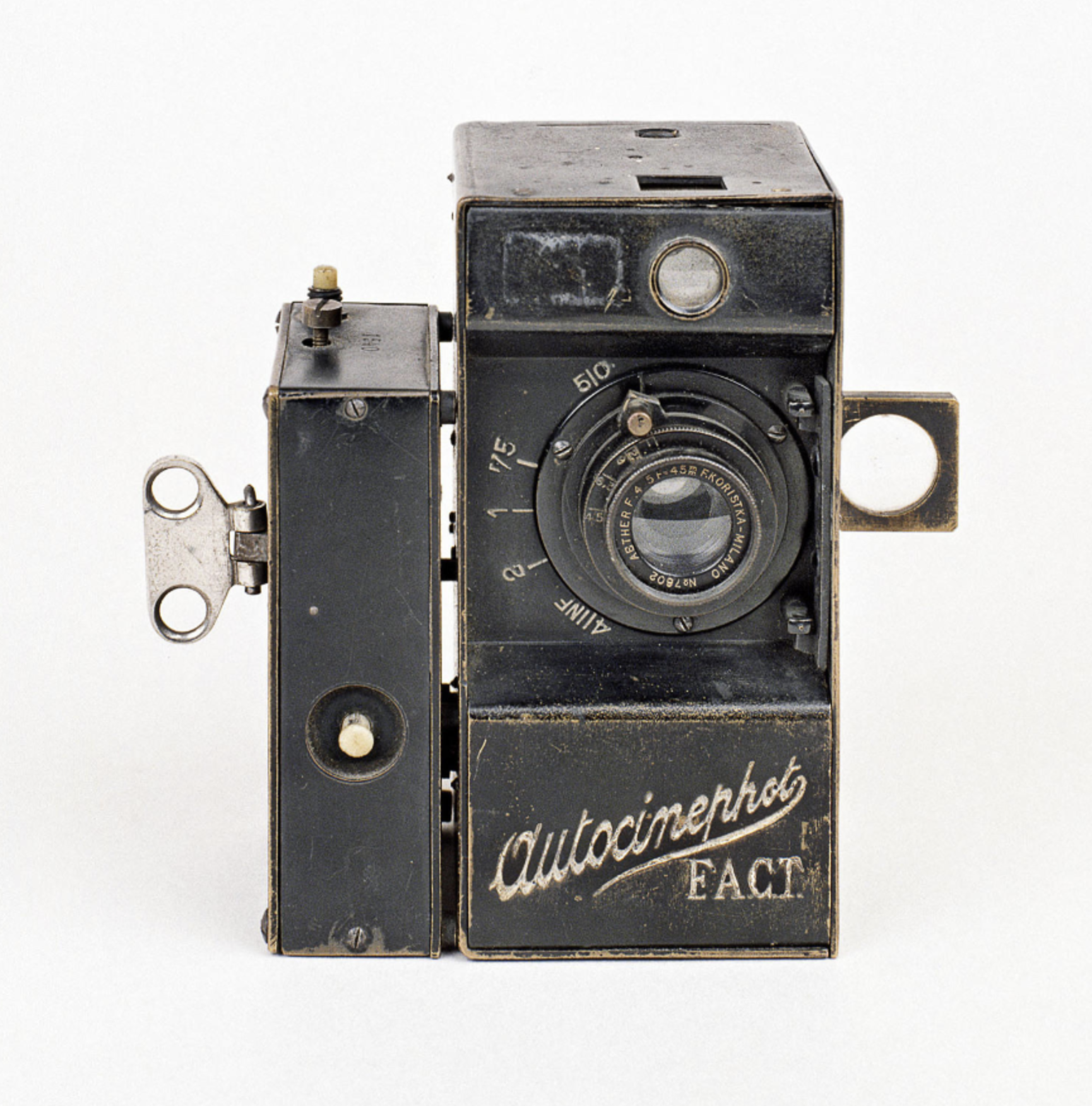
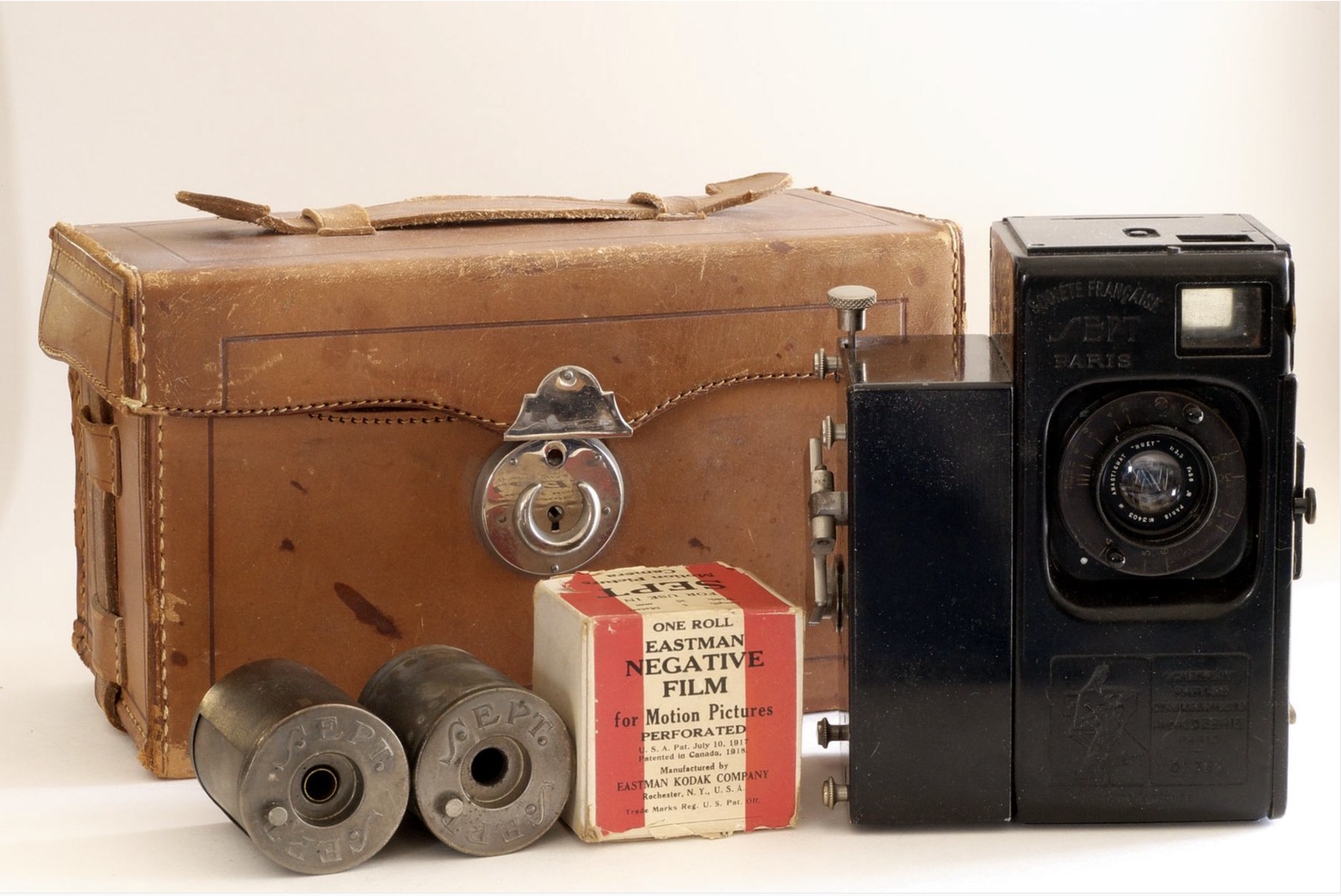
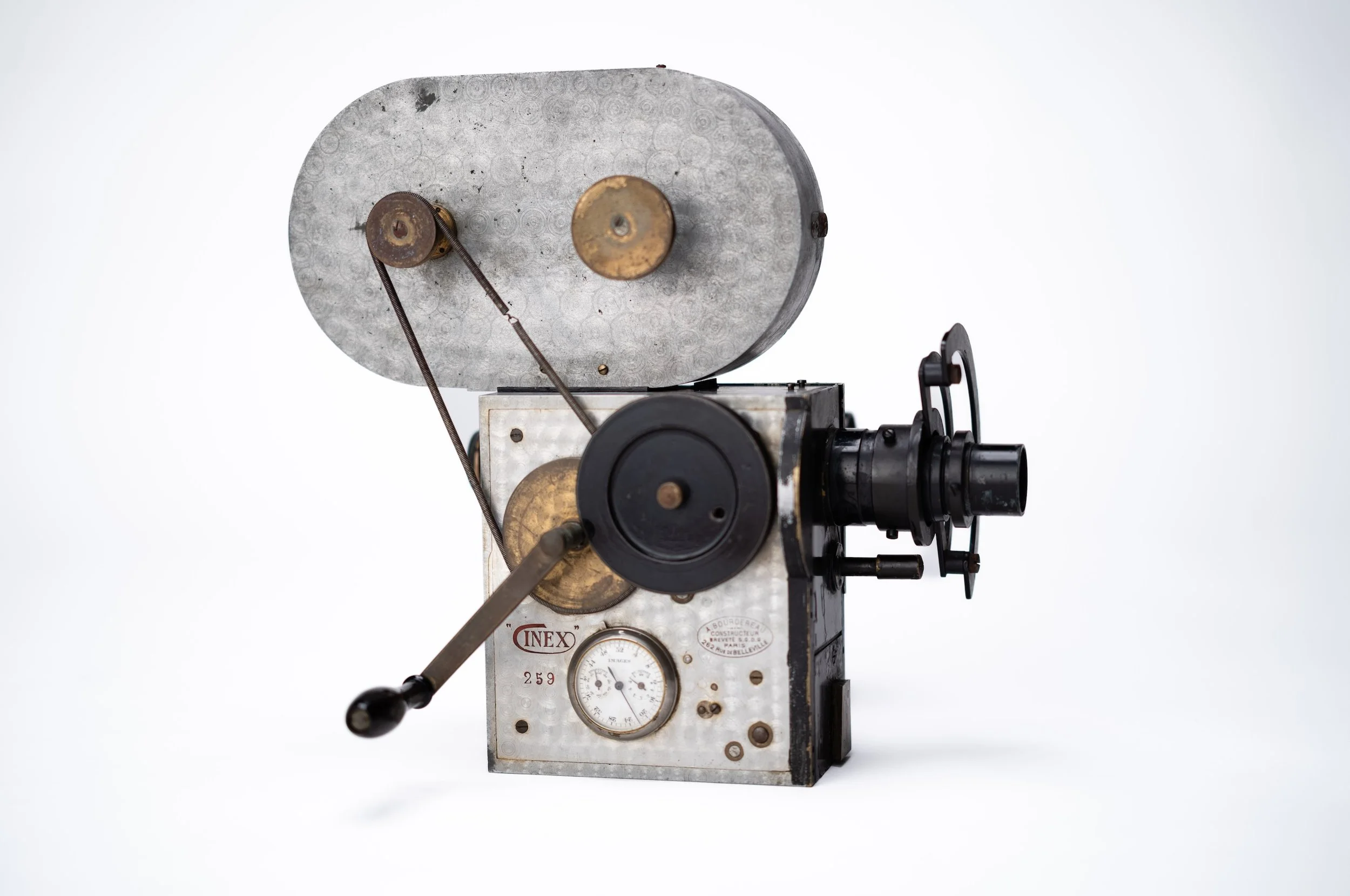
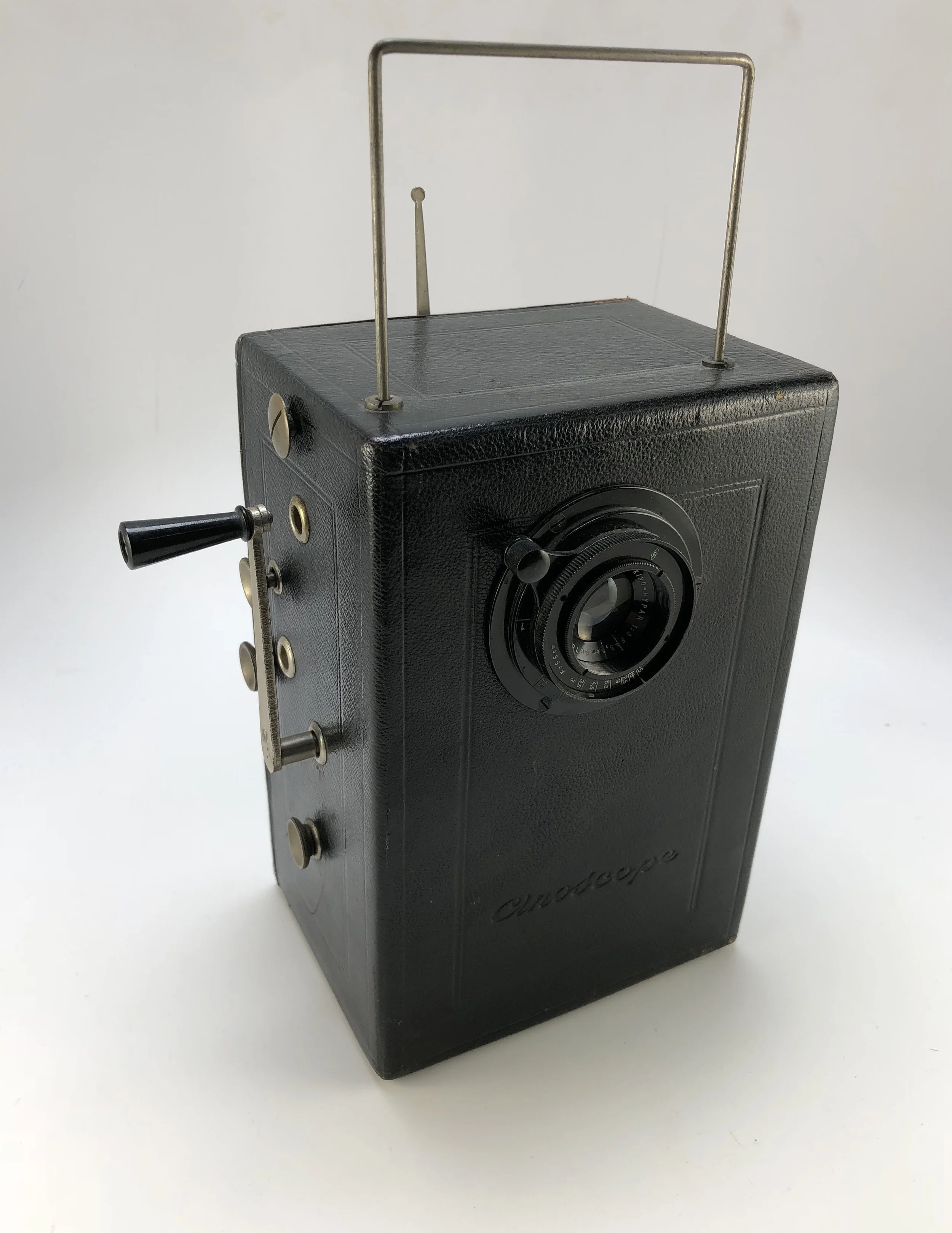
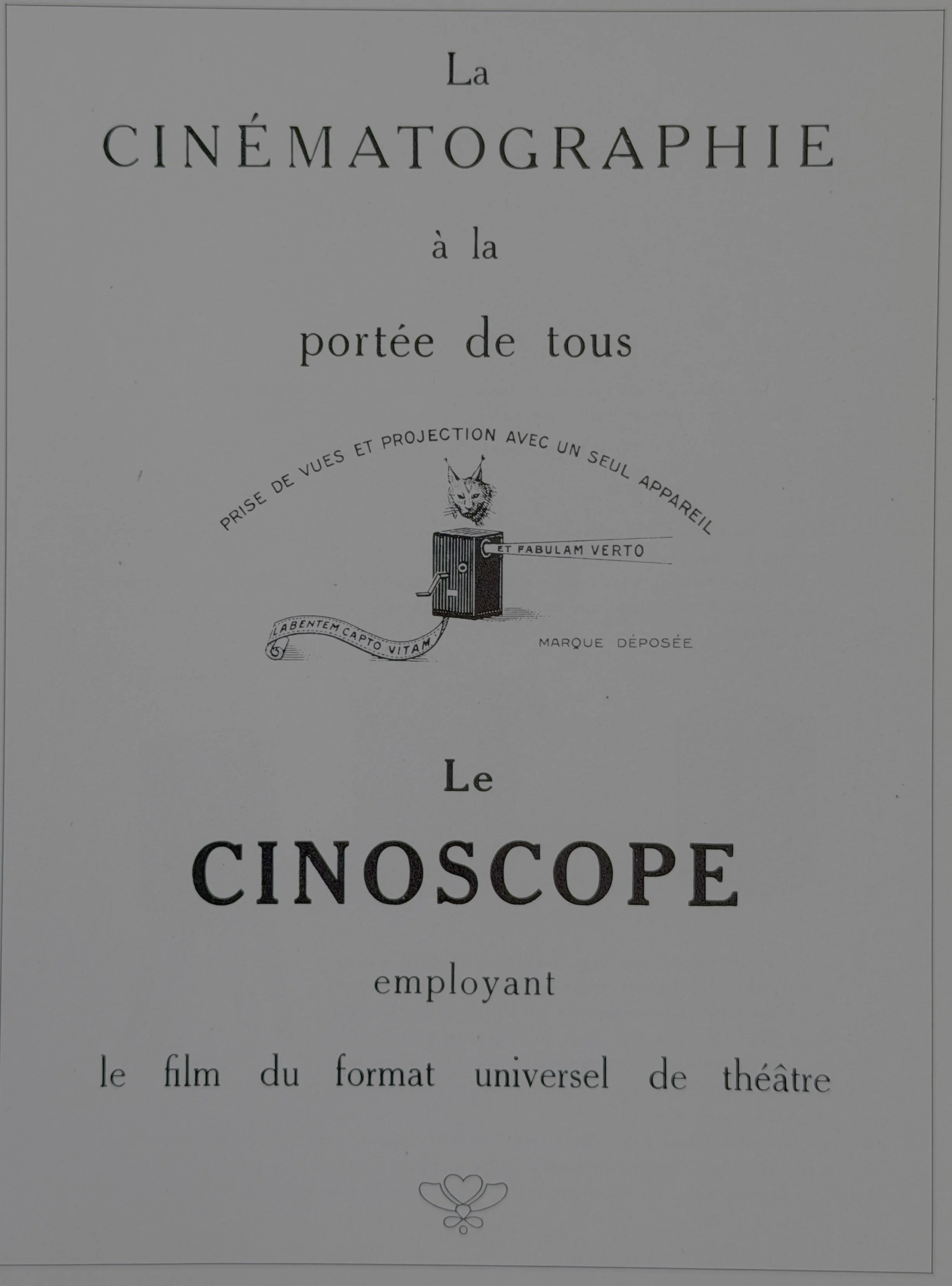
The Kinamo sat at the center of all of this activity. It was arguably one of the more marketable of the group — and the one that would have the most lasting influence on how filmmakers actually worked.
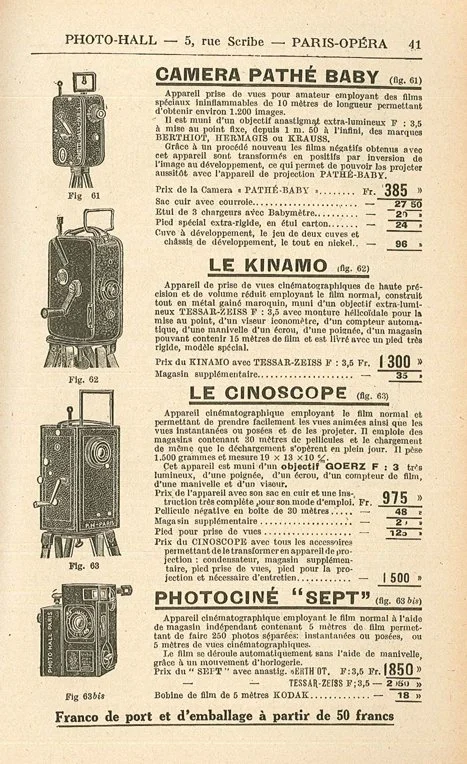
Photo-Hall Catalog, 1924
The Man Behind It
Goldberg went on to lead the formation of Zeiss Ikon in 1926, overseeing the design of the Contax 35mm camera among other major achievements. In April 1933, Goldberg was seized from his Zeiss Ikon office by Nazi operatives. Released several days later following pressure from the governor of Saxony, he wasted little time. He moved first to France, then in 1937 to Palestine, where he lived until 1970 and became a founder of Israel’s emerging high-tech industry. Despite his years as the founding chief executive of Zeiss Ikon, his name was quietly removed from the company’s official histories — in 1937, in 1951, and again as late as 2000.
The Kinamo itself deserves more credit than it typically receives. It wasn't just an early amateur camera. It was a genuinely innovative engineering solution that helped liberate documentary filmmaking from the limitations of existing systems — and in the hands of the right filmmakers, it changed the language of cinema.
Gallery
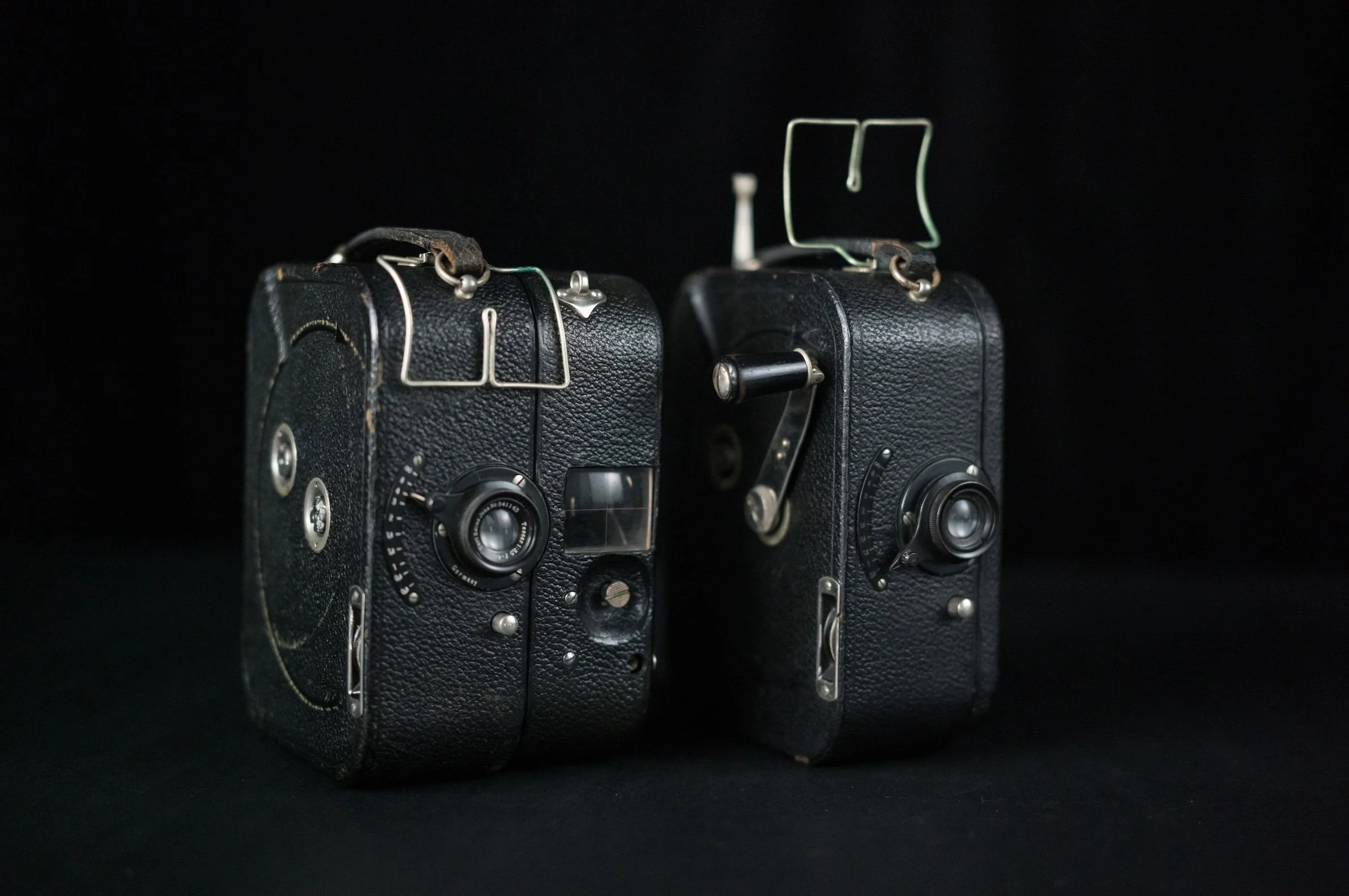
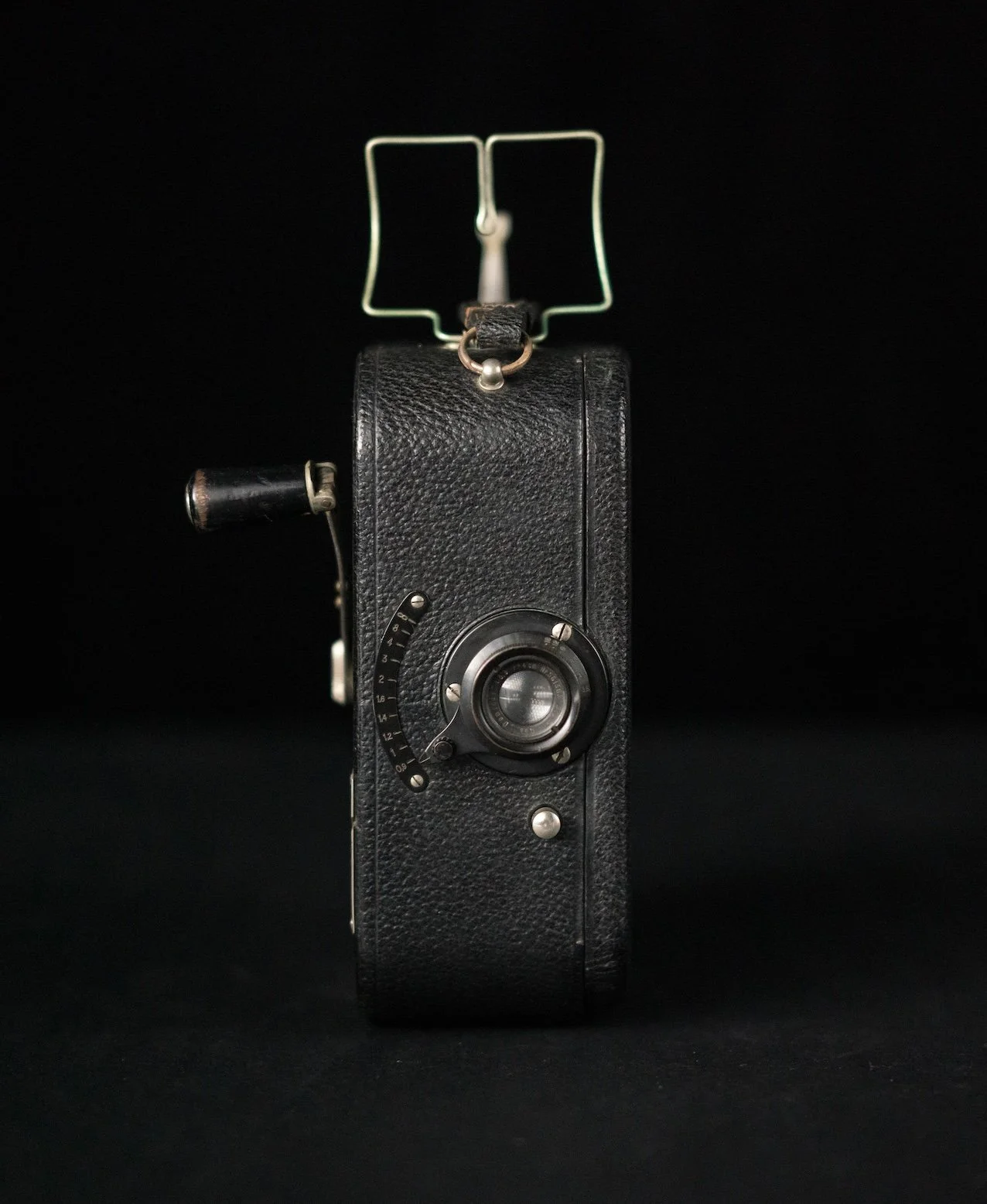
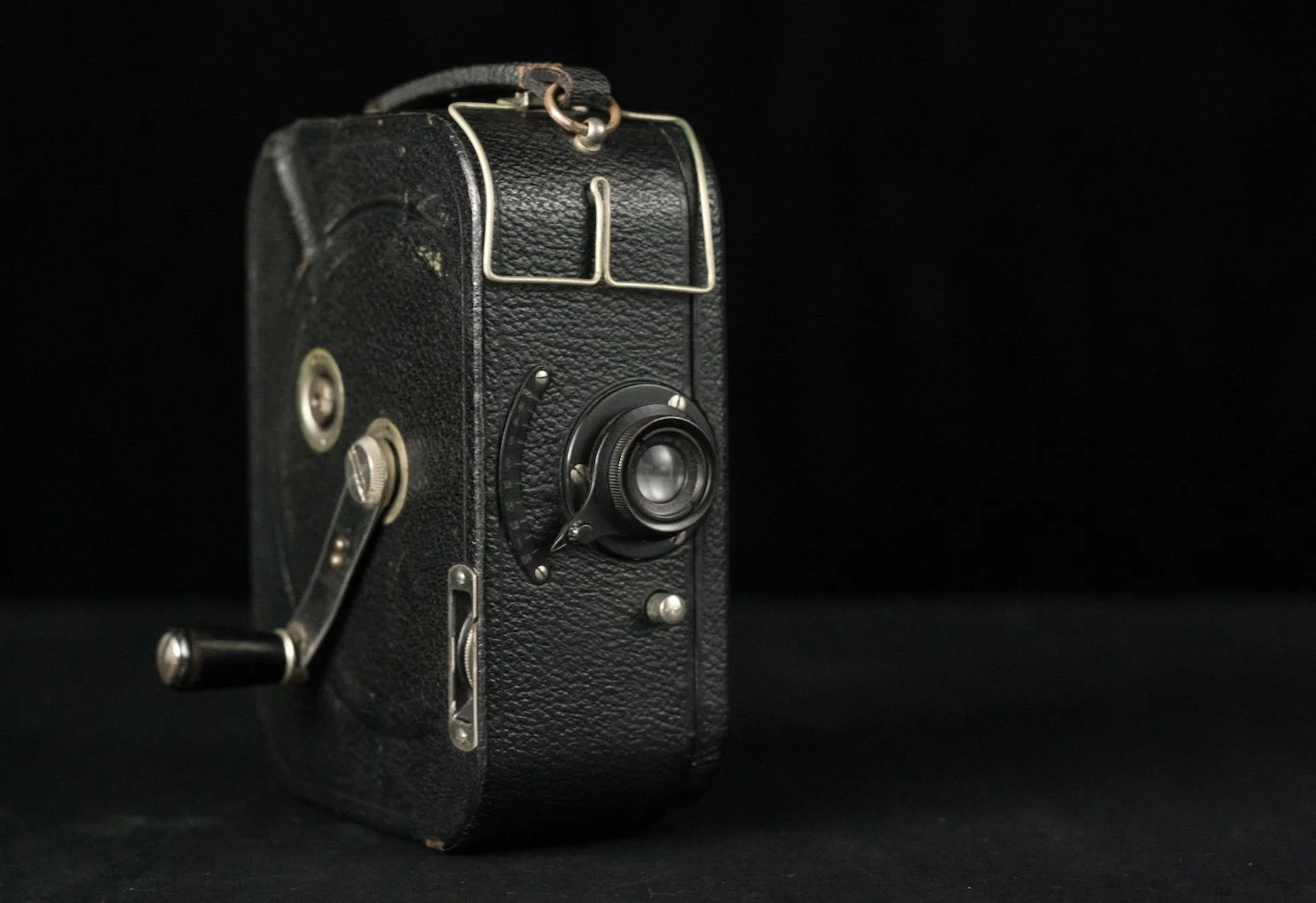
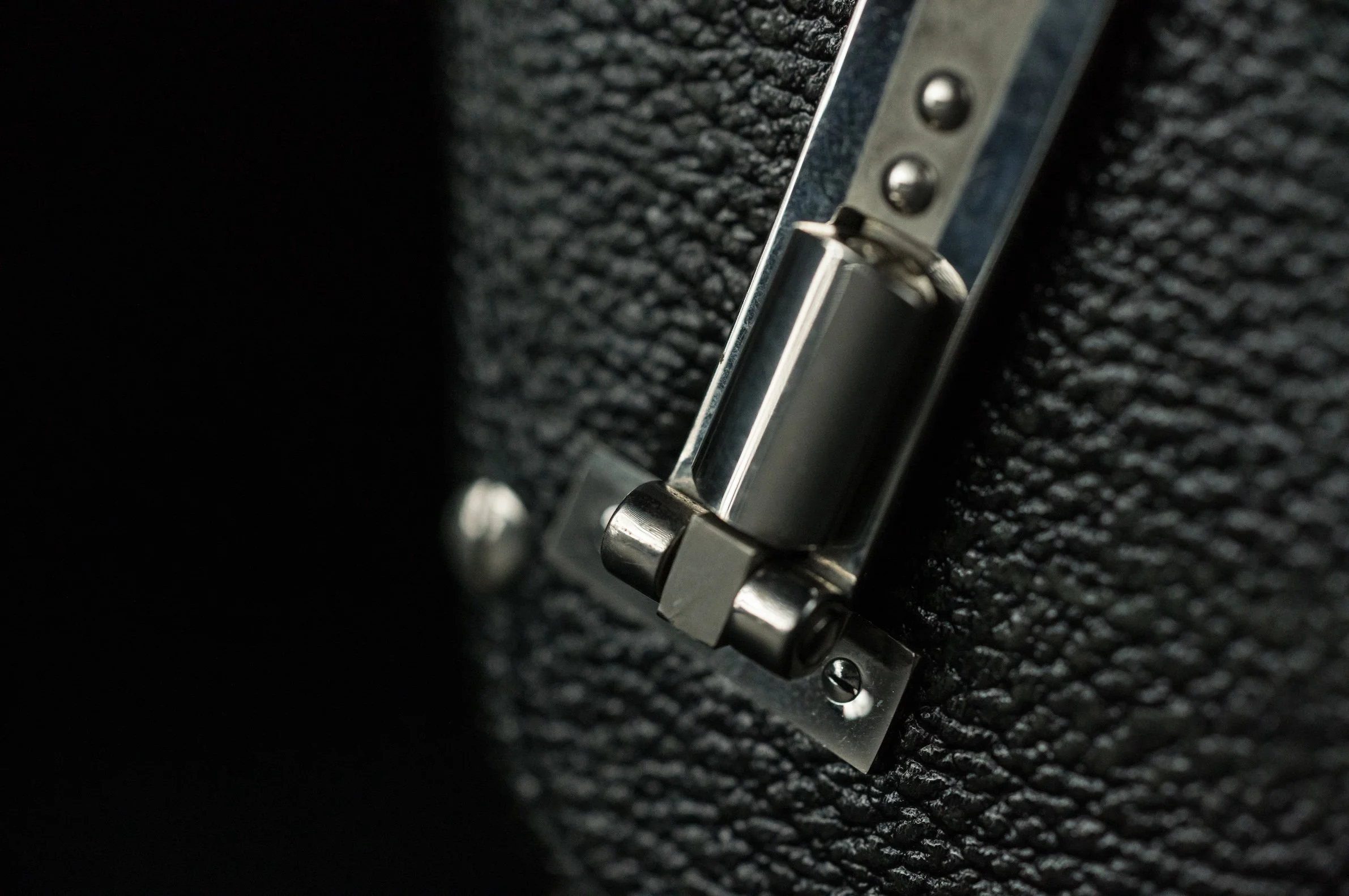
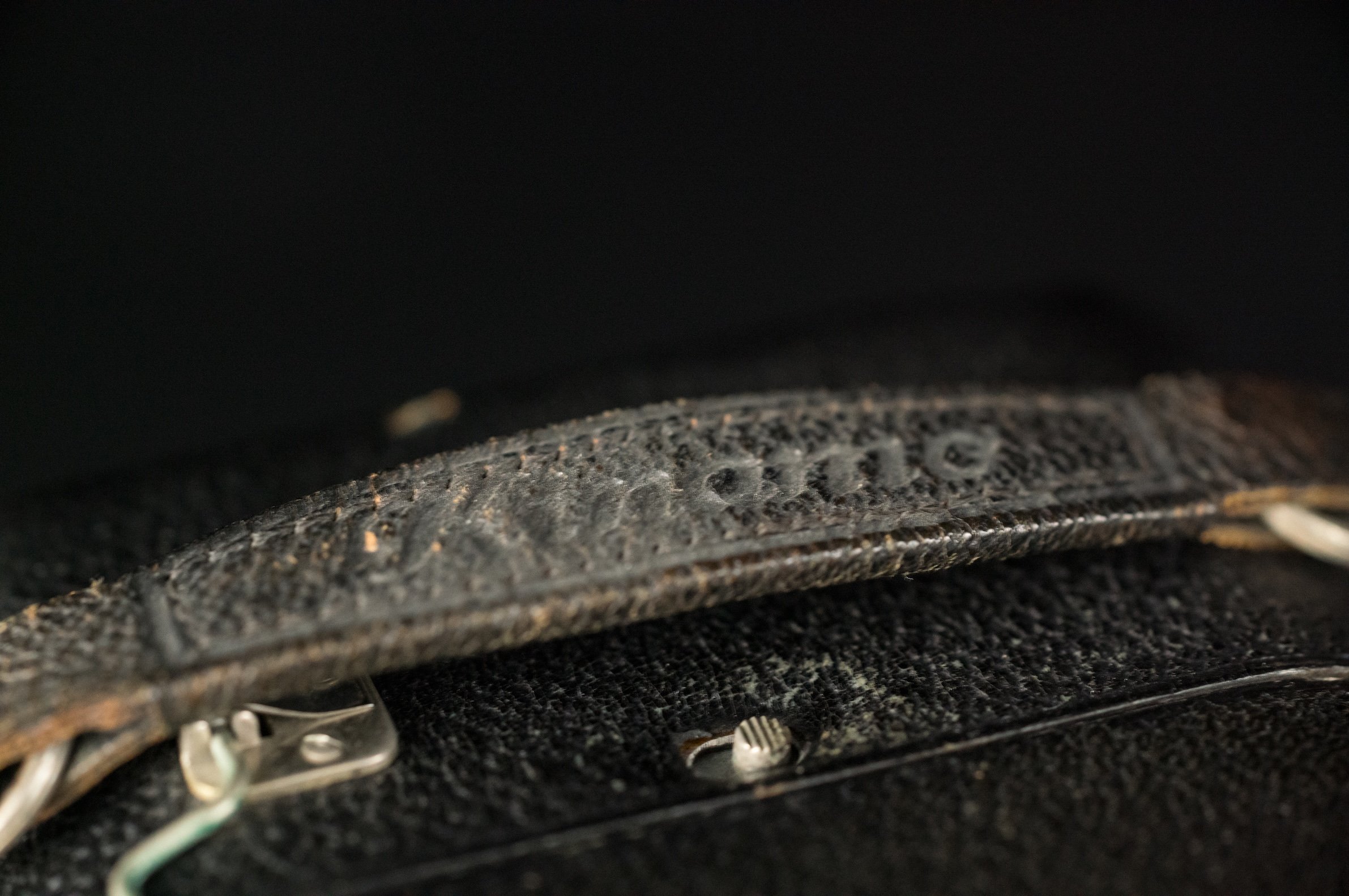
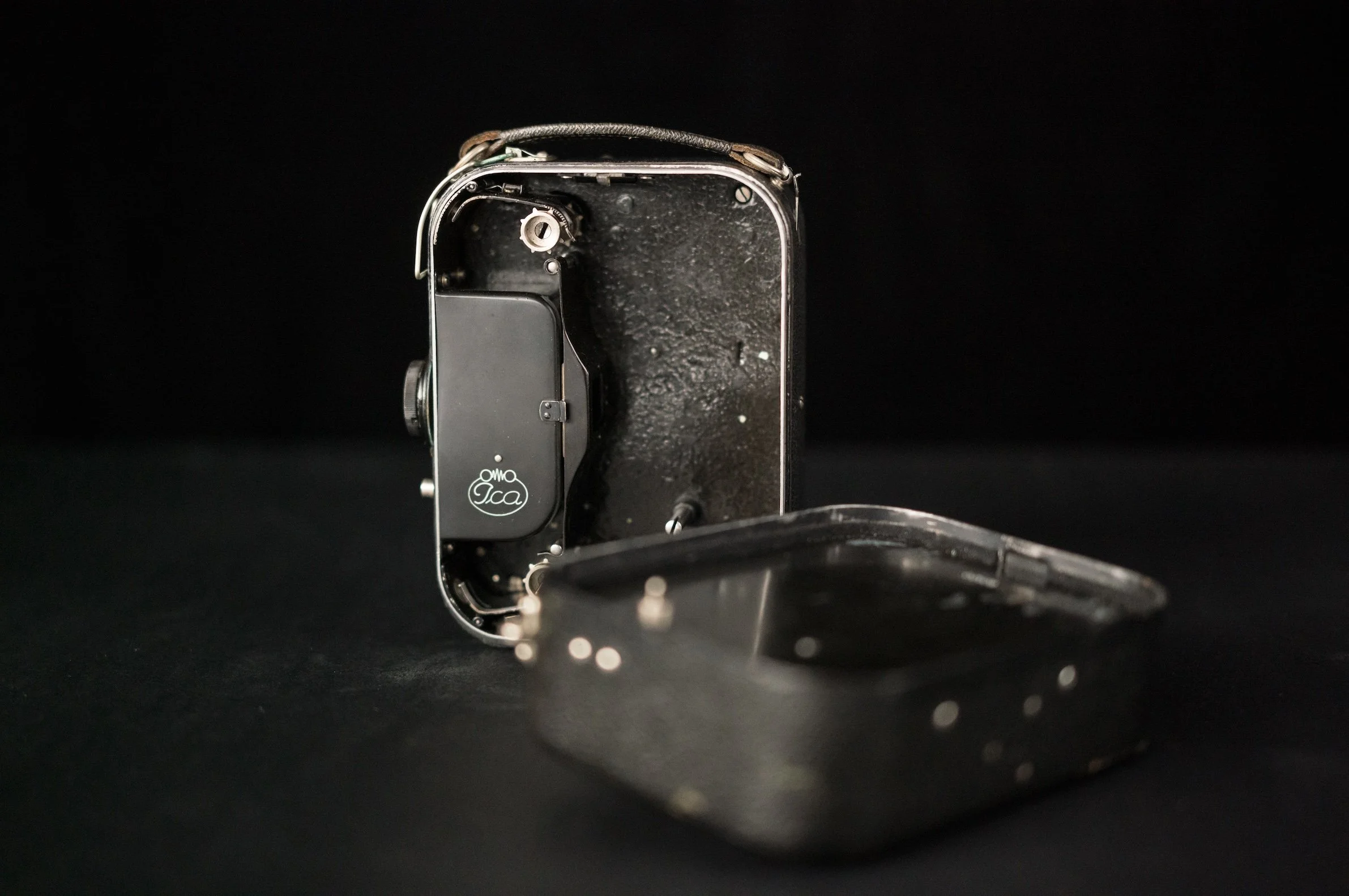
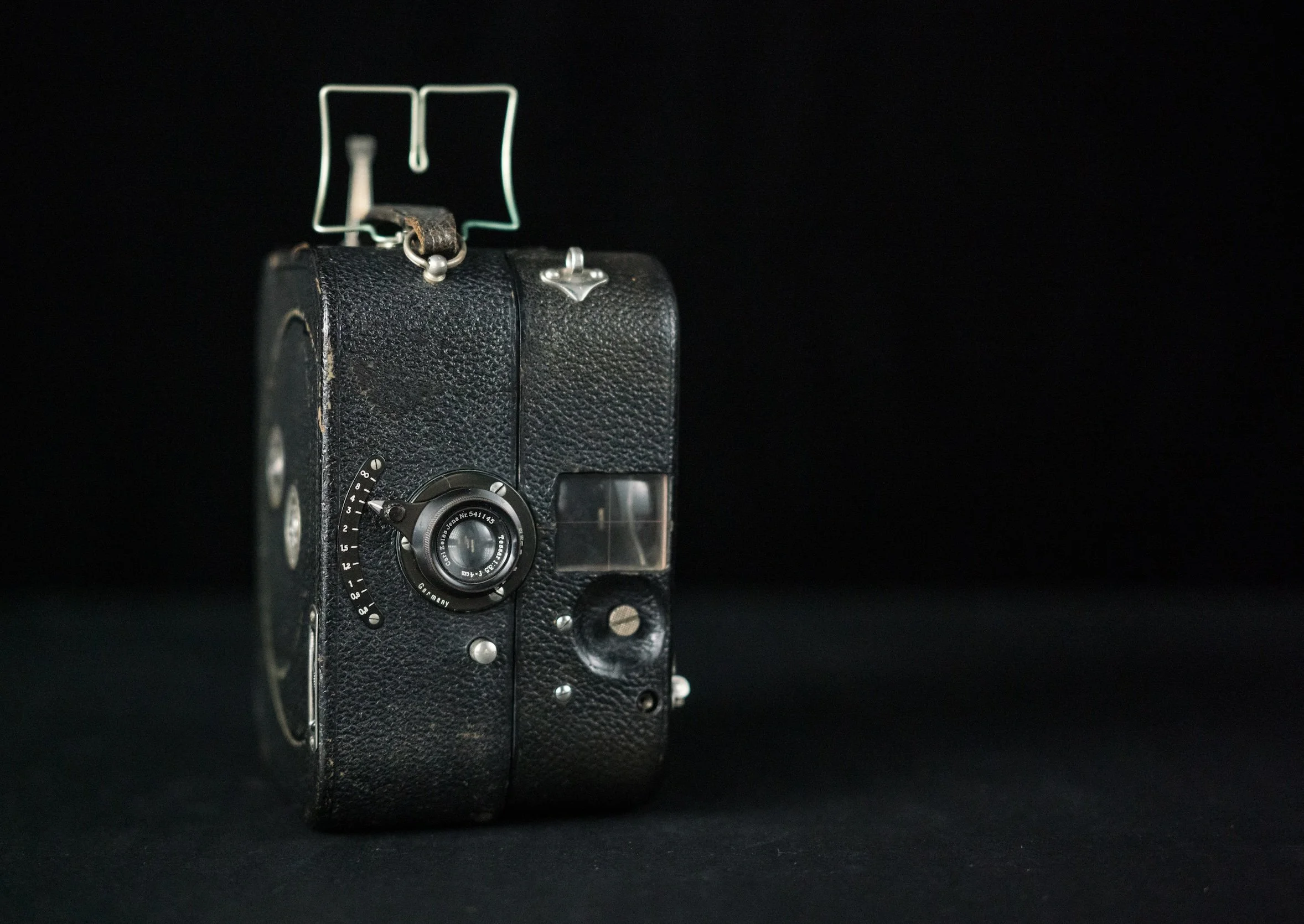
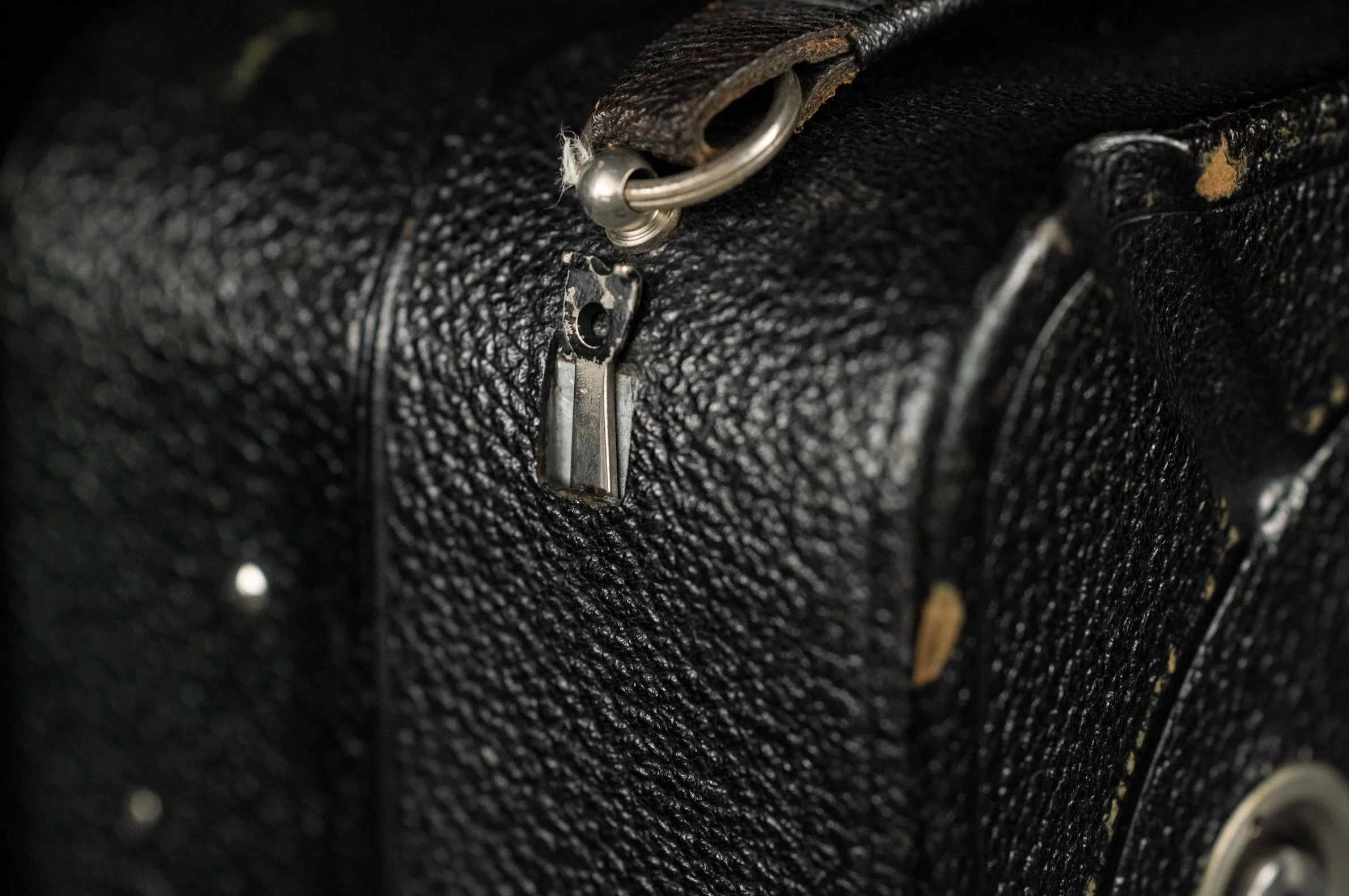
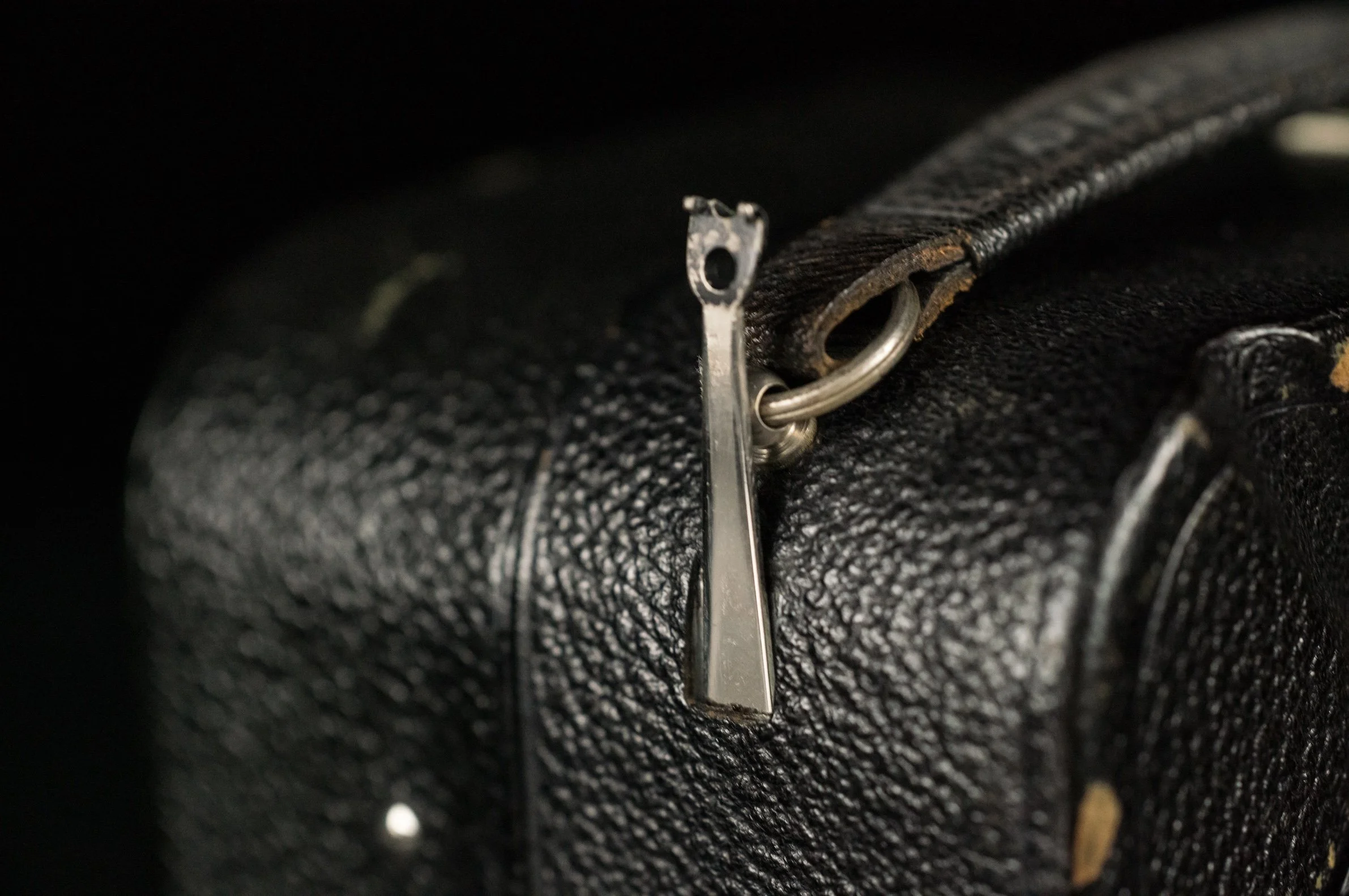
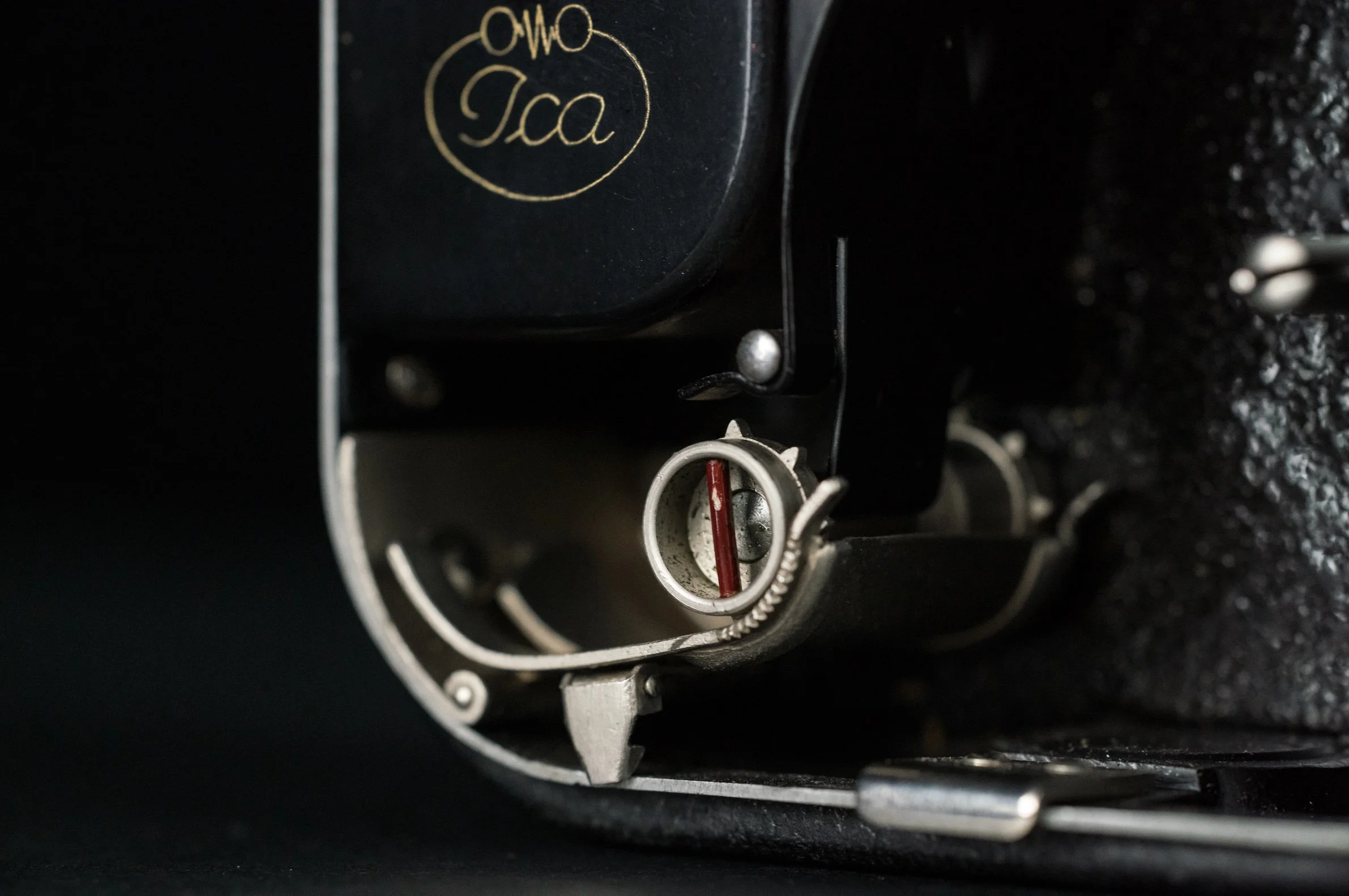
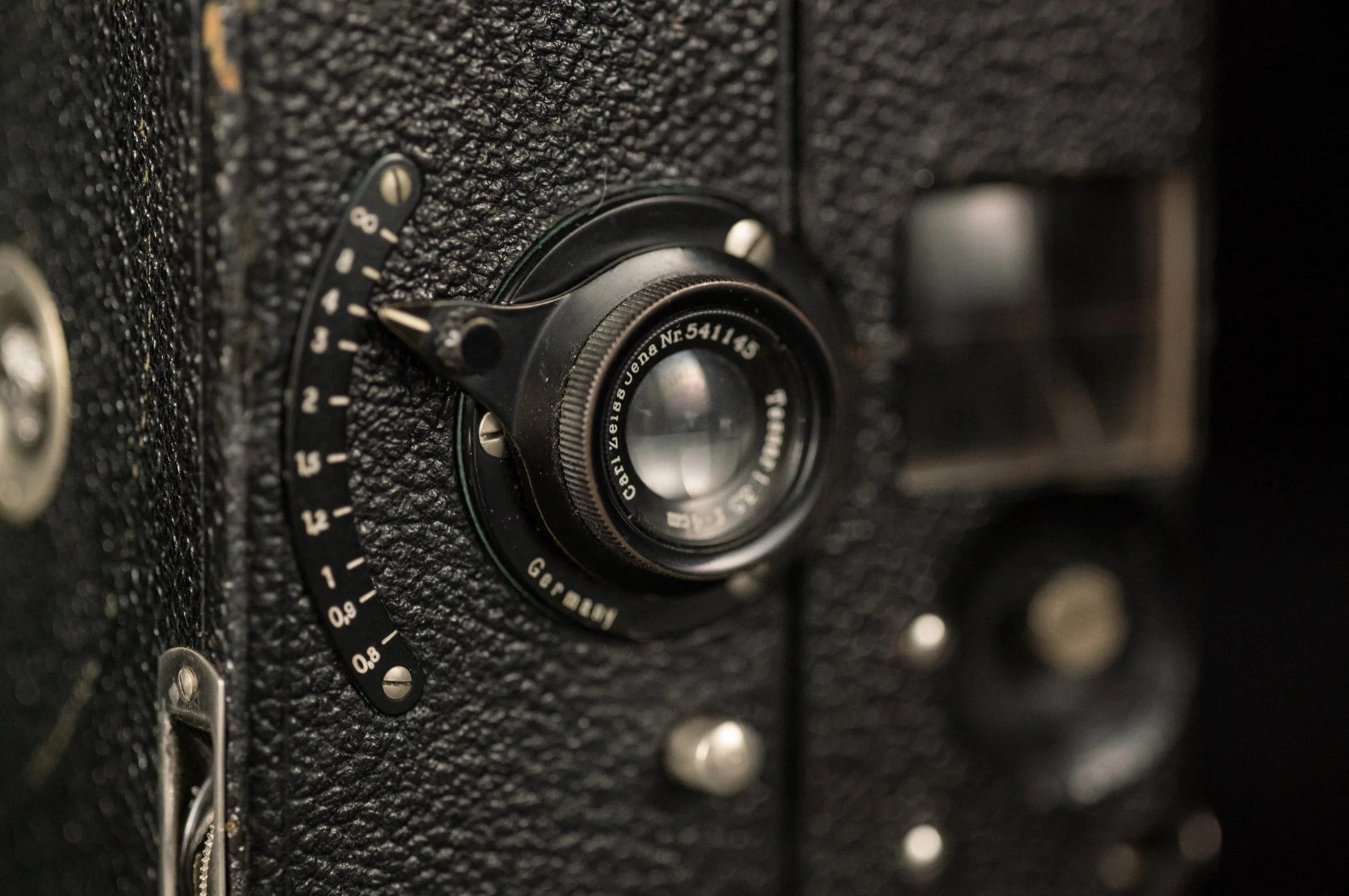
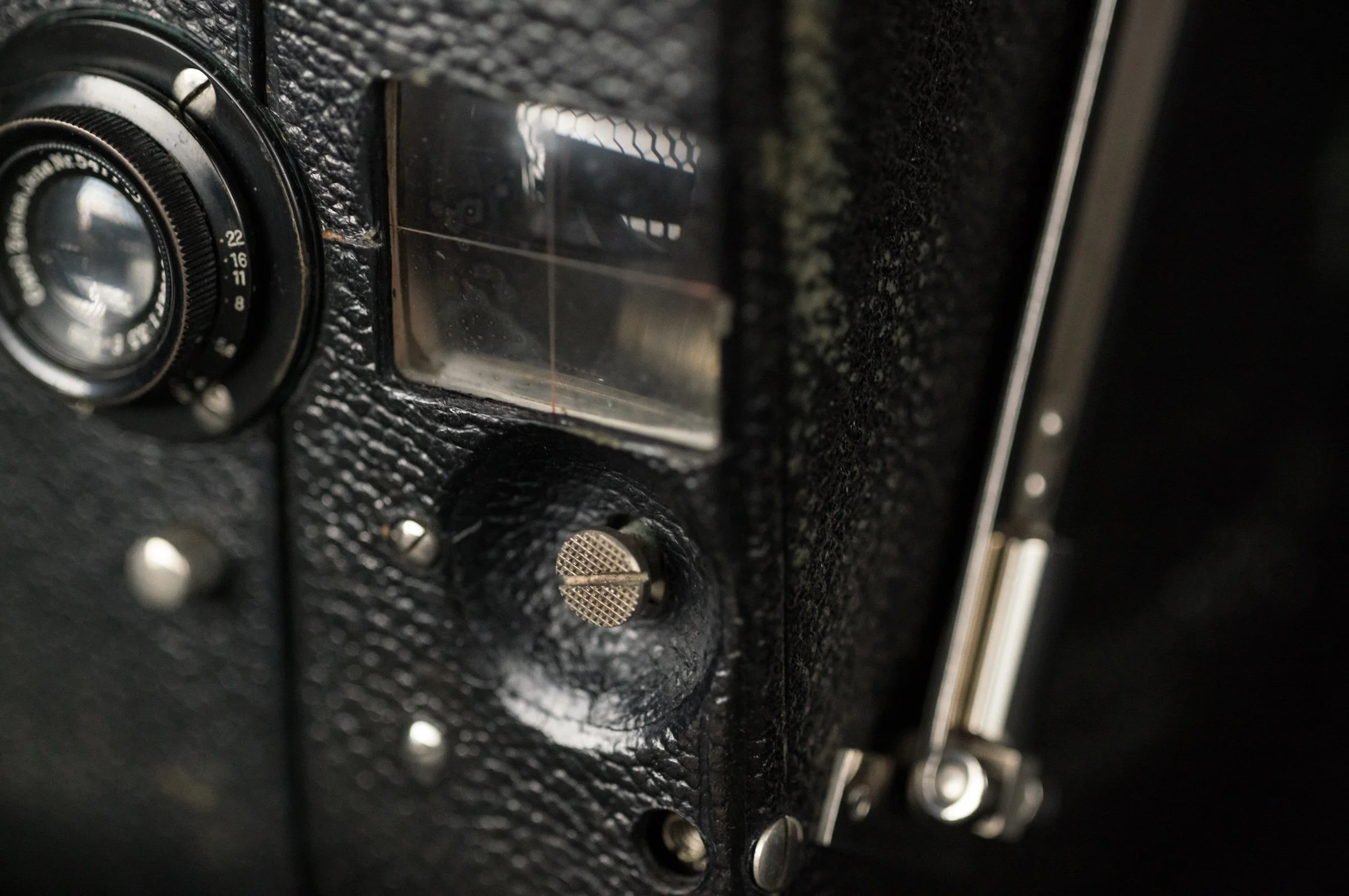
REFERENCES:
Camera Magazine - Volume 27 - Page 527 [1923]
American Cinematographer, Volume 4, No. 1 [1923]
American Cinematographer, Volume 4, No. 10 [1924]
Ica Kinamo Catalog [1924]
Ica Camera Catalog- U.S. Version [1925]
Histoire de la Camera Amateur, Michel Auer, Michele Ory [1979]
Ariel Cinematographica Register no. 140-146, Peter Ariel [1981]
Living Dangerously: A Biography of Joris Ivens [2000]
Emanuel Goldberg and His Knowledge Machine, Michael Buckland [2006]
The Kinamo Movie Camera, Michael Buckland [2008]
The Kinamo Camera, Emanuel Goldberg, and Joris Ivens, Michael Buckland [2008]
Film History 20, no. 1 [2008]: 49–58.
Zeiss Historica, Spring 2009
Motion Picture Photography: A History, 1891-1960, H. Mario Raimondo-Souto [2014]