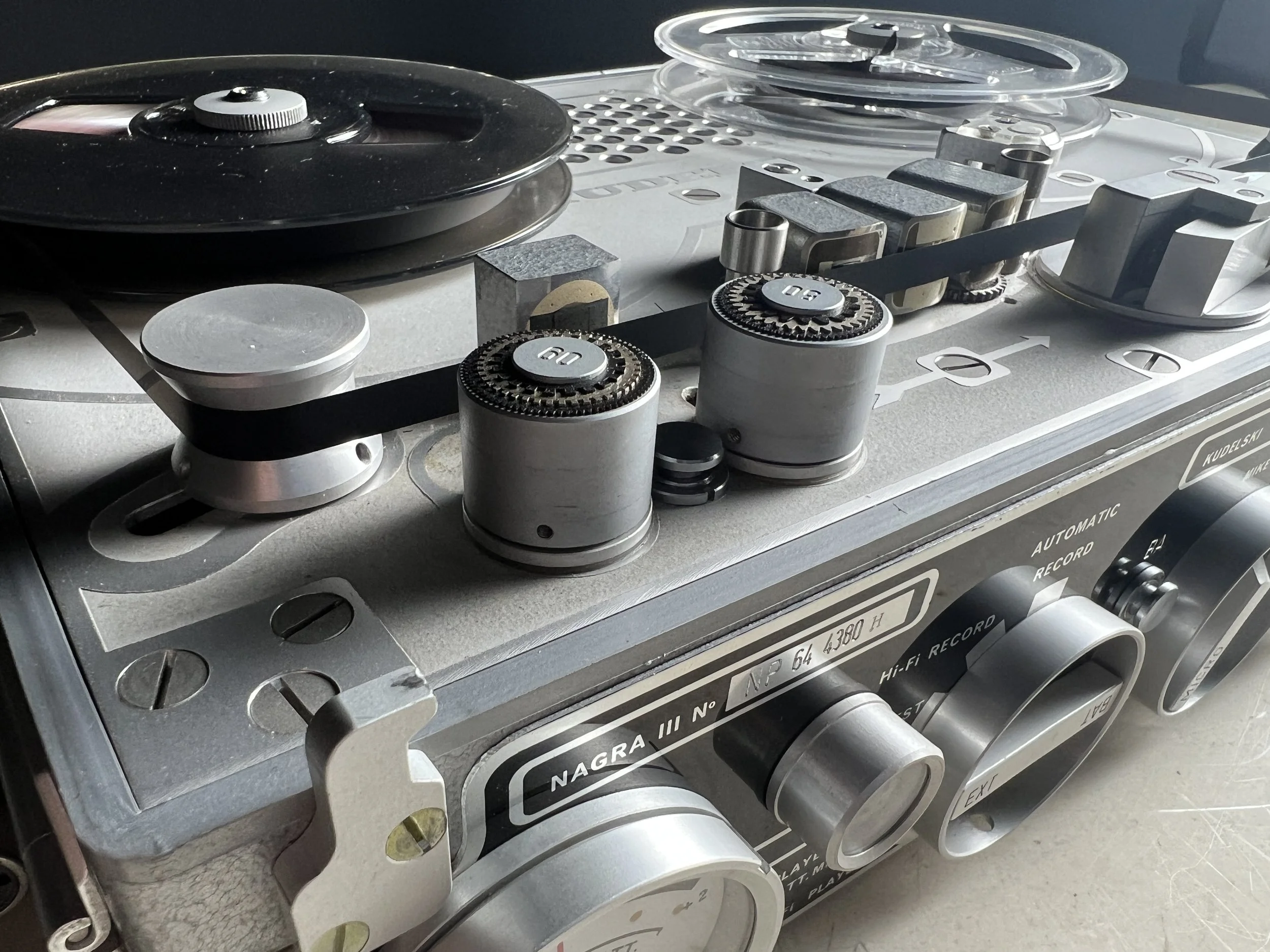
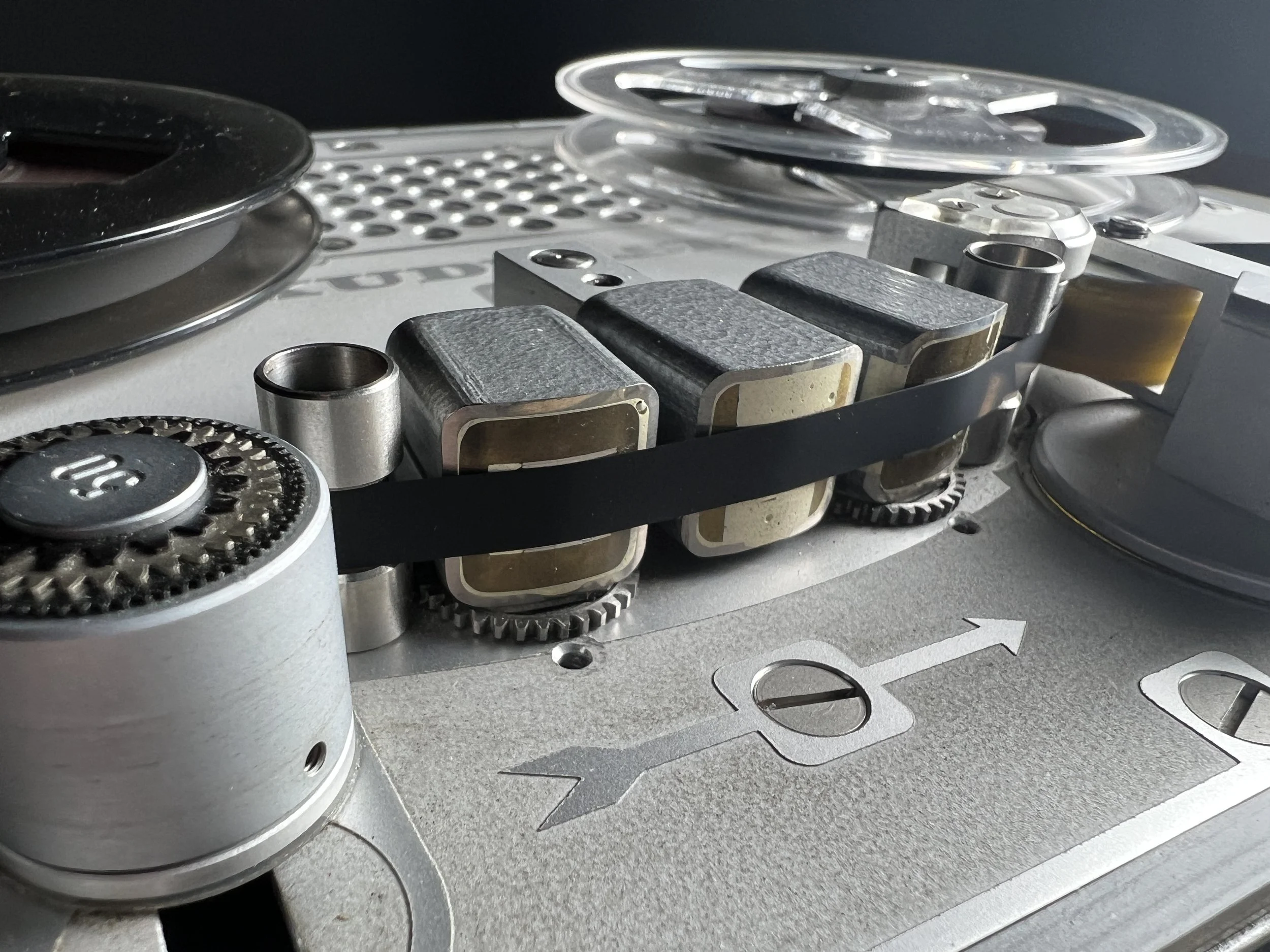
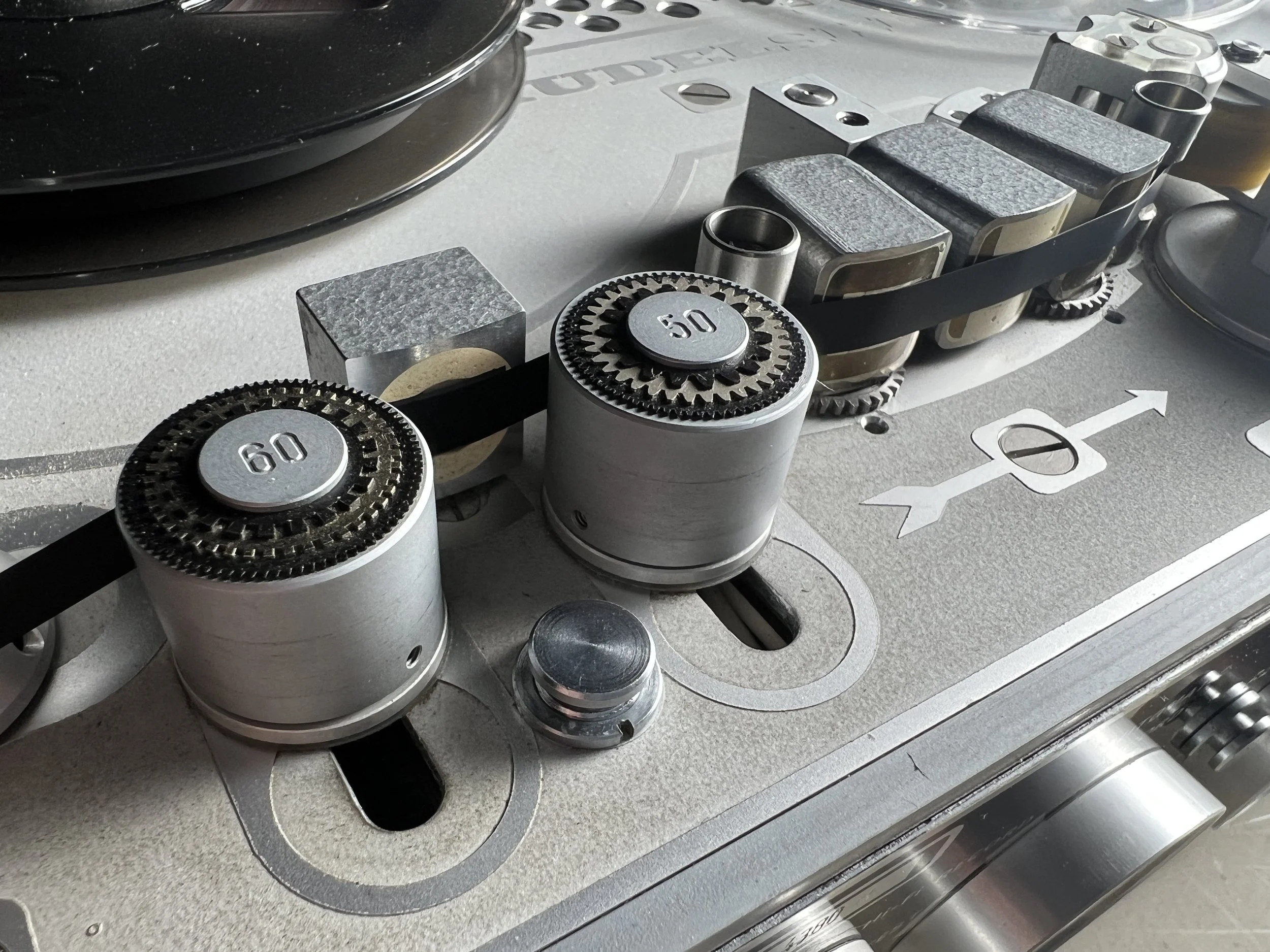
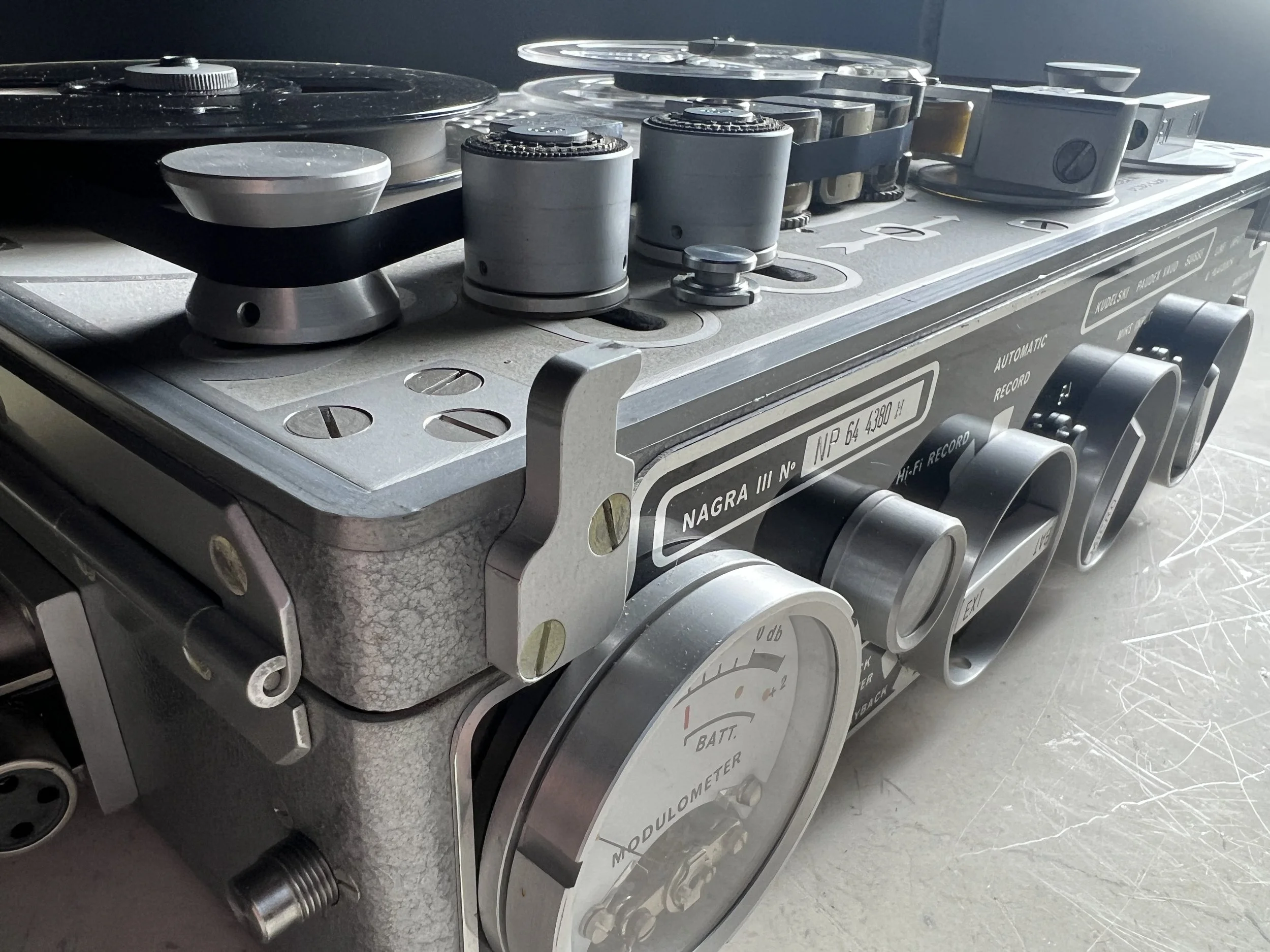
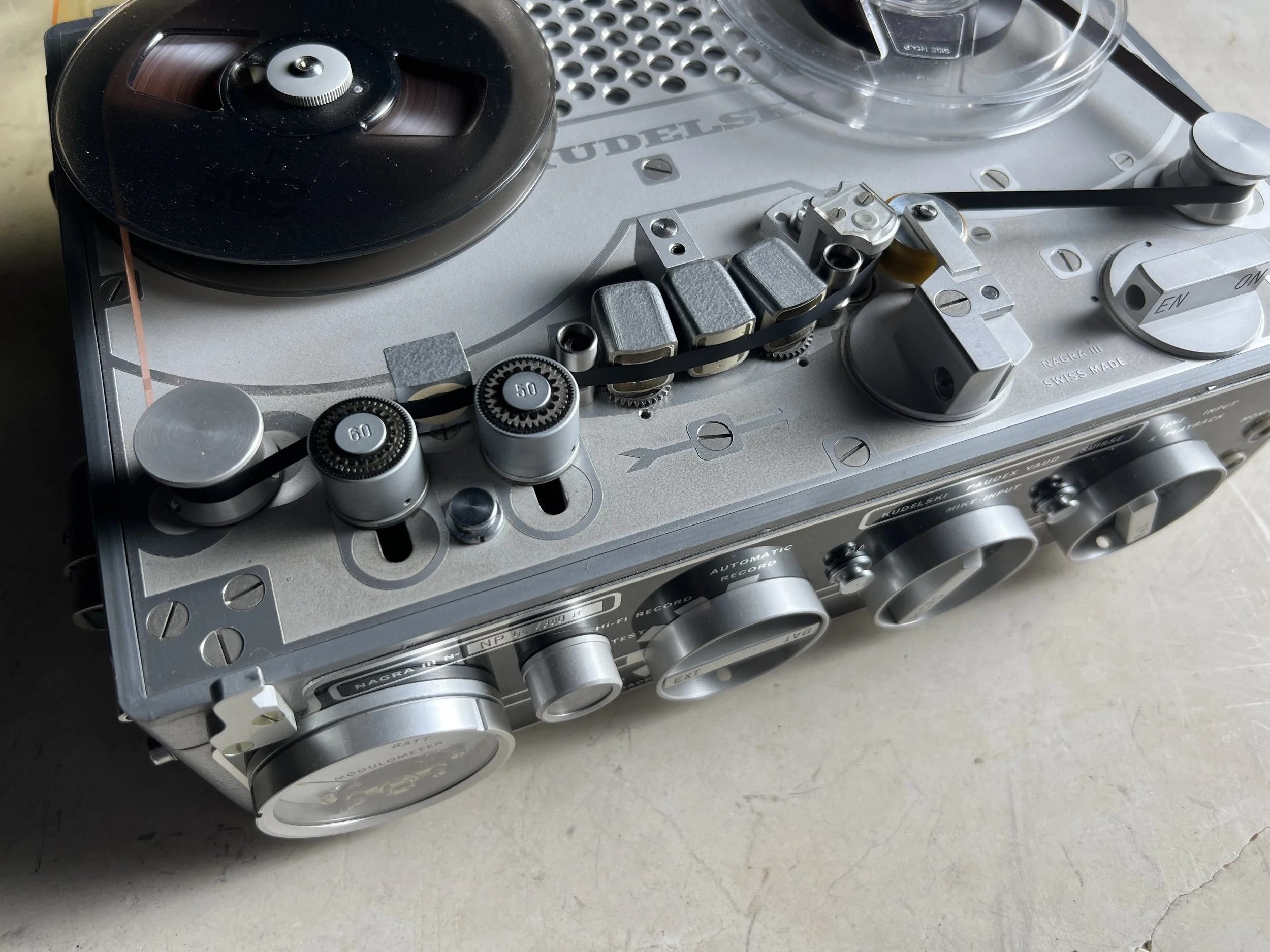
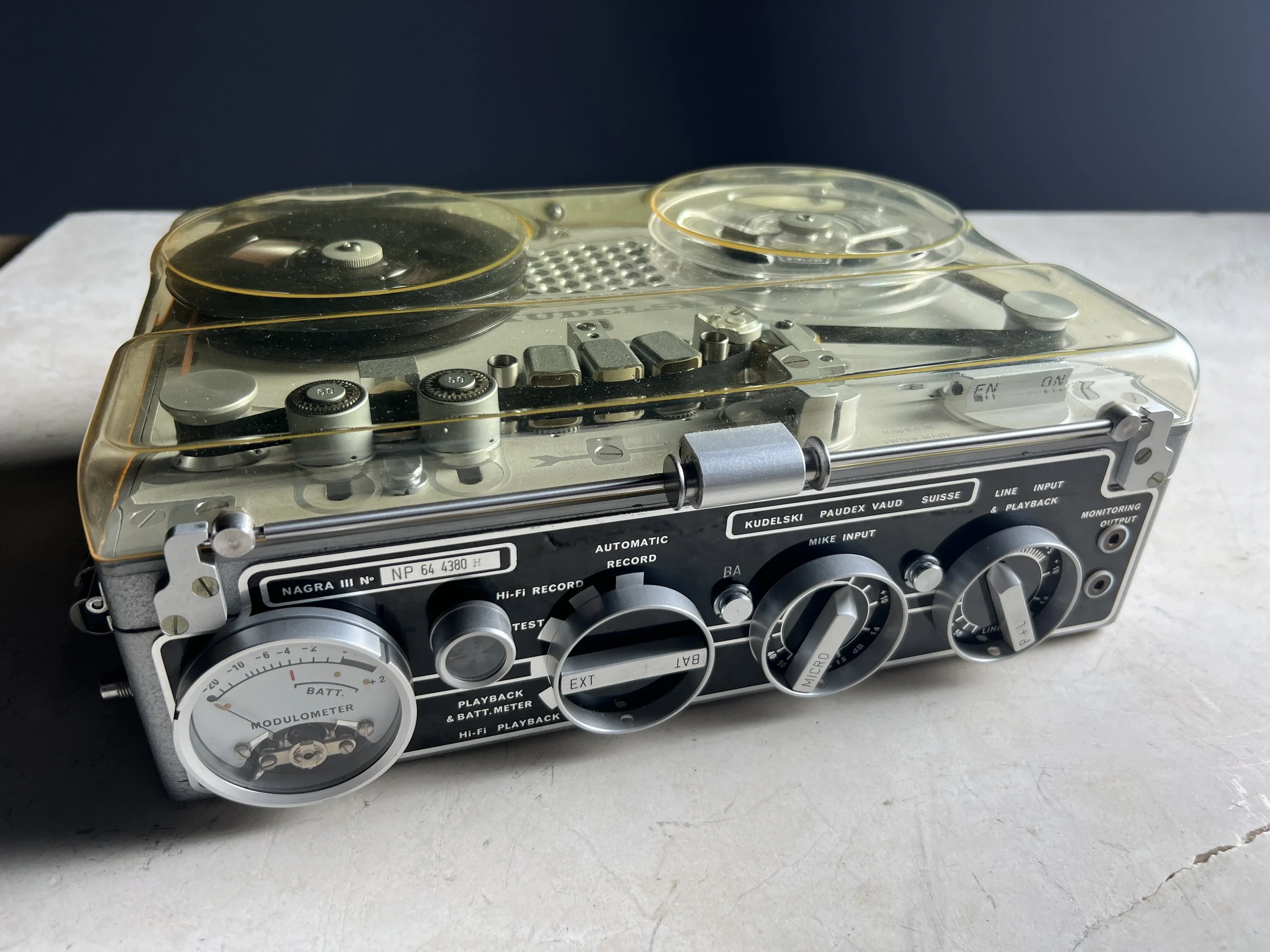
Kudelski Nagra III NP
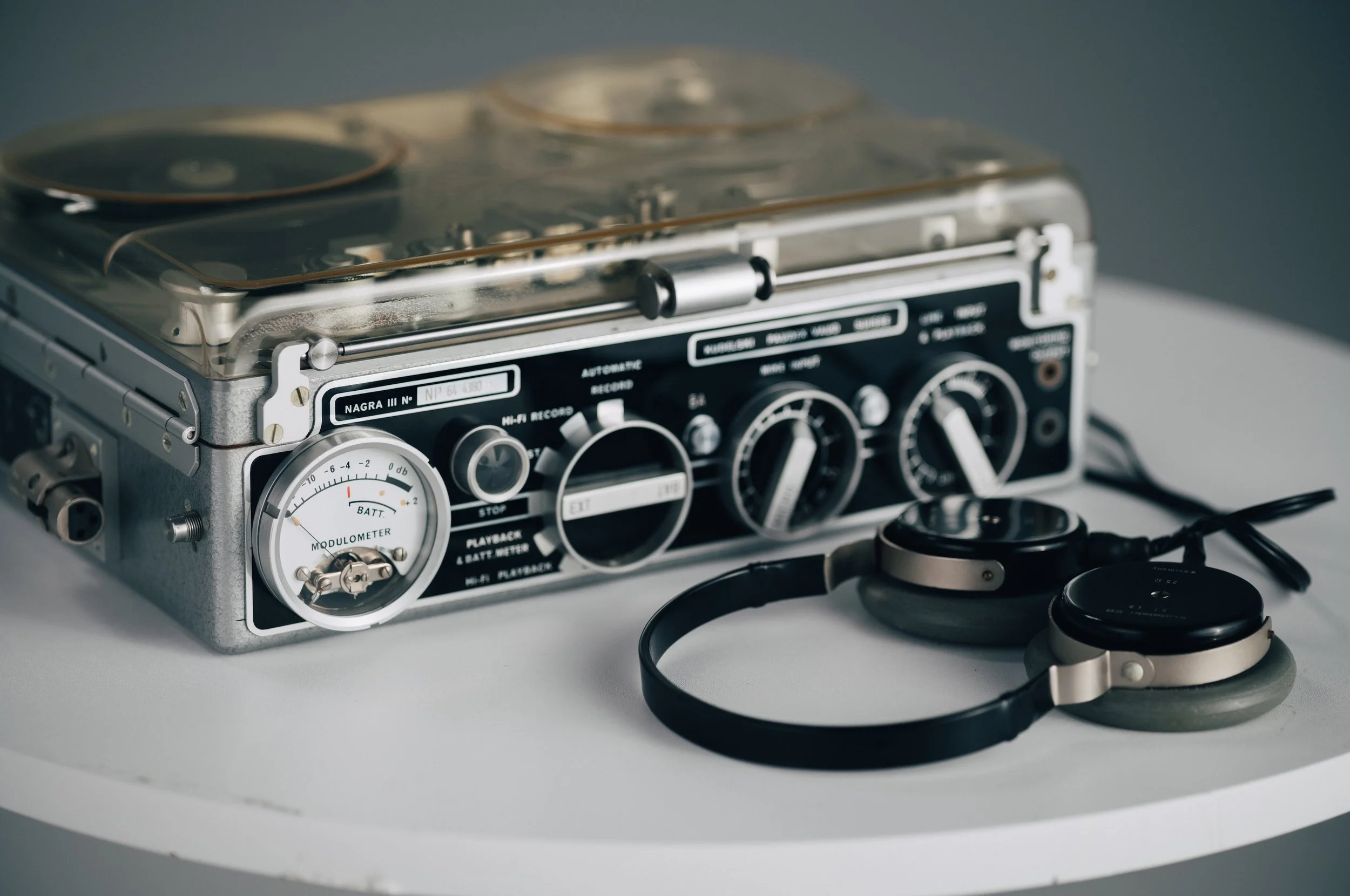
Nagra III NP
It Records
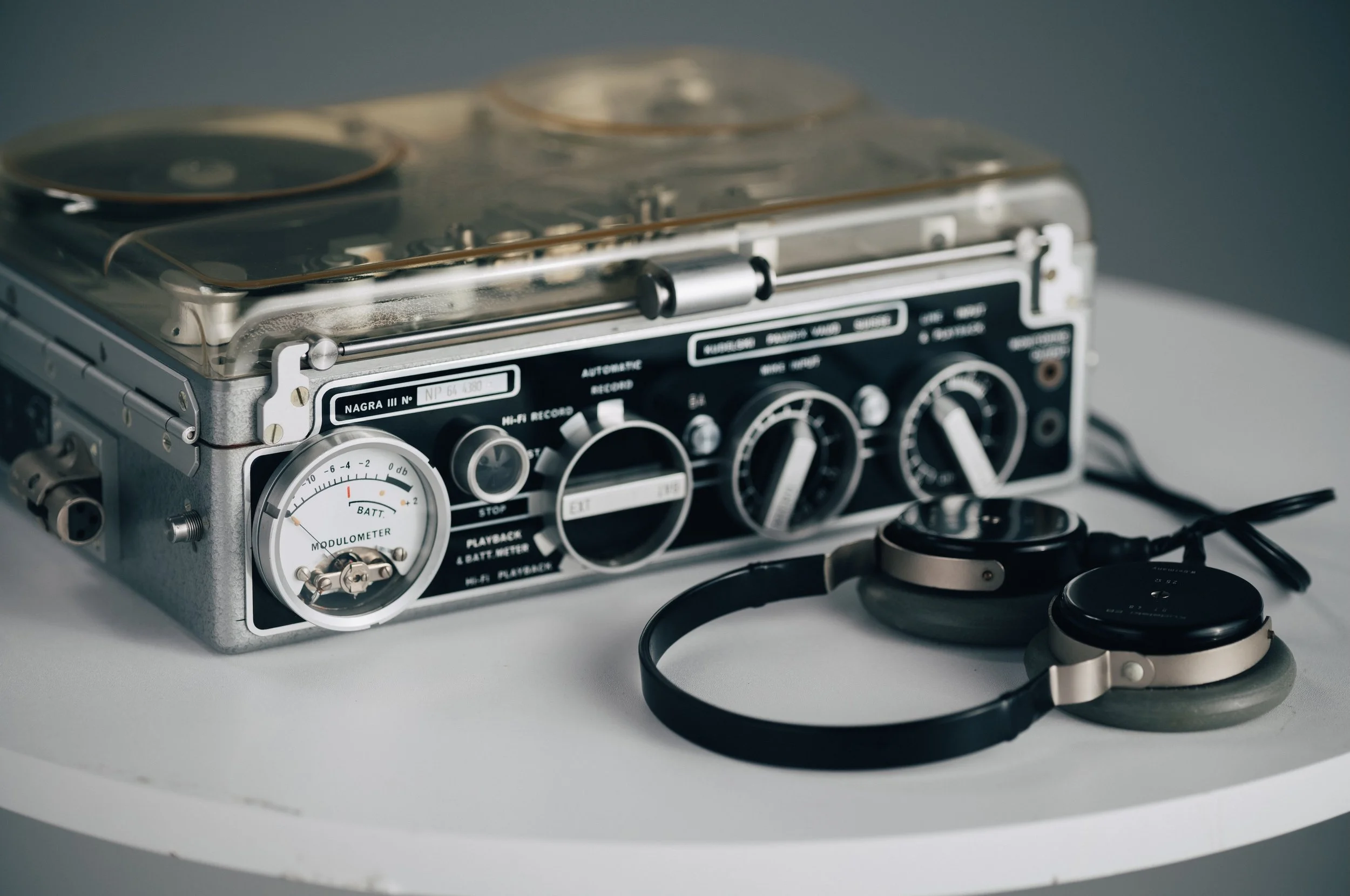
If you worked in film production anytime from the mid-1960s through to the 1980s, your sound engineer most certainly would have been recording audio on a Nagra. This device is not only an engineering marvel but also a remarkable piece of art — all elegantly integrated into one compact and portable unit.
Stefan Kudelski, a young Polish émigré living in Switzerland, developed the very first Nagra in 1951. The name came about when a colleague asked about his strange apparatus and Kudelski replied, "It's a Nagra" — Polish for it records.
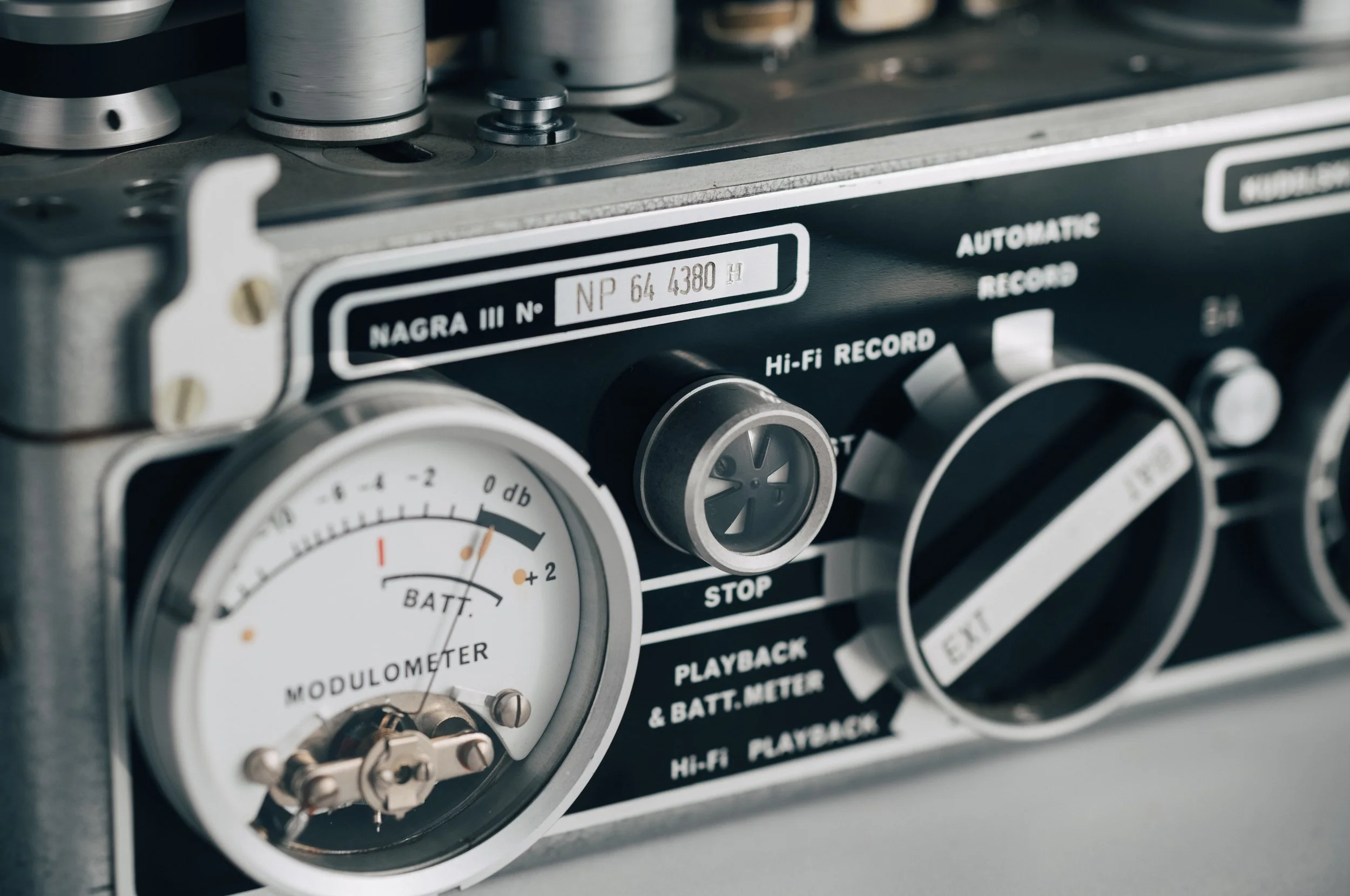
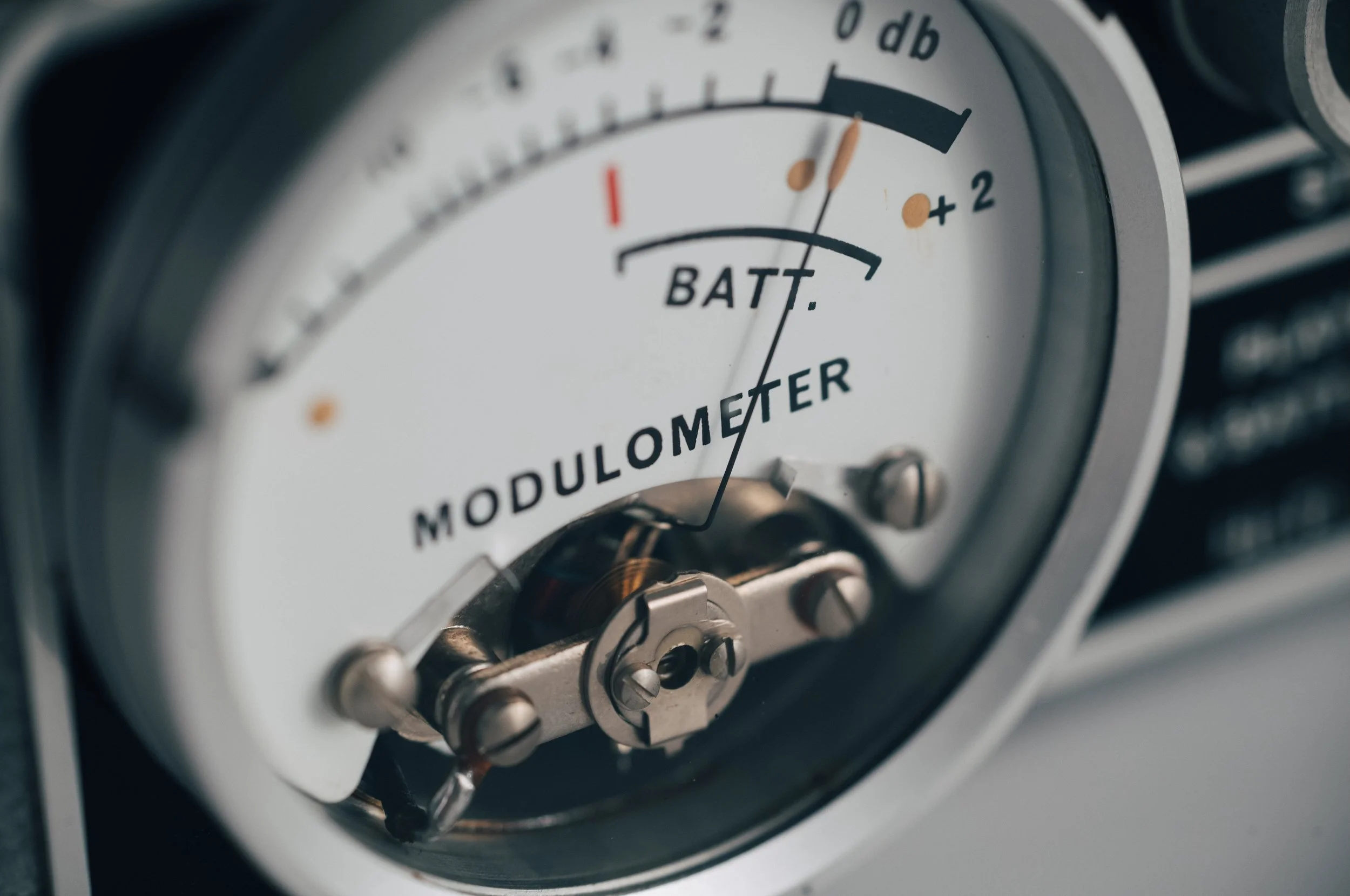
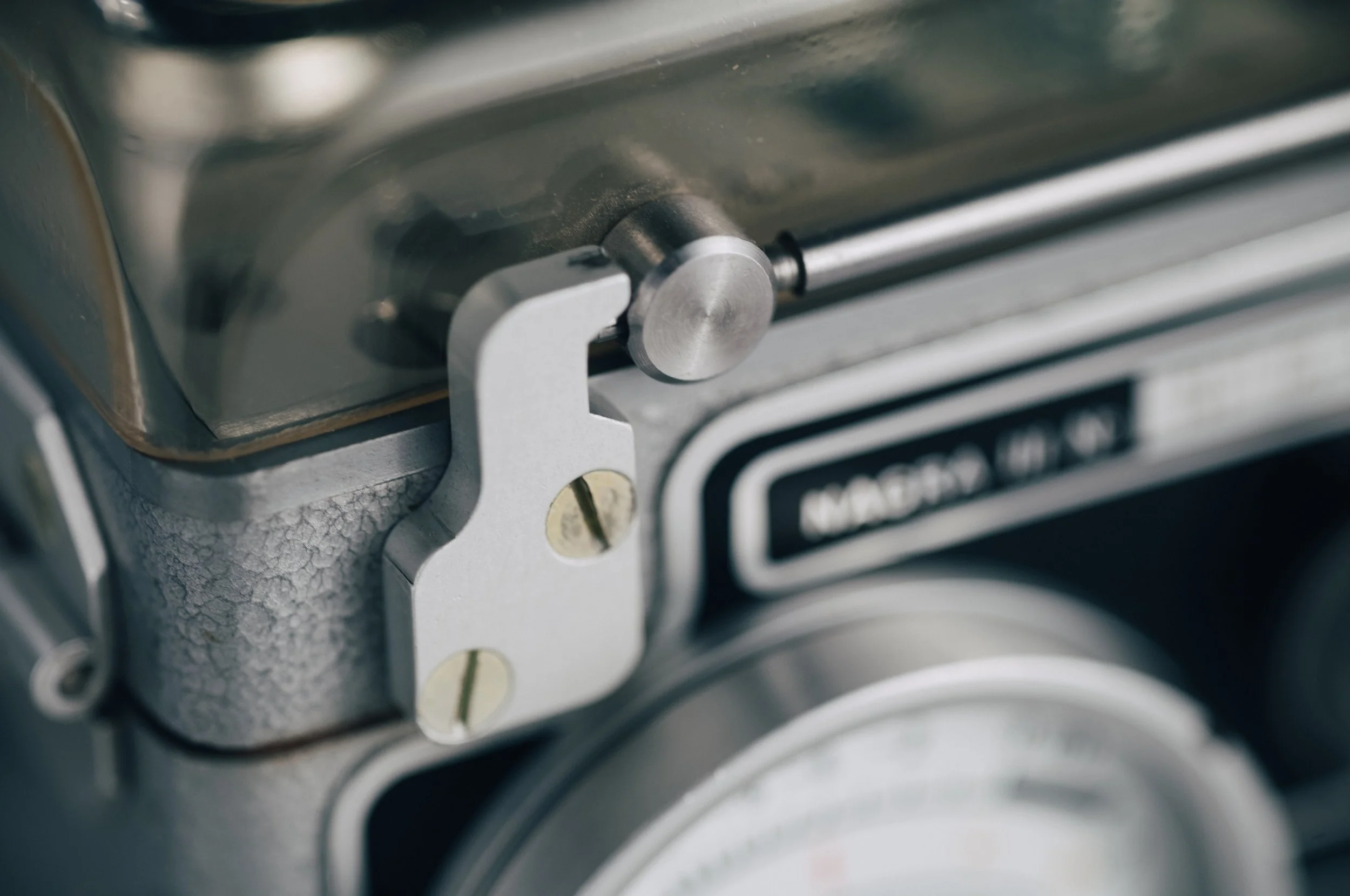
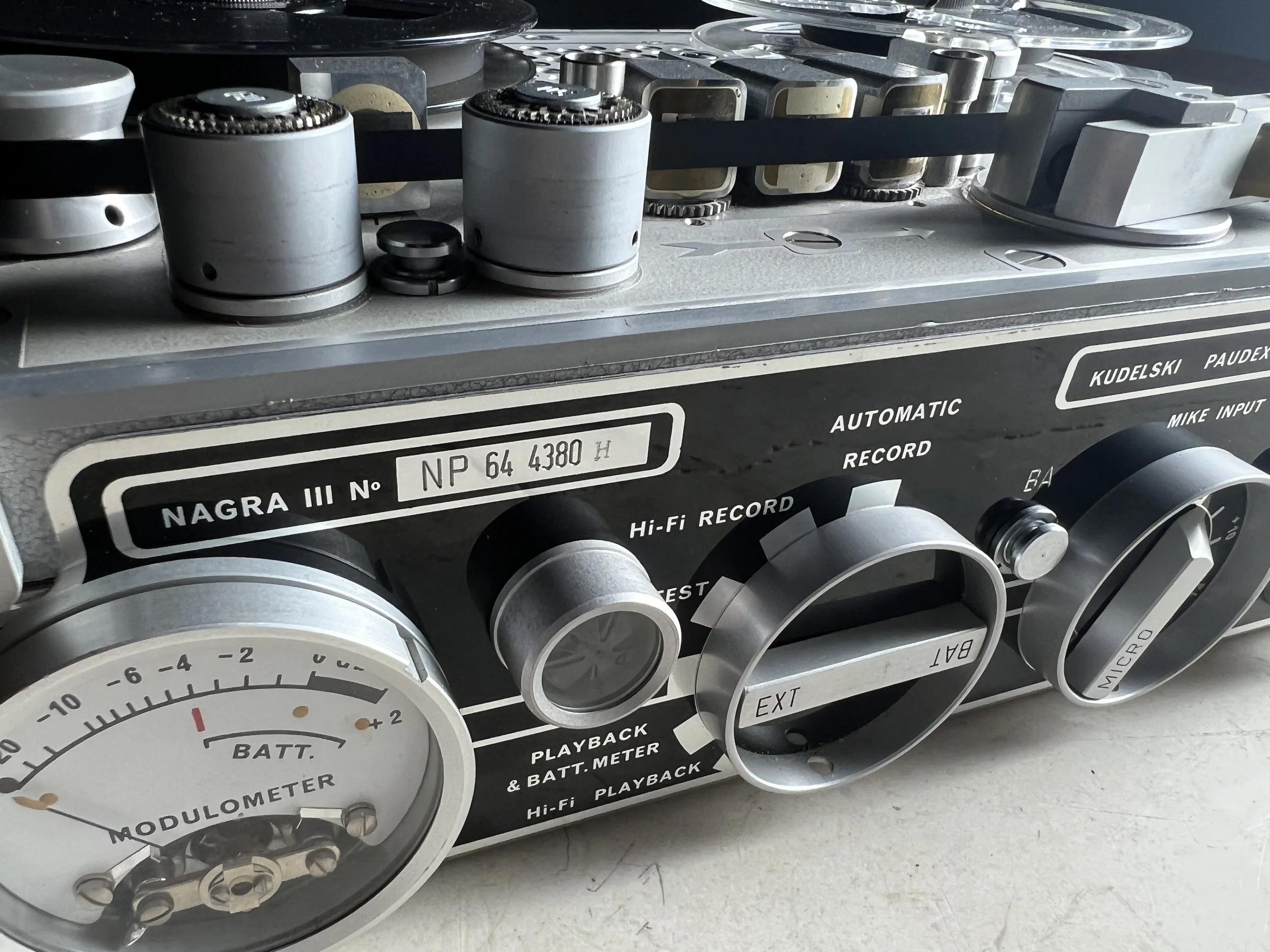
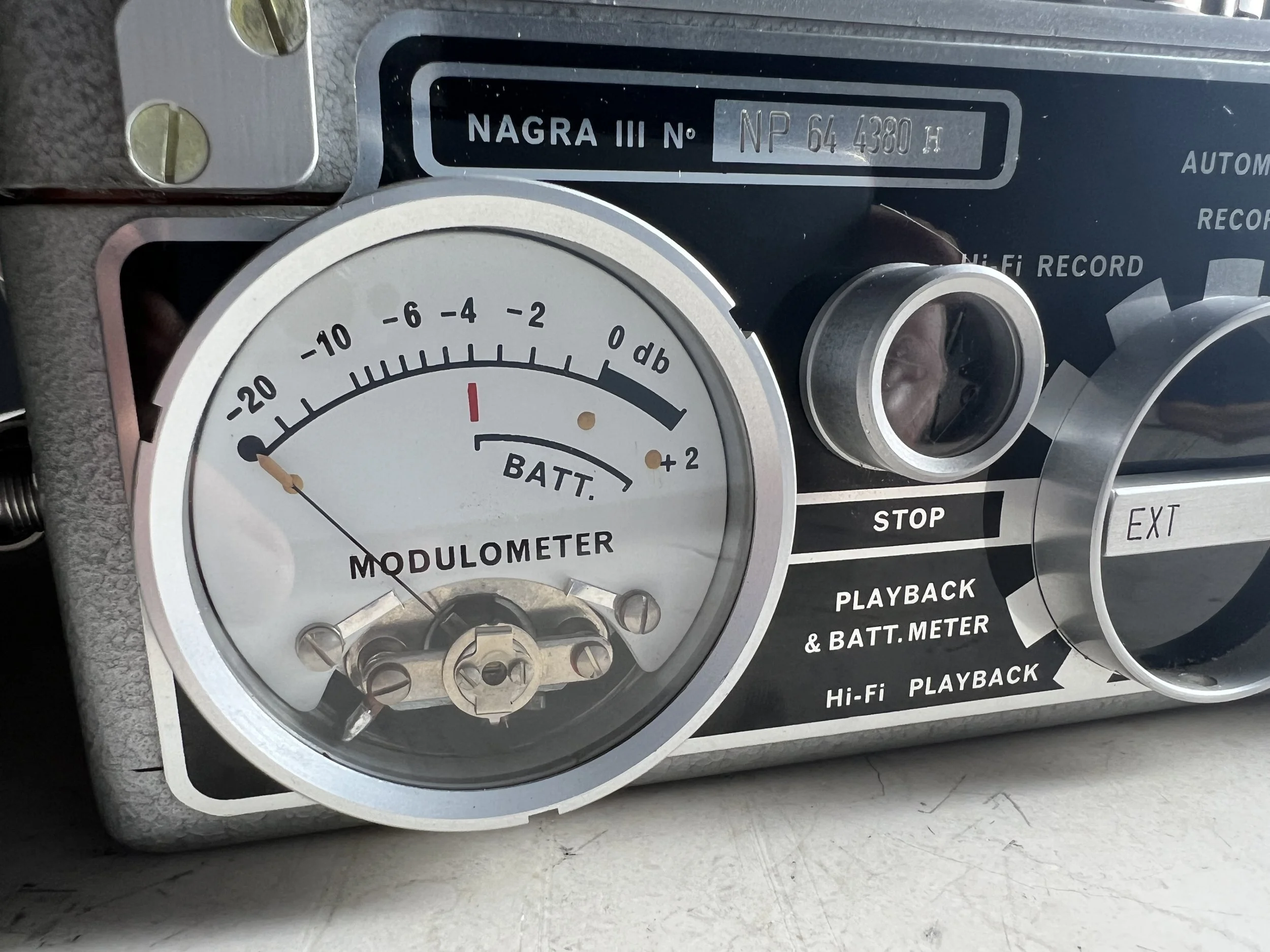
The original Nagra I was a prototype, while the Nagra II was produced in very limited numbers, both early testaments to Kudelski's innovations in sound recording technology. Remarkably, these early models were clockwork-driven. The iconic Nagra III arrived in 1957 and represented a significant technological breakthrough. Kudelski ingeniously replaced the clockwork drive with a highly sophisticated servo-drive DC motor system and further improved the tube-based amplifier circuitry, incorporating a series of individually encased metal modules. These modules contained the individual components along with Kudelski's new Modulometer — a notable upgrade over the standard VU meters of the time. Built like a tank, the Nagra III could be powered by 12 standard D-cell batteries, making it a truly portable field recorder.
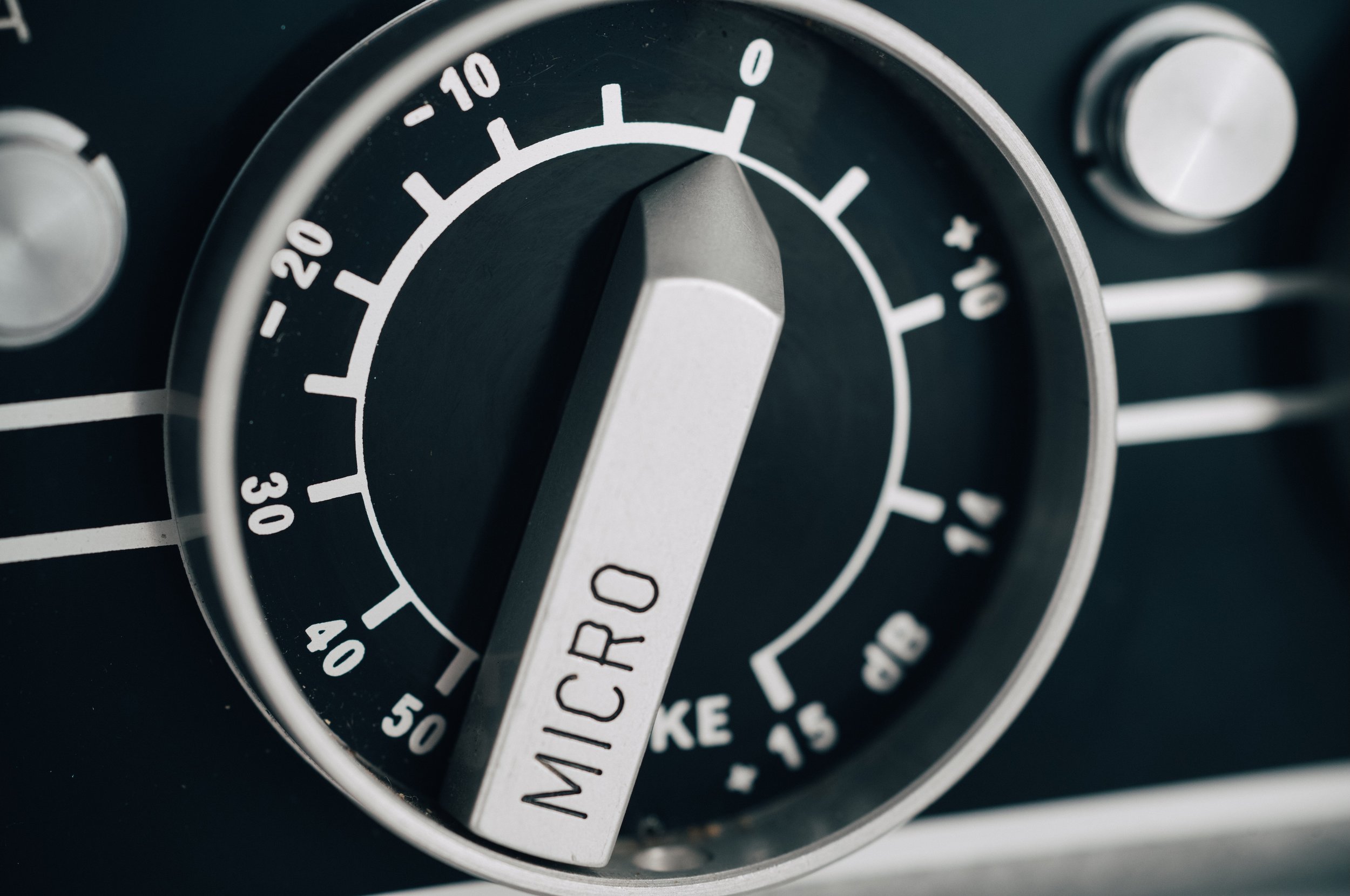
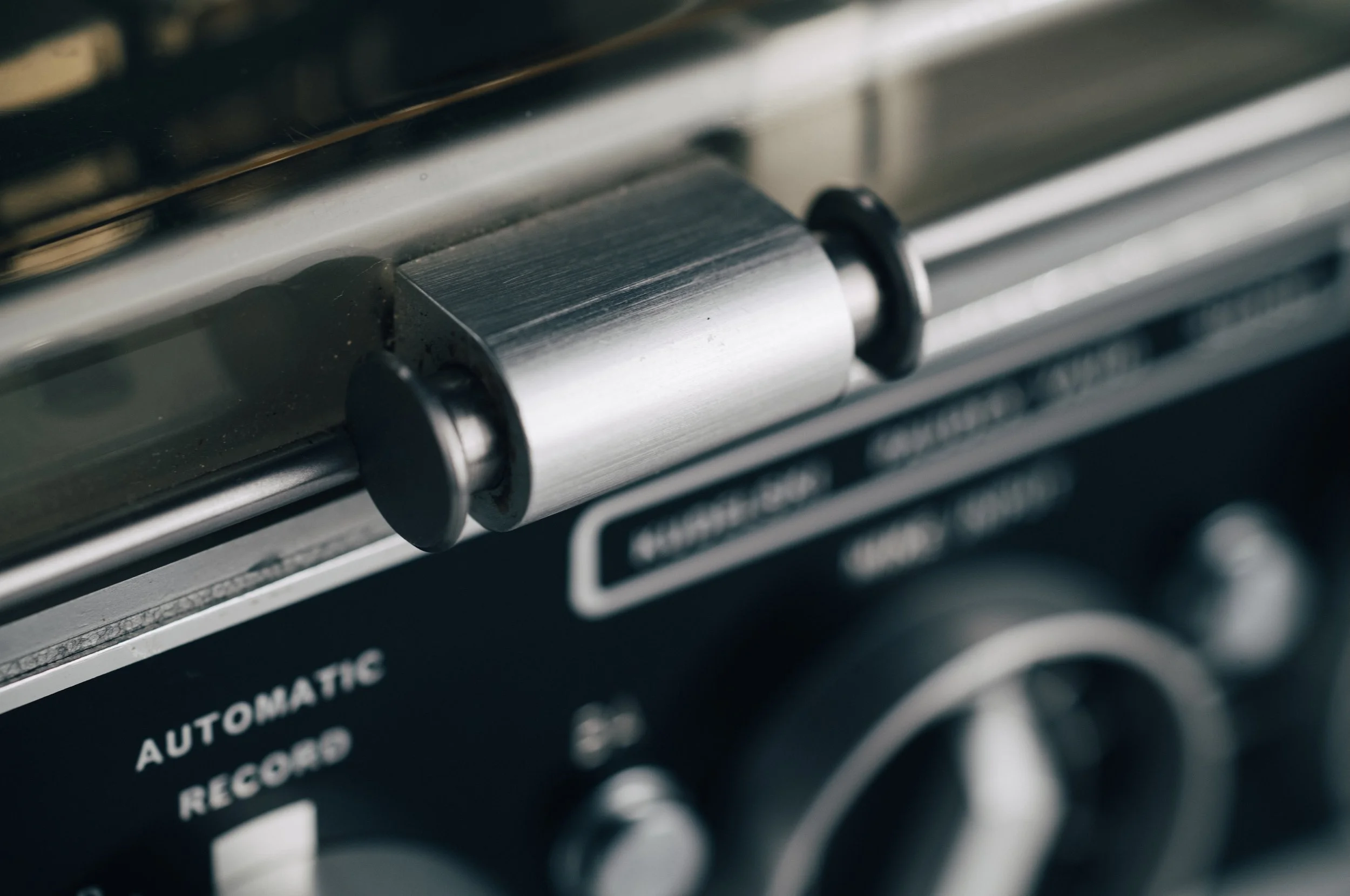
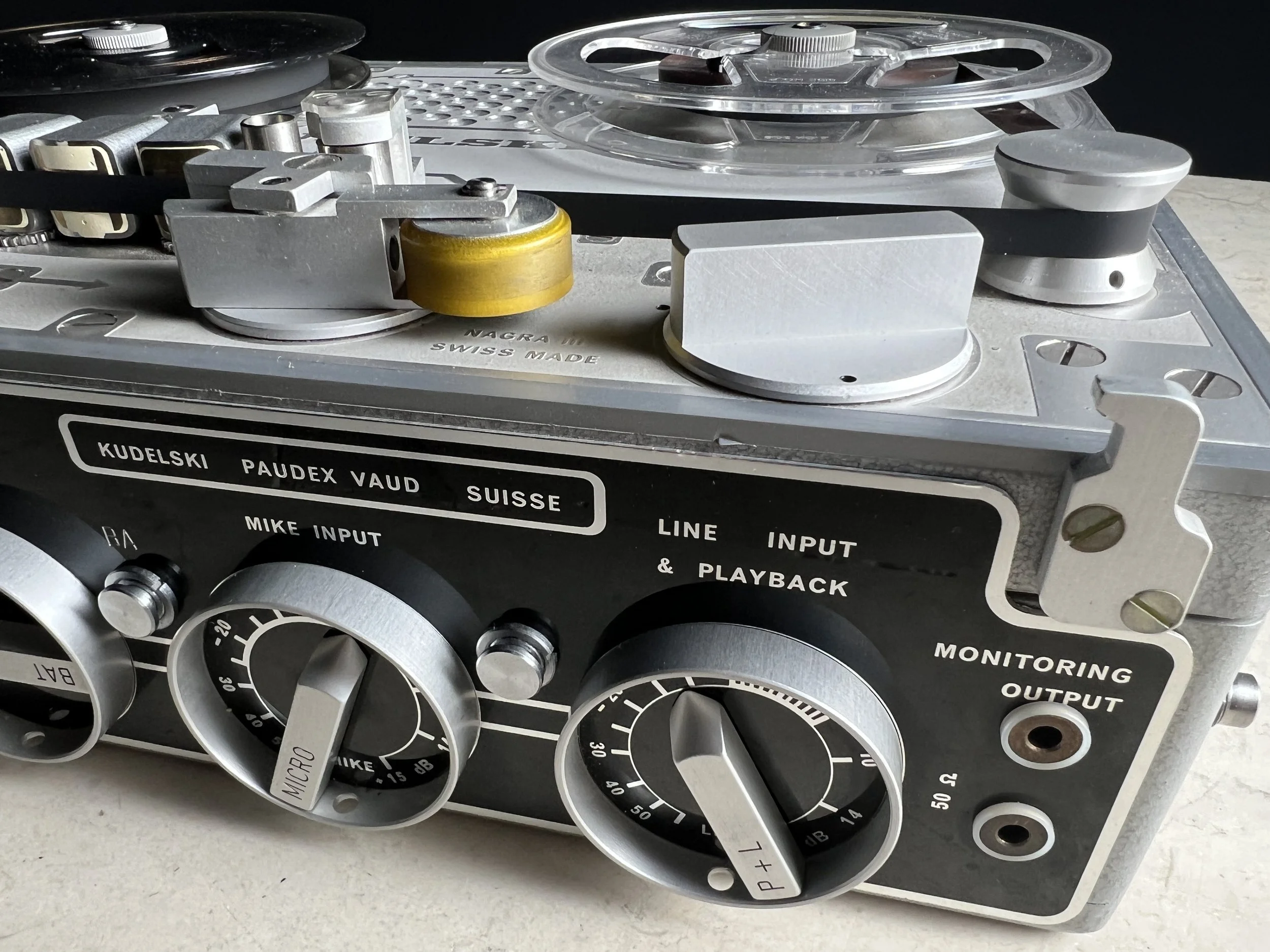
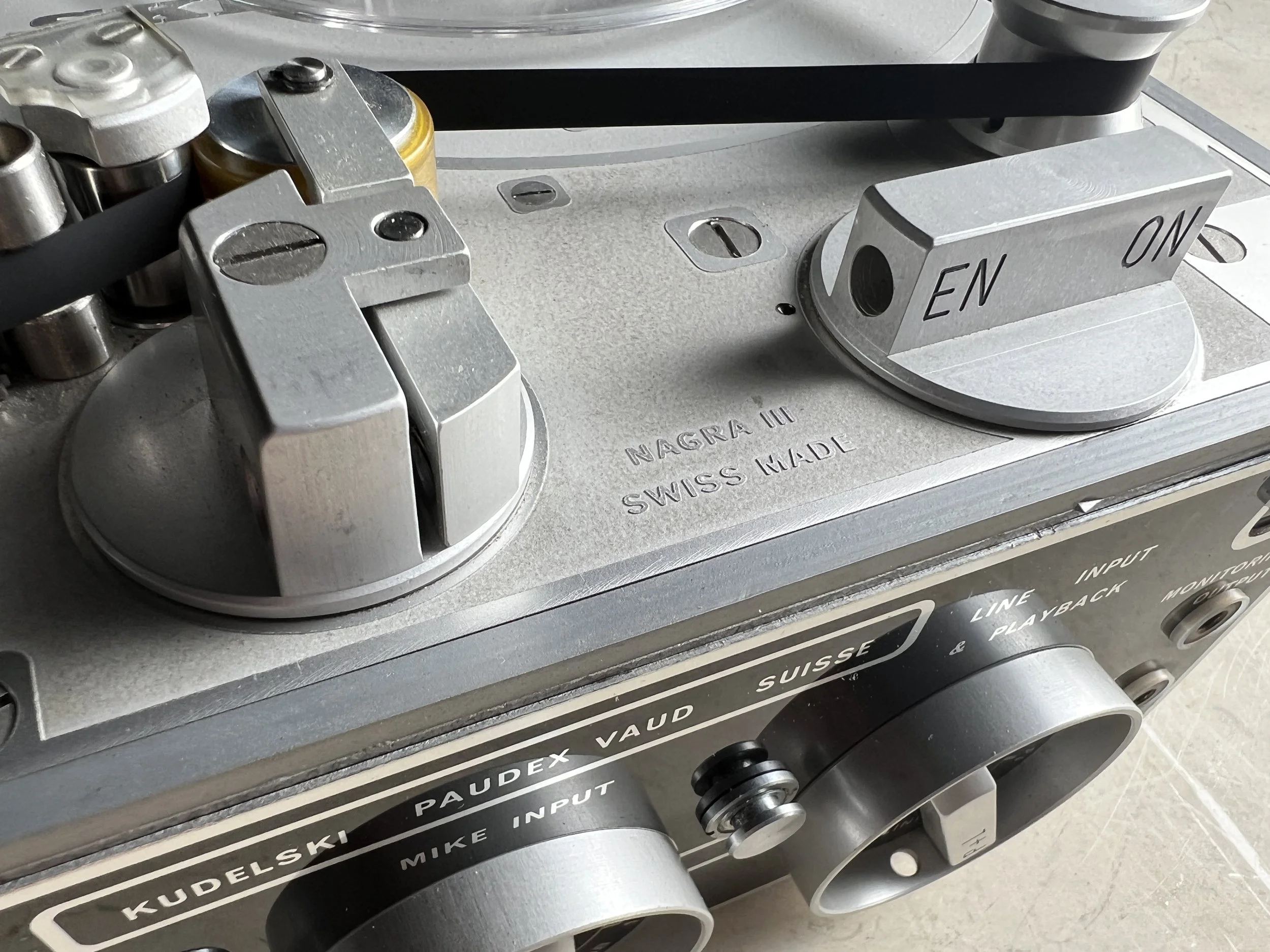
The Nagra III was designed with simplicity in mind. It featured a clean, uncluttered control panel with large, easy-to-operate knobs for adjusting levels, speeds, and playback direction. Sound quality was its defining characteristic — low-noise, high-fidelity circuitry that produced a warm, natural sound free from distortion, with exceptionally low wow and flutter that helped preserve the accuracy of every recording. It recorded on standard ¼ inch magnetic tape, the format that would define professional audio for decades.
The Nagra also earned its place in popular culture. It appears prominently in Francis Ford Coppola's The Conversation and Brian De Palma's Blow Out — two films where the act of recording is central to the story itself. It also shows up in Diva, Steven Soderbergh's The Informant, and even the Beatles' Help!
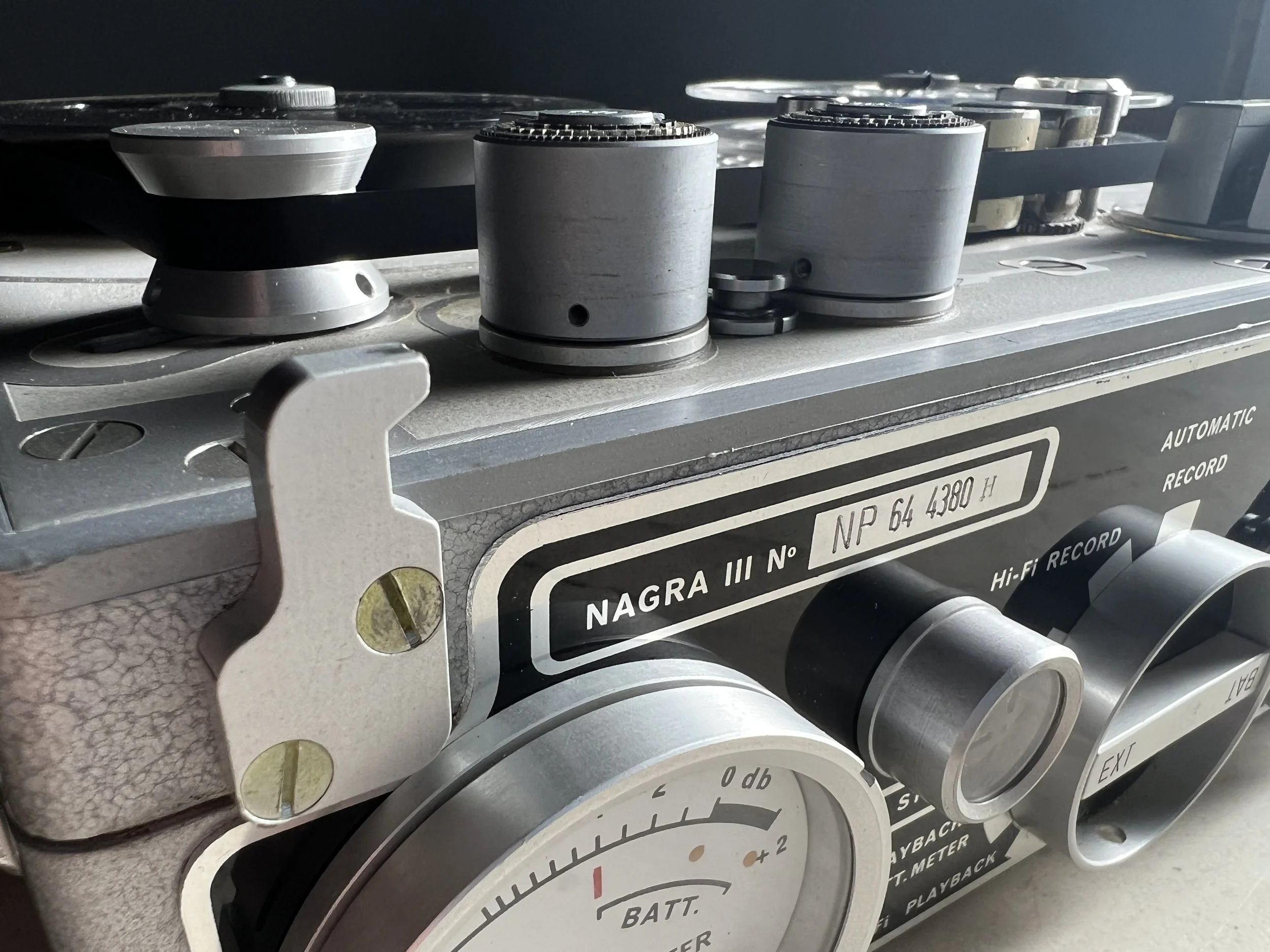
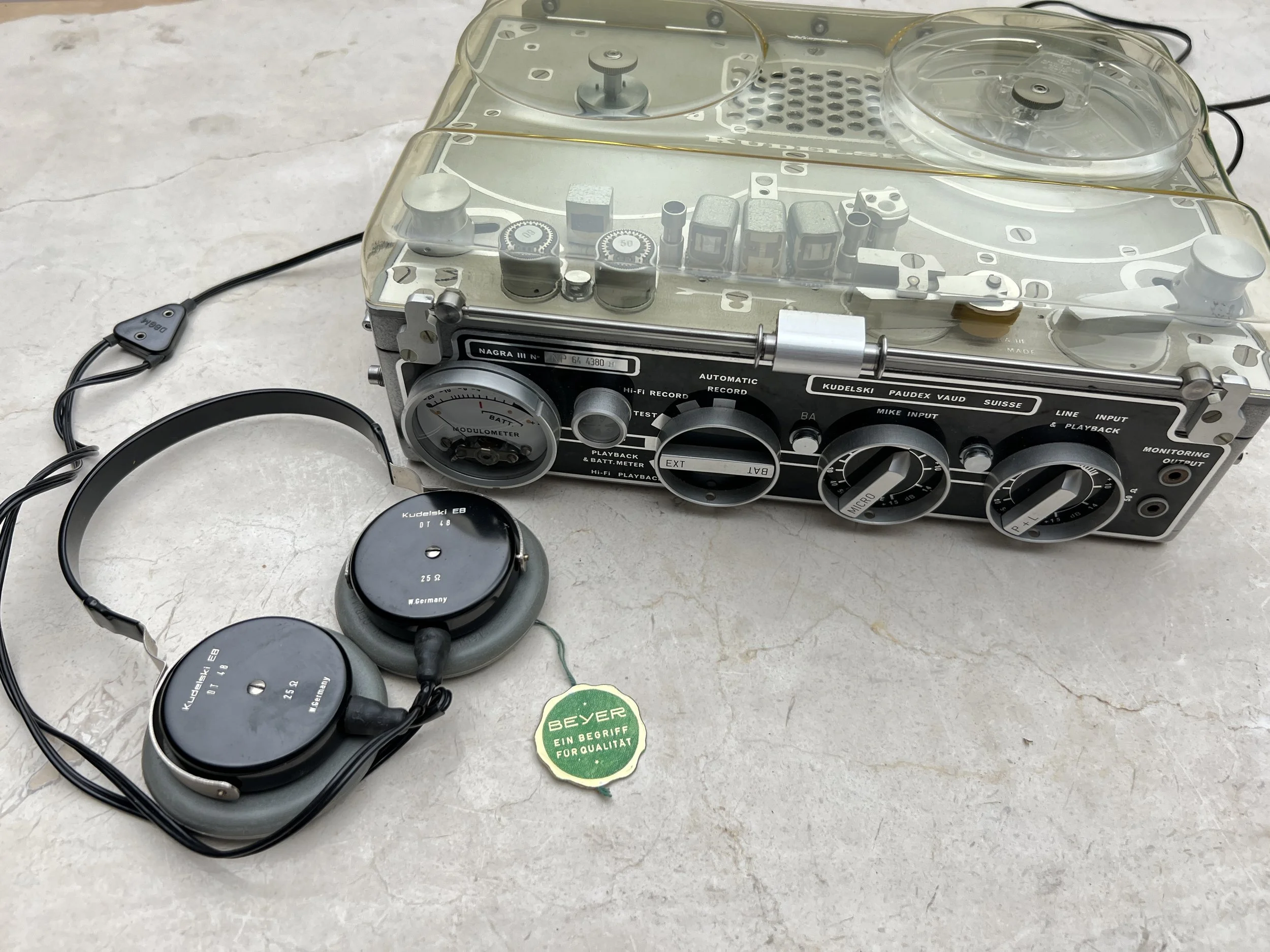
The example in my collection — No. 4380 — was made in 1964, the 4,380th Nagra produced since 1958.
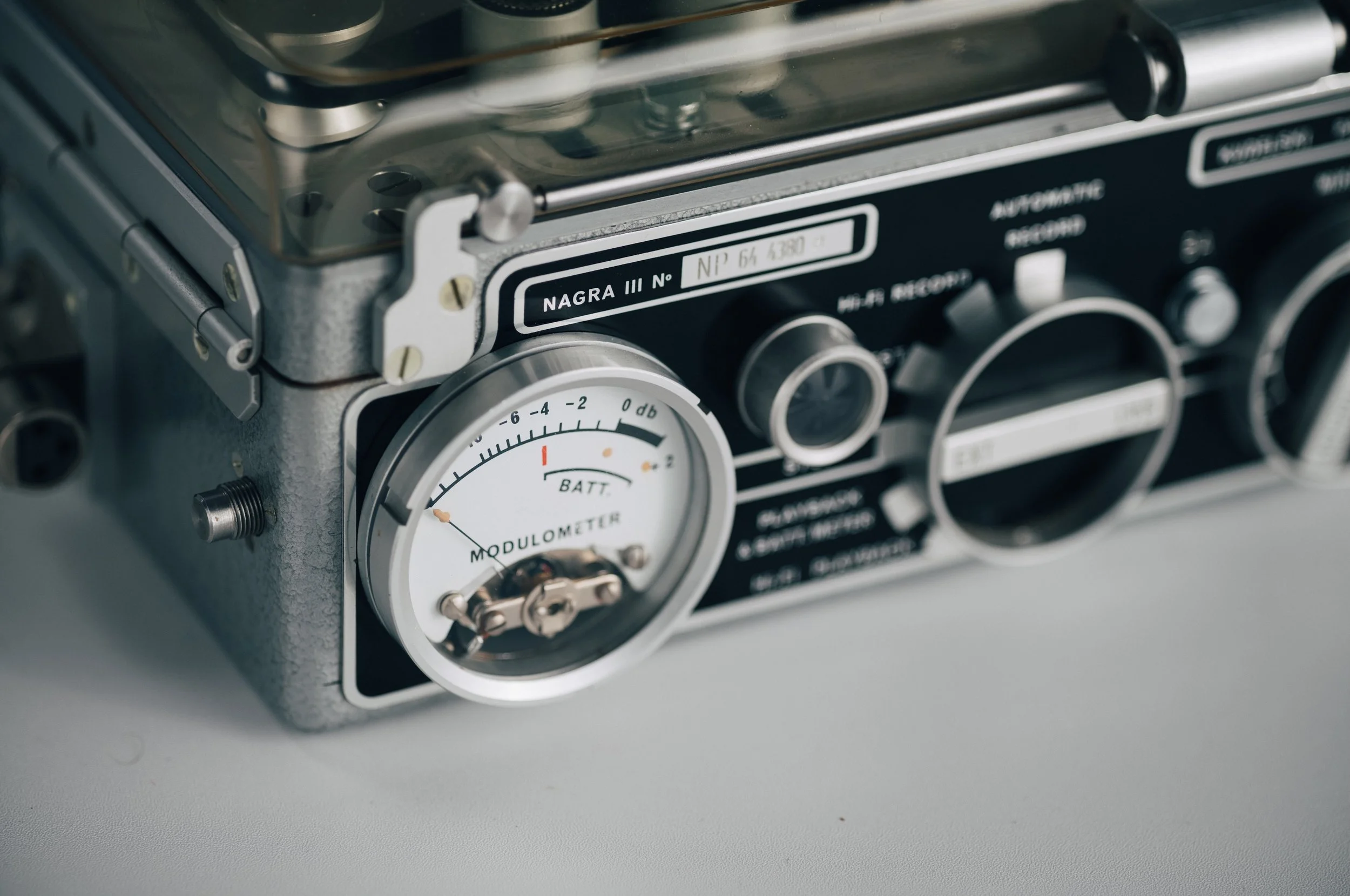
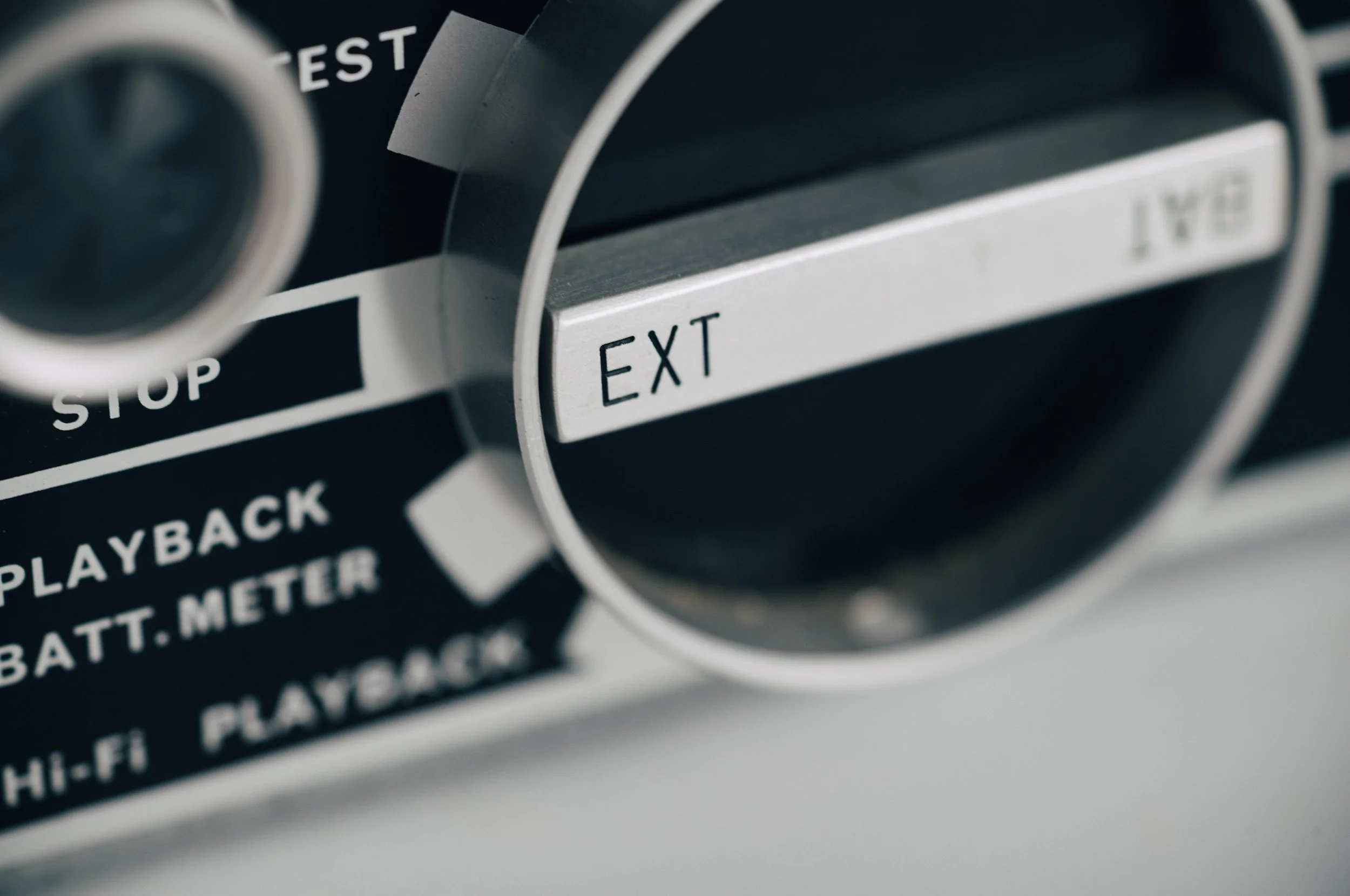
Nagra Modulometer
Then in 1961, Kudelski introduced the Neo-Pilottone sync system, and it changed everything. Location filmmaking was transformed, and the Nagra became the primary audio recorder for most films produced over the next several decades. Rather than recording a sync pulse on a single separate track, the Neo-Pilottone system used two tracks out-of-phase with each other that would cancel each other out on regular playback, elegantly avoiding crosstalk. Initially sync was achieved via a cable from the camera to the recorder, placing a pulse directly onto the tape. This was soon replaced by crystal sync — a quartz crystal controlling the camera at precisely 24 or 25 fps, with a matching crystal placing the sync pulse on the tape. It was a simple, reliable system that quickly became the industry standard.
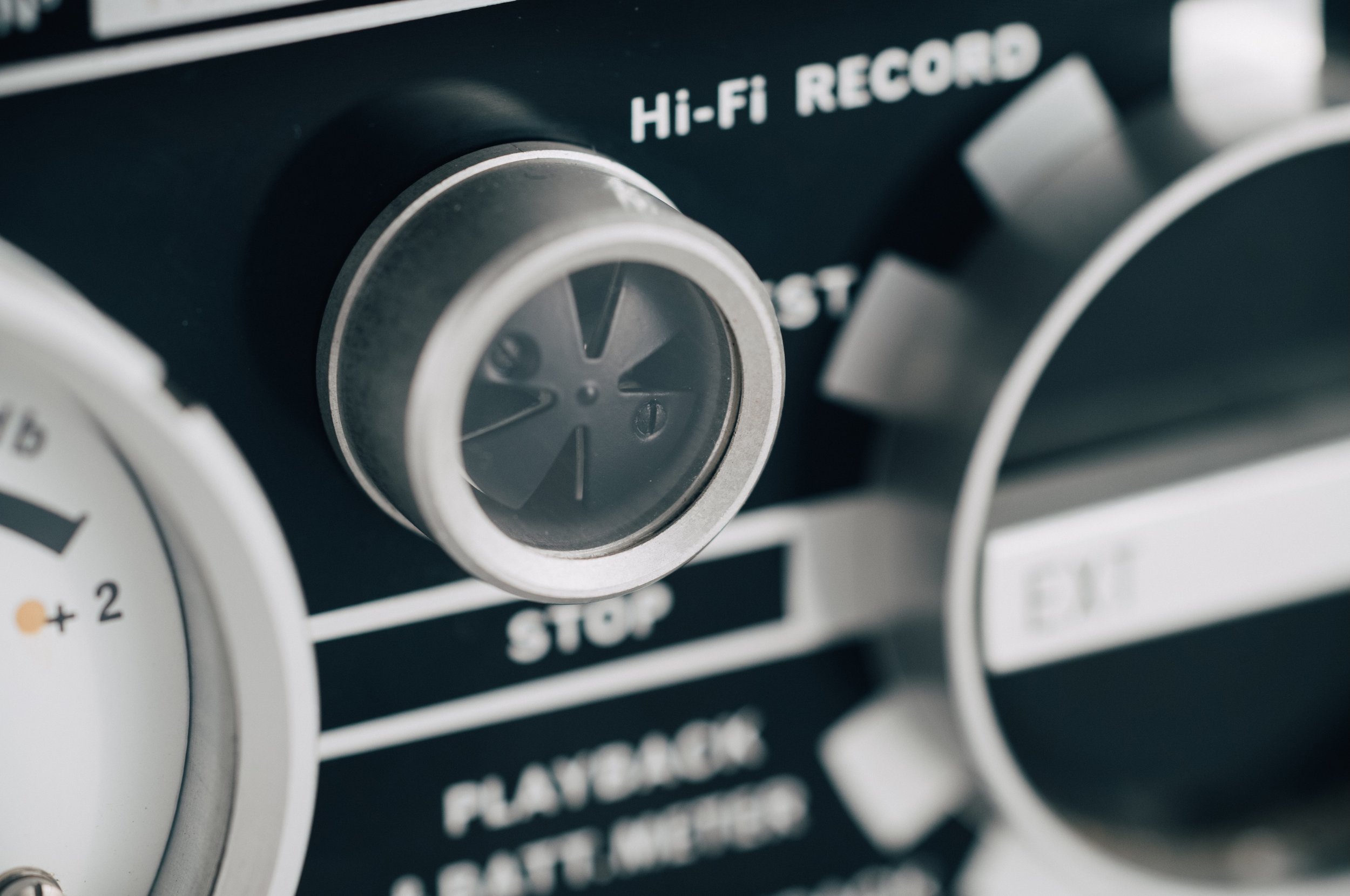
NP- Neo-Pilottone system
The first Nagra III NP was delivered in 1962 and immediately became highly sought after — wait times for a new unit stretched to nearly a year. The large Modulometer and rotary selectors on the Nagra III make it my personal favorite model. The fact that so many remain in perfect working condition today speaks volumes about the quality of the apparatus. It is, in every sense, a piece of art that also happens to work beautifully.
The Nagra line continued to evolve — the Nagra IV refined the formula, the tiny Nagra SN became legendary in its own right as a concealable recorder, and eventually the line moved into the digital age. But it is the Nagra III NP that remains the most iconic, the one that transformed location sound and defined an era of filmmaking.
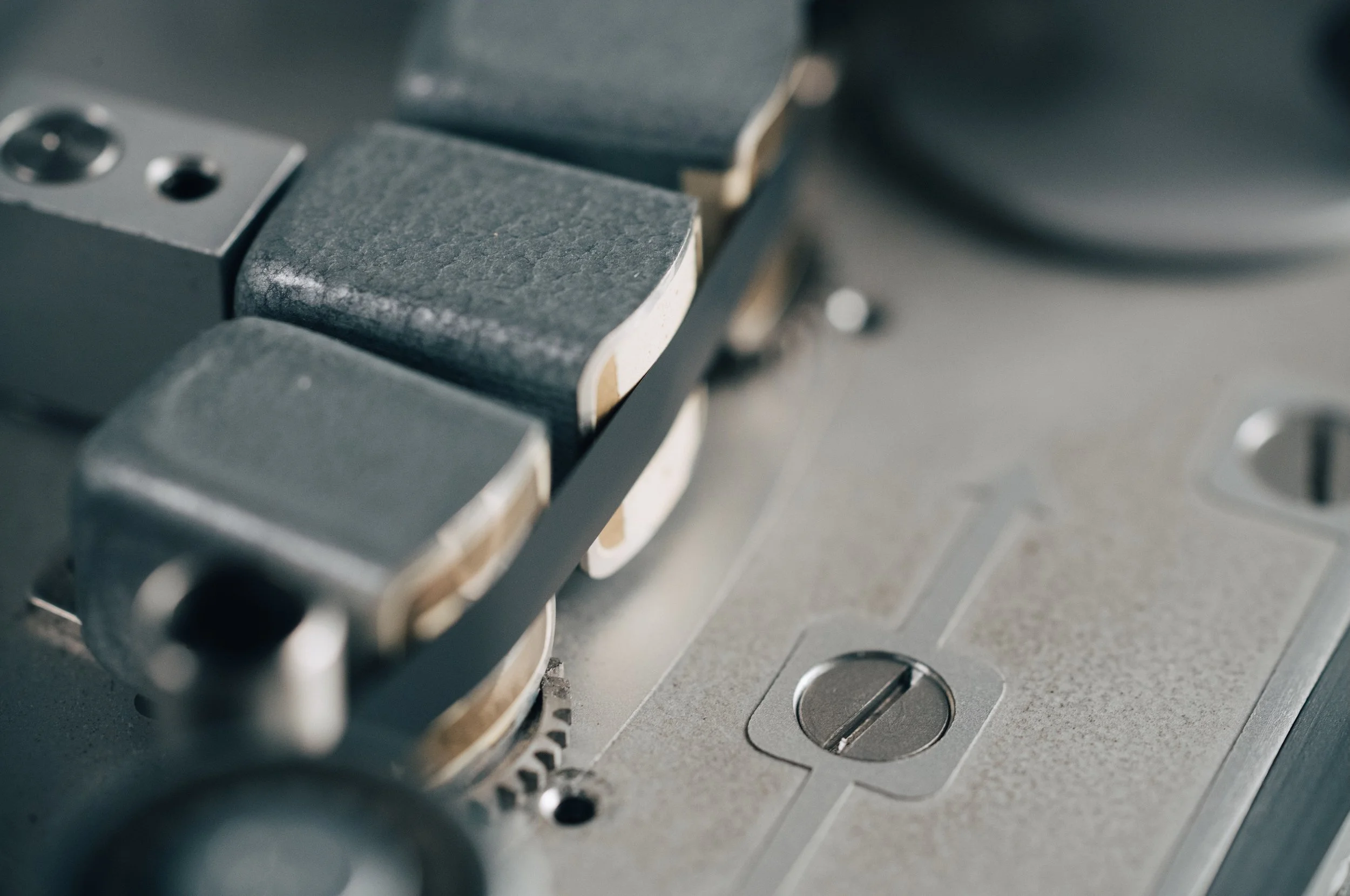
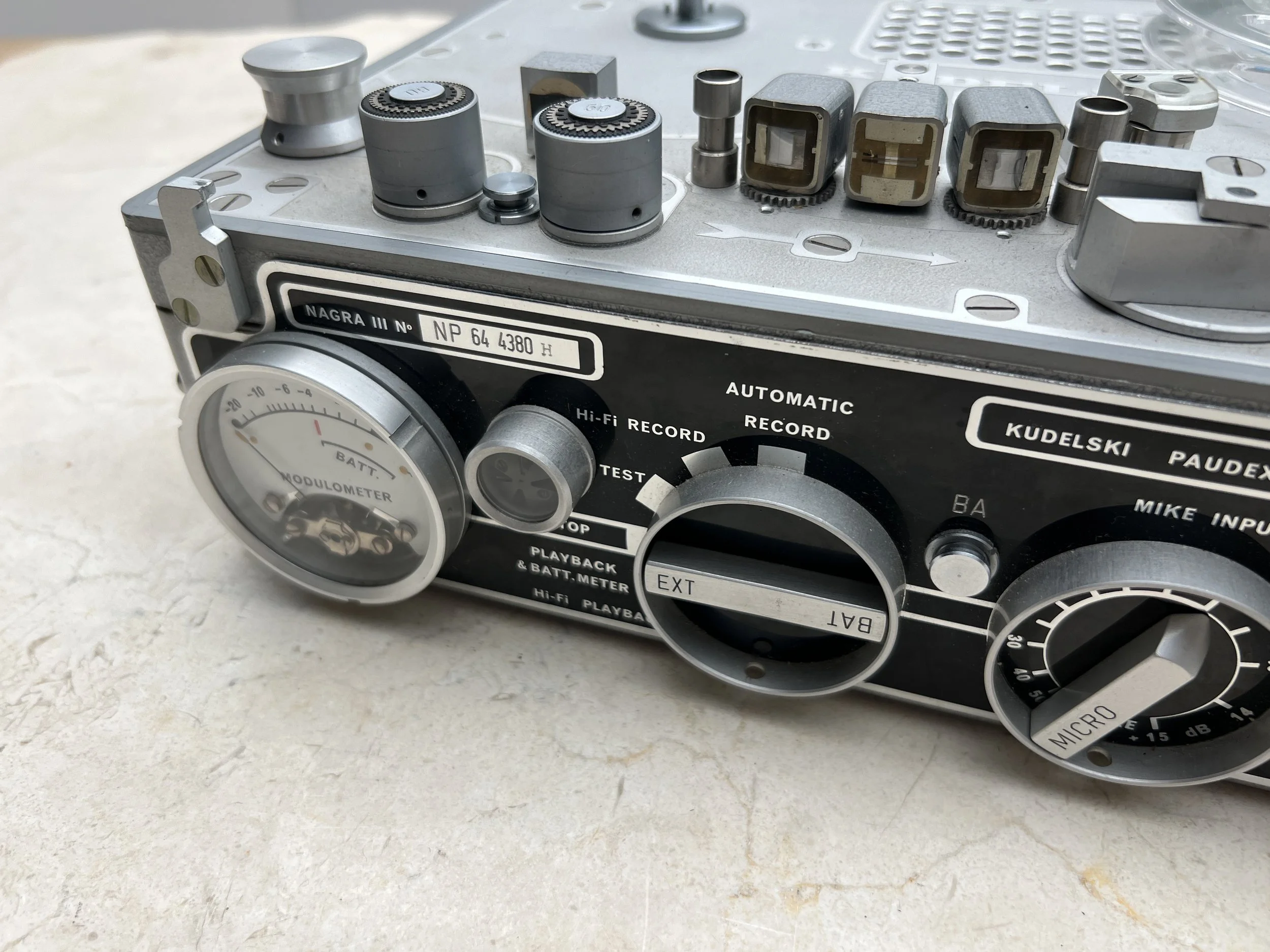
“‘Nagra’ – Polish for ‘it records!’”
Kudelski Nagra III NP playback
Stefan Kudelski
Stefan Kudelski was born in Warsaw, Poland on February 27, 1929. His father had studied architecture at Lvov Polytechnics before moving into chemical engineering; his mother was an anthropologist. With the Nazi invasion imminent, the family fled Poland in 1939, making their way through Romania and Hungary before eventually settling in France. Kudelski resumed his education at the Collège Florimont in Geneva and later studied electrical engineering at the École Polytechnique in Lausanne, Switzerland.
It was in a Geneva machine shop, frustrated by the inefficiency of repetitive manual work, that Kudelski first saw a solution no one else had built — a machine that could replace the repetitive manual work he saw being done around him. He designed what would become the first CNC machine. But to control the motors, he needed a way to record and store data, and that led him to study magnetic recording as a possible medium.
After dismantling an old recorder to understand its design, he began building one from scratch. That machine would eventually become the Nagra I. Unable to attract investment for his CNC project — he was, after all, the son of a refugee family with few connections — he pivoted his focus entirely to designing a recorder suitable for broadcast use. The Nagra was born from that necessity.
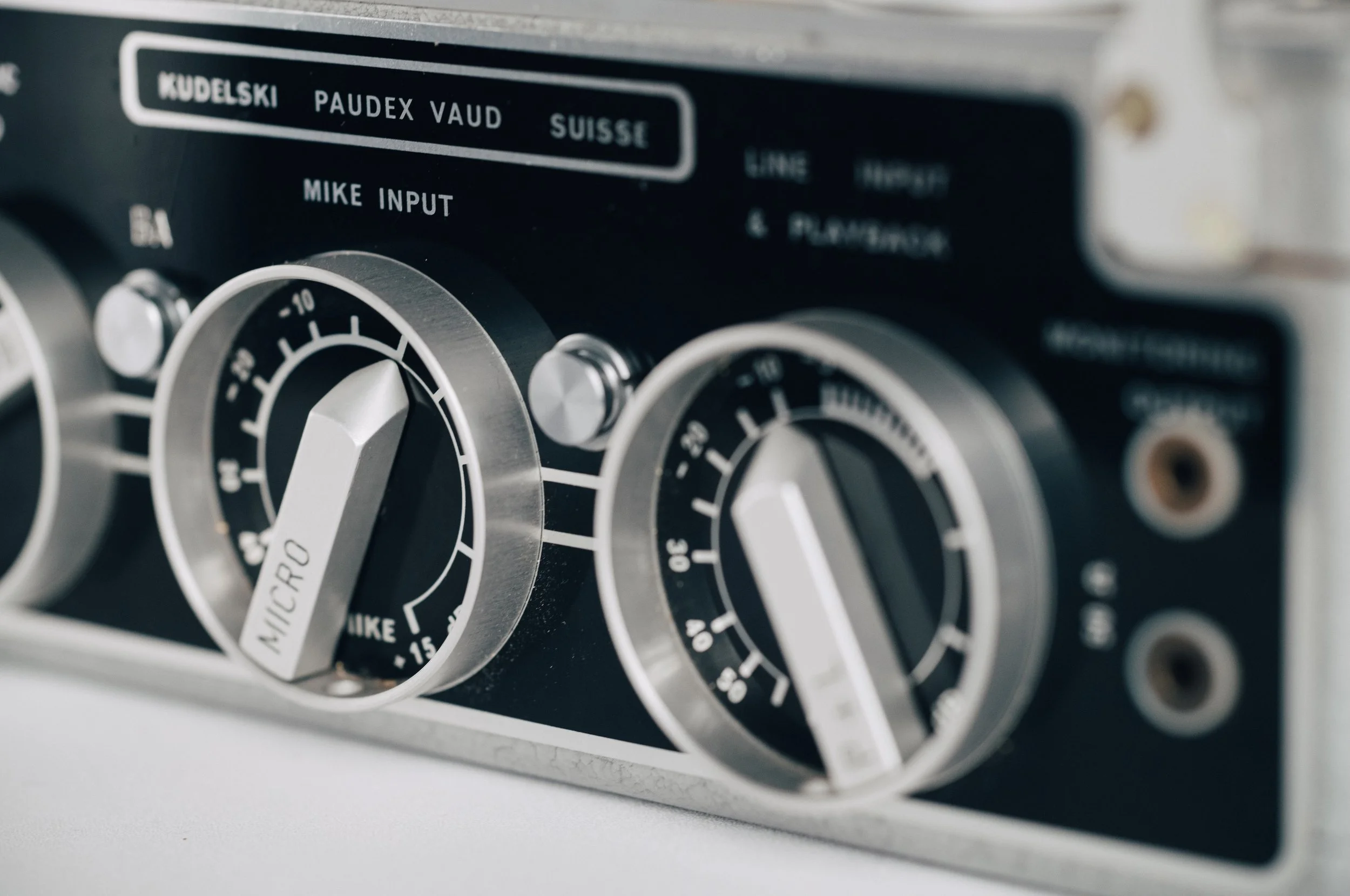
What resulted was something far beyond a utilitarian tool. The Nagra is a beautifully made apparatus, exceptional in both design and build quality, and it reflects every lesson Kudelski absorbed during his years in that machine shop. His instinct for precision, for elegant engineering solutions, for building things that last — all of it is present in every Nagra ever produced. Stefan Kudelski passed away on January 26, 2013, but his apparatus endures. Pick one up today and it will very likely still record, still sync, still perform exactly as it did on a film set fifty years ago. That is the mark of a true craftsman.